































































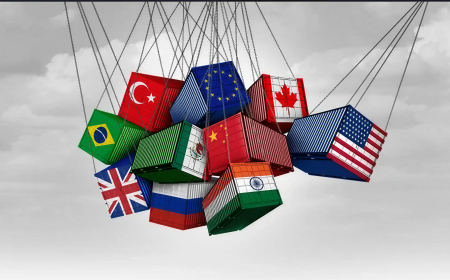
Engagement with China is presented as proof of resistance against Western dominance. Good relations with India become synonymous with regional stability. Foreign policy becomes a performance of political identity rather than a framework for advancing long-term national interests.
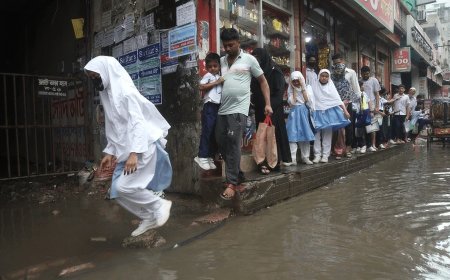
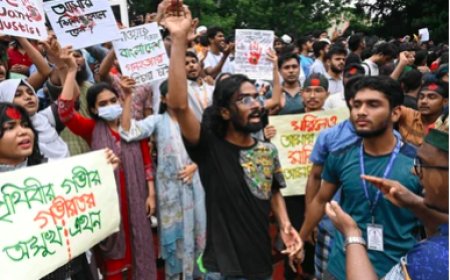
Bangladesh needs emergency protocols that operate before photographs go viral, independent technical review of every national question paper, public disclosure of examination failures, and a transparent remedy for affected candidates.

The recent closure of Ad-din Hospital in Bangladesh illustrates how policymakers sometimes impose extreme sanctions without considering proportional alternatives.

Why should this matter to Bangladeshi readers? The future of high-performance computing will likely be led by the United States and China.

If the Special Marriage Act can first be modernized and made genuinely functional, the more difficult conversation -- extending that same civil framework -- becomes conceivable. Until then, it remains a conversation without legal ground to stand on.
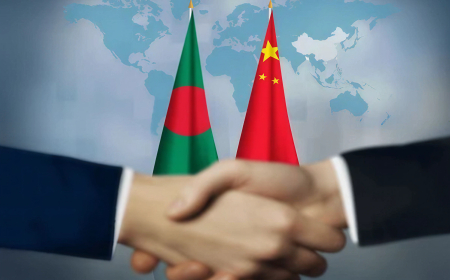
This history matters for one simple reason -- the corridor China proposed in Beijing in June to the Bangladeshi Prime Minister is the same idea, with the same starting point in Kunming, with the same logic, but without India.
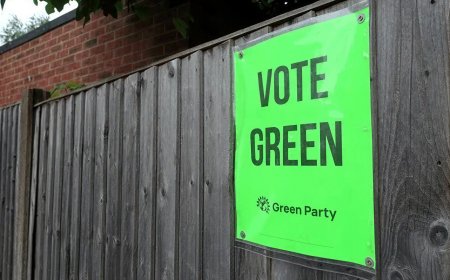
What started as a protest became politics. What was once dismissed as extreme is now the subject of international summits. The questions Green activists were asking 50 years ago -- how do we live within the limits of this planet, and who pays when we do not -- are still the most important questions today.
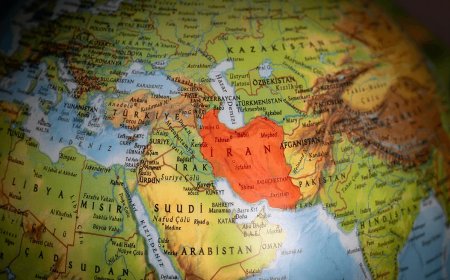
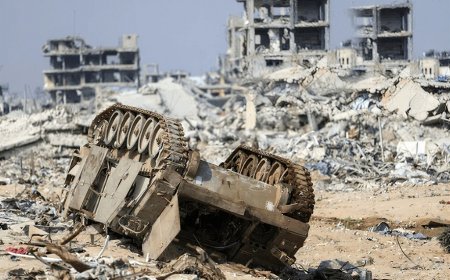
The ceasefire has created an opportunity. Whether the parties seize it will depend not only on the negotiators in the room but also on political leaders willing to accept outcomes short of their maximalist positions. Transforming that opportunity into lasting peace remains the region's greatest challenge.

A country becomes innovative not when its officials announce innovation, but when its inventors no longer need to beg them for the right to build.

Bangladesh now has the diagnostic tools, the legal framework, and crucially, the public honesty about the scale of the task that previous governments lacked. What it does with that foundation over the next two to three years, not the next two to three months, is the real story still being written.

The government and private sector have an opportunity to work together to translate the positive policy signals contained in the budget into tangible investment outcomes. If we do so successfully, Bangladesh will not only attract foreign capital but also encourage successful members of the Bangladeshi diaspora to invest their expertise, resources, and networks in the country's future.

Only through a combined approach -- strengthened technical capacity, strict regulation, and informed public awareness -- can we ensure that vaccines retain their full effectiveness from manufacturer to patient, and that preventable tragedies are avoided.
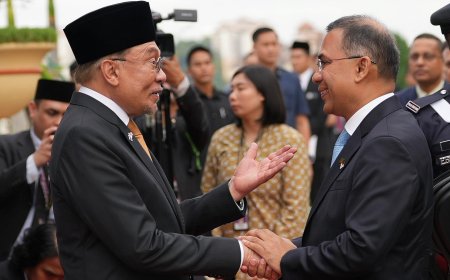
This is not a government choosing China over India, or East Asia over the West. Rather, Dhaka is trying to keep every door open for as long as the money keeps coming in and as long as no single lender or ally claims it exclusively.

An unknown number of Bangladeshi young men whose families parted with savings of 10 lakh taka or more for the prospect of a better life for them, find themselves on a distant frontline in a war they never chose, in a country whose language they cannot speak, and fighting for a side they were never asked to join.
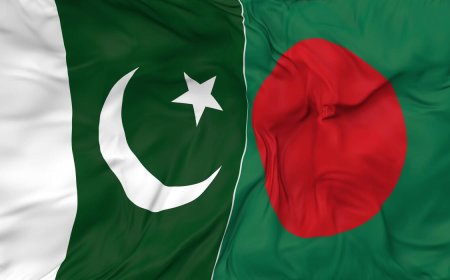
By placing Pakistan in MENAAP, the World Bank is giving institutional weight to this development path, one centred on migration, remittances, energy dependence, external finance and rentier capital. Pakistan’s reclassification is not Bangladesh’s crisis, but it is Bangladesh’s warning.

However critical we may be, the role of the Indian media is noteworthy in the recent remarks of the ex-Chief Minister of West Bengal made on the case of Hadi killings. They collectively refrained, through mainstream and social media, from broadcasting the news publicly to preserve their national interests.