






















































Kulsum’s Disconnected Island
In Bangladesh, we nonstop speak of institutional reform, a tech-forward future, and human potential, but willingly deprive the people in char areas entirely of essential infrastructure.

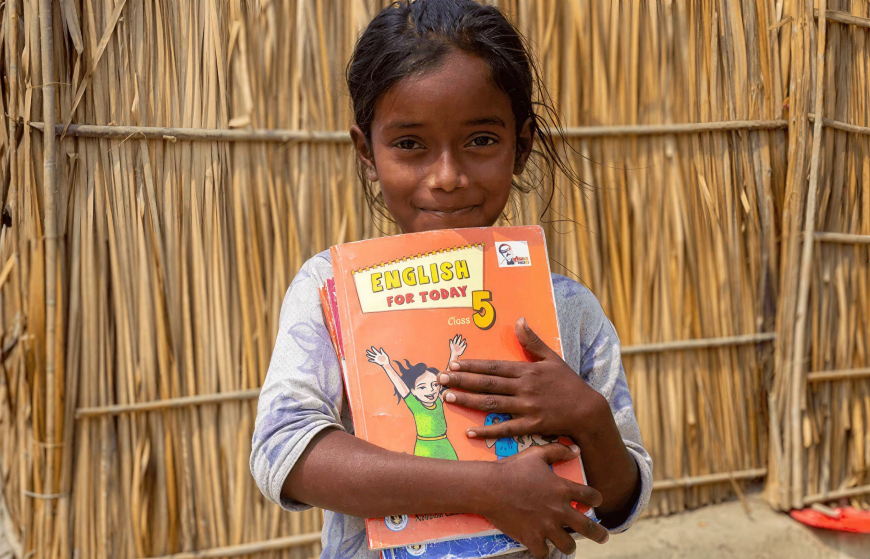
A couple of nights ago, I watched two YouTube videos in a row made by a content creator showcasing the extreme disconnection of Charkhanpur. The riverine island sits on the far edge of Bangladesh.
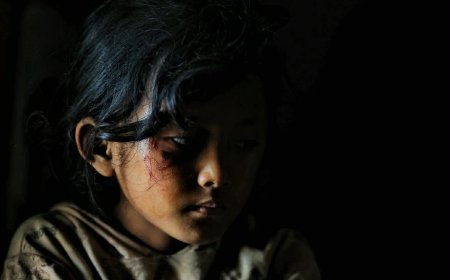
The first footage was shot on the past Qurbani Eid day as everyone was celebrating, including 11-year-old Kulsum, a student of class five. Her island lacks three major things in digital Bangladesh: A high school, a real power grid, and cellular service, resulting in cutting off her community from the modern economy and development.
Beneath the celebratory scenes of Eid day, the remoteness of this char became painfully clear. Seeing the severe consequences of state neglect and due to my foundational background in education compelled to write this article.
The videos were a jarring reminder of the unfulfilled promises of the policymakers. Charkhanpur is located just across the Padma River on the isolated fringes of Rajshahi.
The total landmass of Charkhanpur fluctuates because it is a shifting riverine island. It is surrounded by heavy Indian fences on three sides. Standing behind Kulsum’s lightweight makeshift dwelling, one can literally see Murshidabad across the border.
In the absence of a high school, pretty soon Kulsum’s textbooks could be traded for cooking pots, demonstrating a grim truth: The state is failing on its promises of the rural education mandate.
Kulsum is also facing another stark reality that she will be forced into an early marriage if she cannot get a secondary education. This is not because of dire poverty but because of policy failure by the state. That is an inevitability and has deeply troubled my conscience ever since.
From the outside, Charkhanpur possesses scenic surfaces, but the picturesque beauty can be quite deceptive. Life is a relentless struggle for the inhabitants because of the unsettling certainty of the river swallowing everything under the cover of darkness.
Along with such troubling thoughts, you see a profound failure of national equity where the citizens are trapped. According to Kulsum’s father, Azizul Haque, a farmer/fisherman, Charkhanpur is a community of 3,300 people. Ahead lies the volatile river, cutting her village off from the mainland.
An estimated 1,100 people are registered voters in Charkhanpur under Rajshahi Ward no. 9. In Bangladesh, we nonstop speak of institutional reform, a tech-forward future, and human potential, but willingly deprive the people in char areas entirely of essential infrastructure. This neglect is a reminder that Bangladesh is trying not to see its own reflection in the mirror.
It is quite ironic that the state relies on these borderlands to define its national boundaries but neglects their needs. They are left behind to fend for themselves as second-class citizens. Without help from the state, this vulnerable community is quite powerless to advance.
In the official jargon of Dhaka’s policy circles, Kulsum represents a true demographic segment -- a symbol of a new wave of educated youth. But in the harsh reality of the chars, she is a hostage of her environment.
In an era when Bangladesh celebrates digital transformation and economic connectivity, Kulsum’s future predicament highlights the profound disconnect at the heart of Bangladesh’s development narratives.
In any country, a modern citizenship requires three basic services: Education, electricity, and internet service. This lack of modern connectivity is an indication of the grim reality Kulsum will be facing after she finishes class five.
The absence of a high school and modern connectivity reveals the deep cost of peripheral neglect of Charkhanpur. Fixing these three things will definitely change Kulsum’s trajectory.
As of now, this char island is a land of forced, offline isolation. The people of Charkhanpur are not asking for charity -- as full citizens, they are demanding their fundamental rights to have a high school, full electricity, and a cell tower.
They do not want to become a forgotten community. Although at the moment their life remains frozen in pre-modern times, the people in this community are self-sufficient when it comes to food and shelter. Every year, the river swallows many homes and the land they own, but this resilient group rebuilds from scratch a little farther from the unpredictable river.
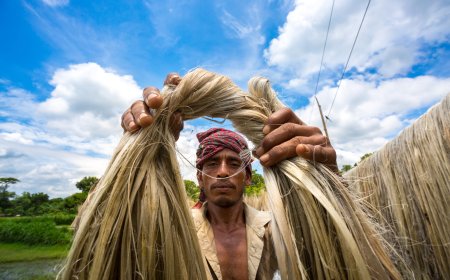
So far, Kulsum’s family has moved six times to different parts of the island. They now live on someone else’s land, paying rent (taka 6,000 per year). The islanders are a very proud group of people who are farmers, fishermen, and livestock herders. They work very hard under extreme conditions. They grow seasonal vegetables, high-value cash crops, and spices along with rice, corn, and jute.
Unfortunately, these farmers are forced to navigate the current complex multi-crop market system based on blind faith. Without a cellular tower, they are unable to digitize their transactions, check wholesale prices in the mainland, or elsewhere in the country.
During the last Qurbani Eid, humanitarian aid was sent to them packaged in sacks of rice, but they refused to collect it by going across the river. The people of Charkhanpur are demanding infrastructure; they are not destitute, begging for handouts.
Watching the video, I could sense that they were very offended because they were offered emergency relief to celebrate Eid. It simply implied they are starving and incapable of feeding themselves.
Denying them their rights and offering them rice is an insult to their dignity. Not only that, it was a serious misdiagnosis of their problem. The people of this char community have enough to eat. They are successful farmers and livestock keepers.
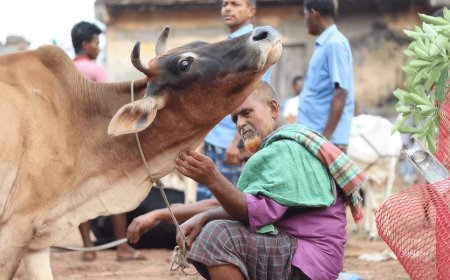
For example, one woman cattle herder owns 20 cows and a few buffaloes. On a riverine island, she is running a dairy farm through her livestock enterprise of milk sales and cattle trading. She is also an example for her community.
This type of grassroots entrepreneurship completely smashes the stereotype of ‘helpless’ and ‘destitute’ women stuck in a stranded char ecosystem. But unfortunately, this dairy farmer faces the same problem as the agricultural farmers because of systematic policy failures.
Her success and accumulated wealth cannot bring her out of isolation. Unable to digitize her transactions, she has to do the bookkeeping the old-fashioned way. Being prosperous doesn’t shield her from the irony that in the absence of a high school, she cannot send her daughters (hypothetically speaking) to school after primary education is complete.
According to the video narrative, right now the partial solar kits on Charkhanpur’s household roofs offer just enough power for a few hours to keep a couple of light bulbs lit and charge a mobile phone. But the cruel paradox is: The phone is useless as there is no signal because the island has no cell tower.
Charkhanpur is a prime example that providing token solar power panels while ignoring the building of a secondary school and a cell tower is a bad policy because it keeps people trapped in the offline wilderness.
Half of the islanders’ homes are deprived of even limited solar power because when the river swallows their homes, they have to rebuild. No state agencies are keeping track of who is in need of immediate electricity. Some homes peripherally remain in the dark.
The state authorities are simply ignoring the massive disconnect between the island, the national economy, and infrastructure modernization.
To build and sustain a modern high school, a community like Charkhanpur needs two foundational public utilities: A high-capacity solar microgrid and digital connectivity. Low-wattage electricity cannot power a high school. It has to be powerful enough to run computers, science labs, and digital projectors.
Schools cannot operate in a pocket of forgotten time. Without a stable internet connection, the teachers cannot access updated information from the Board of Education, nor can the students learn basic internet skills.
In the second video, I saw little primary school students sitting cross-legged on a woven mat for a lesson under the wide leafy canopy of an old neem tree. It was a scene of beautiful spirit but a reminder of the village’s isolation.
The cool shade of the tree is their shield against the blazing sun. The children have no choice but to attend an open classroom; in Charkhanpur, education is dictated by the limits of an outdoor shade in the absence of electric fans.
The video content creator donated Taka 3,000 for a fan for one classroom. A couple of primary school teachers come to Charkhanpur on deputation for six months from Rajshahi by commuting every day. After a year, those teachers are not willing to come back because in the digital age, everyone is afraid of the remoteness of this island.
During emergencies, their loved ones on the mainland cannot call them. To continue her studies after completing class V, Kulsum must risk a dangerous, exhausting, and costly journey across the turbulent Padma River to go to a school in mainland Rajshahi.
In the monsoon season, this dangerous ride can quickly turn into a life-threatening hazard as no one can predict the mood of the river. The boats often capsize in the unpredictable Padma.
The total lack of communication poses a very real security concern where the islanders cannot reach their children. Naturally, they are terrified. Besides, Kulsum’s family cannot afford to pay Taka 300 for a boat fare each day.
Due to such predicaments, along with many others, Kulsum’s parents will be forced to decide against continuing the education of their children. Though some parents of boys do send their sons to high school, often they drop out because each day, such a commute takes its toll on everyone.
They join their fathers and elder brothers in agricultural work or take their produce and milk to sell in Rajshahi. Each way they take the risky boat ride. The state’s failure to construct a high school in Charkhanpur is not merely an administrative oversight but a systematic destruction of human capital.
This academic marginalization is a direct consequence of the broken national infrastructure chain. Every chance Bangladesh boasts of having gone digital, but Charkhanpur’s reality tells a different story. On paper, it is categorized as having access to low-cost electricity due to the home-based distribution of solar energy.
Should national progress solely be measured by headline economic figures, urban economic growth, or digital progress for the urban population? Or equal focus should be given to how the state treats its most vulnerable frontier people?
If the current administration wishes to build a truly equitable nation, it has to begin by recognizing that the state cannot claim progress when its most vulnerable children are discarded to navigate the dark.
To change that, they have to put together an infrastructure package to build a secondary school by powering it with electricity and an internet connection.
Through public-private partnership, the Education Ministry, the Telecommunication Regulatory Commission, and the Ministry of Power have to come up with a viable plan in discussion with the representatives of Charkhanpur to figure out the best course of action to connect them with the rest of the country.
A newly built school with the recruitment of qualified teachers will change Kulsum’s future. Being in school will prevent her from entering a likely dead end; she will become a literate young woman.
Otherwise, this lack of modern connectivity is an indication of the grim reality Kulsum will be facing after she finishes the current school year. Other than being stuck in a vicious cycle of neglect, Kulsum deserves better.
If her village modernizes, the patriarchal mindsets will automatically shift community expectations about what girls like Kulsum can achieve. With a secondary school education, Kulsum will not be a forgotten girl in the shadows of the Rajshahi border.
A digital transformation and a high school in Charkhapur will completely rewrite Kulsum’s destiny; her parents will no longer be able to use safety reasons as a pretext for early marriage.
Zeenat Khan is a regular contributor to South Asia-based journals and literary magazines. Before taking up writing, as a special education teacher, she taught middle school children with mild learning disabilities (grades 5--8) at a parochial school in Washington, D.C.