










































![A Ledger of the Soul: Navigating the Allah-Bhagavant Nexus in a 19th-Century Puruṣākāra Jñāna Caupara [Gyan Chauper]](https://counterpointbd.com/uploads/images/202608/image_430x256_6a93baa3b09a7.jpg)



















Nothing Beyond the Law
Law is not static; like people, society, and technology, it can evolve. Every advance in rights, every institutional reform, and every step toward justice has been shaped by individuals who believed that change was possible.

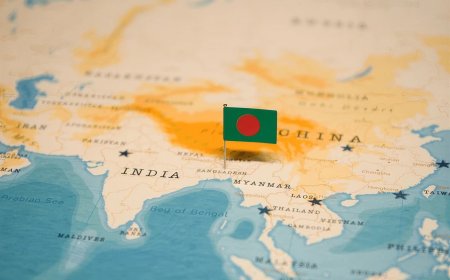
As Bangladesh stands at a crossroads of constitutional reform following a mass uprising, it also confronts the consequences of regional and global conflicts.
In this context, the significance of law in shaping transformation and progress cannot be overstated.
No human society -- domestic, regional, or global -- can be imagined without some form of order, and it is law that ensures and sustains that order. In many ways, law is like the air around us: Essential, yet often unnoticed until it is absent.
Accordingly, it is during times of conflict and crisis that both the need for legal protection and the consequences of its absence are most deeply felt. These are also the moments when law can become a crucial instrument of transformation.
We are living in a time when both the world around us and the nature and implications of conflict are changing at a breakneck speed.
Conflict today is no longer confined to traditional methods or geography, whether domestic or cross-border. Nor is it limited to politics alone; it increasingly relies upon -- and produces -- economic, technological, and environmental forces and consequences.
In Bangladesh, the constitutional order has been tested, not only today but over decades. Yet questions concerning legal and constitutional order often capture widespread public attention most sharply during times of crisis.
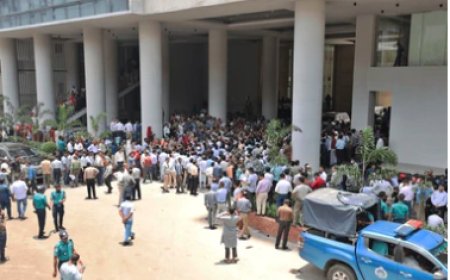
The events of July 2024 stand as a powerful illustration. A nationwide movement that led to the loss of more than a thousand lives -- including many young people and children -- and left thousands more injured and maimed raised fundamental questions about state power and accountability, as well as both the failure and reform of constitutional dispensation.
The events of the past two years remind us that conflict and political uprisings can themselves have profound constitutional significance.
They compel us to ask: What happens when institutions, the legal order, and the constitution fail? And how can law serve both as a check on power and as a pathway to conflict resolution, reform, and progress?
At the global level, ongoing tensions in Iran and the broader Middle East provide a similar reminder of the fragility of the international order.
The consequences of these conflicts extend far beyond their immediate geography, triggering fuel crises, economic instability, rising poverty, and many other long-term human costs -- challenges humanity has struggled for centuries to overcome.
The post-Second World War legal order, including the UN system governing the use of force, is being put to a critical test in so many ways.
The global and domestic experiences bring us not just to political questions but also to deeply important legal ones. Law is an instrument of both protection and progress. It protects rights, structures governance, and delivers justice.
Yet it can also be shaped by power and, at times, used in ways that undermine the very principles it seeks to uphold.
The challenges are further compounded by rapid transformations driven by science and technology. Technological advancements -- including the internet, digital media, artificial intelligence, and new forms of warfare -- are reshaping not only human existence but also the nature and consequences of conflict.
In Bangladesh, our recent experience offers vivid testimony to how digital media can be used not only as a tool of communication, but also as an instrument of censorship, repression, and the suppression of dissent, particularly as it happened during the July uprising.
The legal questions that arise are both urgent and far-reaching: How do we regulate technology effectively? How do we ensure that innovation serves humanity rather than undermines it?
This brings us to one of the foundational principles of legal systems: the rule of law -- both domestic and international. At the domestic level, it rests on the principle of equality before the law.
At the international level, it is grounded in the idea of the equal sovereignty of states, upon which the United Nations system was built.
Yet history -- and contemporary reality -- shows us that power and wealth often distort this aspiration. Some individuals are more equal than others, just as some states are more sovereign than others.
If legal systems, domestic and international, struggle today to ensure equality among unequals, how will they respond to a future in which technological power becomes even more concentrated -- in a few countries and, within them, in the hands of a few?
The importance of the rule of law has been recognized for centuries. What has long distinguished just governance from tyranny -- both within nations and globally -- is the rule of law. That insight remains as relevant today as ever. Where the rule of law prevails, we see stability, accountability, and progress.
Where it breaks down, we see horror, arbitrariness, and decline -- along with conflict, loss of life, and the destruction of societies, cultures, civilizations, and the environment.
Today, the rule of law faces myriad challenges. Across the world, we observe the expansion of executive authority and growing strain on judicial independence.
Here in Bangladesh, we have recently witnessed the rollback of important reforms aimed at strengthening judicial independence.
In many regions, democracy itself is under threat from populist movements that seek unchecked power, often at the expense of fundamental rights and freedoms.
In such environments, many individuals feel that there is no space for dissent and no protection against arbitrary authority.
The events in Bangladesh in 2024 demonstrated the powerful role that young people can play in shaping change, including legal and constitutional reform. Young people across the world will likewise be required to lead global change and progress.
Despite the scale of the challenges, there is reason for the audacity of hope. Law is not static; like people, society, and technology, it can evolve.
Every advance in rights, every institutional reform, and every step toward justice has been shaped by individuals who believed that change was possible. Hence, all our endeavors are part of that continuing journey.
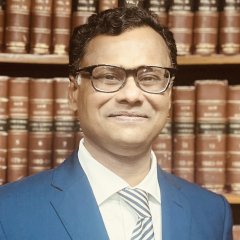
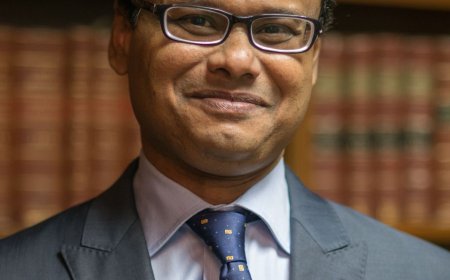
Dr. Sharif Bhuiyan is a Senior Advocate at the Supreme Court of Bangladesh. This article is based on a speech delivered by him as Chief Guest at the opening ceremony of a law spring school at the University of Asia Pacific on May 2, 2026.