



































































The Unseen Line: On Andrzej Bargiel, Everest, and the Geography of Ambition
The Western adventurer, armed with a historically cultivated obsession and corporate capital, comes to a land where the mountains are woven into the spiritual and daily life. He relies on the unparalleled skill and strength of the Sherpas, whose names are too often relegated to the fine print of history, to achieve a personal zenith.
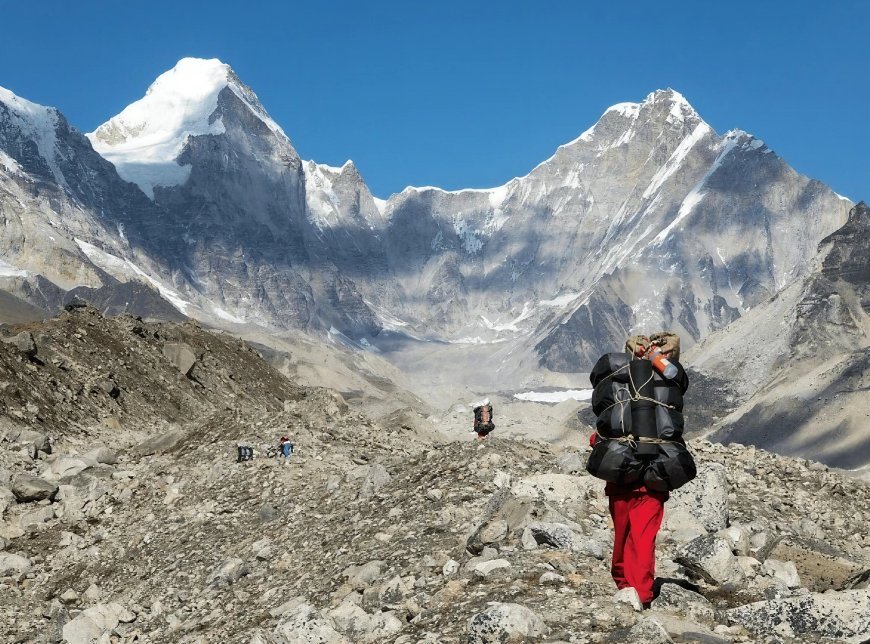
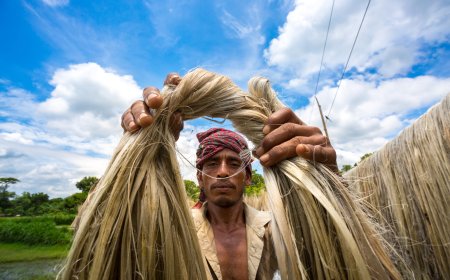
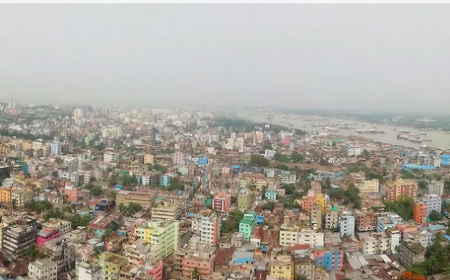
I am writing this in Nepal, but I carry the topography of Bangladesh in my bones -- a land of floodplains and rivers, an unrelenting flatness where the horizon is a soft line between water and sky. Life there is dictated by horizontality, by the flow of currents across vast plains. To come from that world and stand before the vertiginous geometry of the Himalayas is a sensory shock.
The mountains here are not just scenery; they are profound, overwhelming presences.
The news of Andrzej Bargiel’s feat -- climbing Mount Everest and skiing down from the summit to Base Camp without supplementary oxygen -- arrives here not as a distant headline, but as an echo in a sacred valley, a concept almost alien to my native sense of space. It is an almost unimaginable act, a blend of supreme athleticism and pure, terrifying audacity.
To picture him arcing turns in the Death Zone, where the body consumes itself and the mind frays, is to witness a form of human expression bordering on the sublime and the suicidal. It forces a question that has haunted me since I first gazed upon these peaks from my horizontal world: Why? What alchemy of spirit drives a person to seek such a perilous, vertical edge?
To understand, we must look beyond the ice and rock. In my review of Robert Macfarlane’s seminal work, Mountains of the Mind, I explored his powerful thesis: that mountains were once reviled as “monstrous excrescences of nature,”. The modern desire to conquer them is not innate but constructed, a product of shifting cultural tides -- Romanticism, the advent of geology, and the colonial impulse to map the unknown.
Bargiel’s descent is the logical, extreme endpoint of this centuries-long project. He is not just climbing a mountain; he is performing an idea forged in the West, the idea of the peak as the ultimate arena for self-testing. Macfarlane argues that this is a “history of the imagination,” and on Everest, imagination meets its absolute physical limit.
Yet, to stand in Nepal is to feel a dissonance. The Western narrative, so brilliantly chronicled by Macfarlane, often centres on the solitary hero, the individual will pitted against the elemental force. Here, that narrative crumbles like old moraine. The undeniable truth is that no Bargiel, no Messner, no Western climber can perform their feats without the Sherpa people.
Their role is the bedrock upon which all Himalayan ambition is built. They are the engineers of the possible, stringing the safety lines over gaping crevasses, bearing the burdens, and possessing a profound, ancestral knowledge of these mountains that no satellite map can replicate.
This brings us to the uncomfortable machinery behind the mystique. A feat like Bargiel’s, while personally astounding, does not occur in a financial vacuum. It is underwritten by corporate sponsorship, a fact we must confront. The logo of an energy drink giant is the silent partner in this dance with death.
This is the commodification of human endurance, where extreme courage becomes a vehicle for brand narrative. The mountain, once a sublime terror, is now also a backdrop for a commercial. This sponsorship is what transforms a personal dream into a logistically feasible mission, creating a stark divide between the funded explorer and the local for whom the mountain is simply home.
It begs the question: What are we truly celebrating? The human spirit, or its successful corporate branding?
So, we are left with a complex portrait. The Western adventurer, armed with a historically cultivated obsession and corporate capital, comes to a land where the mountains are woven into the spiritual and daily life. He relies on the unparalleled skill and strength of the Sherpas, whose names are too often relegated to the fine print of history, to achieve a personal zenith.
The feat itself is a breathtaking, legitimate human achievement, a push against a boundary that redefines what is possible. But it is also a symbol of a profound asymmetry.
Perhaps the meaning lies in holding both these truths at once. We can, and should, stand in awe of Andrzej Bargiel’s incredible ski down the roof of the world. The footage of his descent is a cinematic poem of human focus and grace under the most extreme duress. Simultaneously, we must use that awe to look deeper, to see the entire ecosystem of the feat -- the cultural history that propels it, the local labour that enables it, and the corporate engines that fund it.
The true summit, then, may not be a point on a map, but a point of understanding. As the mist swirls around the peaks outside my window, the mountains remain, immutable and silent. They care nothing for our sponsorships, our historical obsessions, or our records. They simply are.
The feats we perform upon them are ultimately stories we tell about ourselves -- our desires, our capacities, and our often-flawed relationships with the sacred, the wild, and each other. Bargiel’s line down Everest is a visible, brilliant scar upon the slope. The more important line, the one we must all trace, is the unseen one between celebration and critique, between a conqueror and a guest.
Zakir Kibria is a Bangladeshi writer, policy analyst and entrepreneur based in Kathmandu, Nepal. His email address is [email protected]