
































![A Ledger of the Soul: Navigating the Allah-Bhagavant Nexus in a 19th-Century Puruṣākāra Jñāna Caupara [Gyan Chauper]](https://counterpointbd.com/uploads/images/202608/image_430x256_6a93baa3b09a7.jpg)


















Why Four Streams Of Bangladesh’s Education System Must Become One
The products of English Medium schools are proficient in neither Bangla nor English and the situation is not too dissimilar in Bangla Medium schools.

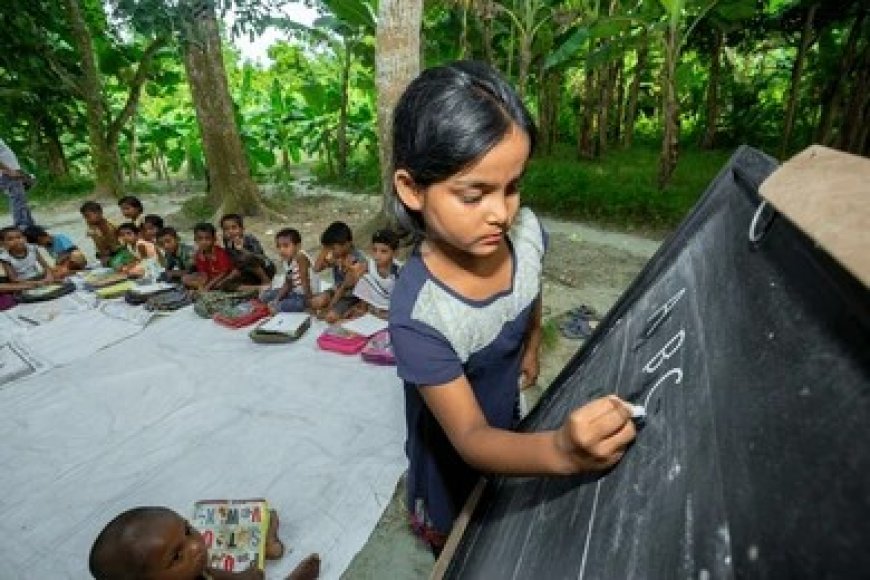
Has anyone ever wondered what four streams of education in Bangladesh are doing to our people from a very early age, not to mention what is happening to our Bangla language and our sense of national and social cohesion as a result?
Let me start by listing the four streams as Bangla Medium, English Version, English Medium, and Madrasa Medium; and by focusing on education up to the equivalent of 12 years of education, i.e. up to Higher Secondary level only.
Bangla Medium, the mainstream and largest track in the country is both public and private and follows Bangladesh’s National Curriculum and Textbook Board (NCTB). English Version is also both public and private and follows the same NCTB curriculum translated into English.
English Medium schools, on the other hand, are private businesses that are completely outside the Bangladeshi national board framework and follow the British international curricula primarily administered by Cambridge International Education (CIE) or Pearson Edexcel.
Madrasa Medium is divided into Alia Madrasas and Qawmi Madrasas. Alia Madrasas are mostly private institutions, supported by the government that blend theological education with modern secular subjects, and have their medium of instruction primarily as Bangla. For the secular subjects, they follow the NCTB whereas for theological subjects, they follow the curriculum managed by the state regulated Bangladesh Madrasah Education Board (BMEB).
Qawmi Madrasas are privately funded and independently operated institutions (often with boarding) that focus entirely on traditional Islamic jurisprudence, Arabic, Quranic memorization, and theology. They operate under their own independent boards like the Befaqul Madarisil Arabia Bangladesh, follow the Dars-e-Nizami curriculum, have their medium of instruction as Bangla, though the linguistic environment is deeply rooted in Arabic and Urdu.
I will now venture straight into the point of this article. This morass of an education system must be rationalized into a uniform structure, following the same curriculum and having the same medium of instruction.
As I mentioned earlier, my concern is up to HSC level only. This has been discussed in Bangladeshi circles before, but never has there been any form of consensus reached on the matter. I will endeavour to bring out some social and national matters that may get this discussion going again.
Before I do that however, let me put out my proposals.
I propose that massive investments be made to the Bangla Medium over the next few years and decades to make other streams of education in the country obsolete. There will remain an international school or two in Dhaka and other large cities for children of foreign diplomats, foreign businesspeople, and any returning Bangladeshi expats from the West. They will be part of the international chain available in almost every country. But the aim must be to educate all Bangladeshi children in a new Bangla Medium up to HSC level.
Gone should be kindergartens, pre-primaries, and what not. Every child should mandatorily attend Class 1 through 12 preferably in the same educational institution. Our indigenous children in the hills should be taught their languages properly along with contents of the NCTB in Bangla.
These twelve years of education must be considered a basic human right and the state must take special responsibility here. The partial socialist in me wishes to see all private institutions disappear and the state provide the first twelve years of education to all for free. Whether this is even remotely a possibility remains a huge question and will not be the topic of discussion here.
The topic here instead will be for all to study the same thing in the same manner for the first twelve years. This may well have to be in a collaborative environment between the public and private sector. There should be no specialization by choosing groups of subjects towards the end of this period.
Does the teaching of English disappear in this new proposed world? Absolutely not. What this new world will demonstrate to all is that Bangladesh does not need the mushrooming money-making English Medium entities to teach English to our children. The language can be and will be taught in Bangla schools as a second language effectively, using modern techniques and concepts.
This could start at Class 3 (only a suggestion) and will progressively equip every Bangladeshi child to, by the time they finish Class 12, communicate in English, verbally and in written form to a high standard, progressively integrating them into the global village through the cyber world, smart devices, media, social media and optional higher education either at home or abroad.
The old methods of teaching English through obsessive focus on grammar and rote learning should be binned forever. The purpose of learning English in Bangladesh should be framed clearly. It should be to enable every person to communicate effectively with the outside world when necessary and equip them to pursue further knowledge, expertise, certifications and degrees in the English language if so desired or required, when they complete their HSCs.
Therefore, teaching communicational English must be the main focus, along with the foundations to specialize in the future for English for Science, Engineering, Mathematics, Information Technology or Business. English Literature need not be taught other than at the introductory level. Bangladesh does not need it. Charles Dickens or Shakespeare for us? Not really.
Where does religious teaching fit into this picture? I will unabashedly state that of the two Madrasa systems, Qawmi madrasa is the most useless and harmful one, that does not equip a single student in those places of so-called learning for the modern world. It is the state’s failure that poor parents and guardians of orphans often have often no choice but to send children to these places of abuse and years of waste.
Previous governments have attempted to bring Qawmi Madrasas under regulation to no avail, due to the political clout of Hefazat-e-Islam, the religious group that is the spiritual and organizational leader of these institutions. Bangladesh must confront this reality sooner rather than later and aim to channel the education of children attending or boarding at these places, away and into the mainstream Bangla education.
Alia Madrasas on the other hand deserve consideration. If those places can be modernized exactly in tandem with the Bangla schools, keeping their religious curriculum intact or modernized if needed, it is conceivable that those institutions can remain an accompaniment to the mainstream education in Bangladesh. I will not campaign for their disappearance. I will however vociferously do so for Bangladesh’s Qawmi Madrasas, English Versions, and all the English Medium schools -- and for good reason.
Before I do that however, let me layout further the goals of the twelve years of education of our children. This is where much discussion is currently going on under the auspices of the new government and where I too would like to chime in. I have already mentioned English being taught as second language in our Bangla schools, detailing its purpose.
It is important that religious teachings be left to the Alia Madrasas and not to the mainstream Bangla schools. Education in the latter must be purely secular with a focus on the future. This is important to create a congenial atmosphere for non-Muslim children and a universal environment for all.
Earlier in this article, I referred to some social and national matters that I promised to return to. I will combine them now with what else I would like to see in the new education system and why I would like to see Qawmi Madrasas, English Versions and all the English Medium schools made obsolete.
First of all, the new Bangla curriculum must have three main goals:
1) To create a sense of being Bangladeshi and Bengali (or indigenous) among the youth through our independence history, Bangla literature, poetry, music, dance and cottage industry (with indigenous variations where needed).
2) To create good, productive and healthy citizens through social studies, vocational education, lifestyle knowledge, and sports.
3) To prepare children for what could lie ahead after class 12, by building in them foundational mathematical, scientific and IT skills including AI.
For teaching methods, I strongly recommend studying the norm in Finland and adapting it to the realities of Bangladesh. There must be no rote learning other than learning the alphabet, numbers, and numerical tables. Analysis, investigation, research and creative projects must be the rule of the day.
By the time a student is ready to face the world after Class 12, she or he should be fluent in flawless Bangla and English, both in spoken and written form, and be able to present themselves or defend themselves in any environment. Curiosity and critical thinking must be ingrained into every pupil.
Is this what is happening now in Bangladesh? An emphatic NO. One way to judge is by listening to how students speak; and observing how they write on social media. Let’s take the use of their Bangla language first.
Not just students, but some academics, politicians, businesspeople, some media people, doctors, engineers and influencers cannot string a single Bangla sentence together without using English words for which perfectly usable Bangla words exist. Earlier, this trend was noticeable in spoken form only, but these days it is increasingly prevalent in written form too.
Dig deeper and you will see that these people actually do not know the Bangla word since the tendency to insert the English word overtime hides the Bangla word from our collective consciousness. One may attribute this to the fluidity and live nature of a language. I will attribute this to one’s inferiority complex about Bangla, its words, its richness, beauty, and history.
The British era created a class of English-speaking Babus to act as an intermediary between the British rulers and the masses. The Babus over time assumed a class above the rest, ingraining into the masses that using English was a matter of higher social being.
In independent Bangladesh, whoever can afford to it, send their children to the private English medium schools mentioned earlier thinking that that is the passport to a future. While this is the result of the total failure of mainstream Bangla education, one must stop to ponder its effects.
I do not generalize when I say that those money-making businesses are assembly lines for creating pupils who hate their own country, heritage, language, culture, music and are programmed to fly out to the West at the earliest achievement of A-levels.
Listening to their views about themselves and their country makes me gulp. Listening to their Bangla makes me reach for the kerosene. And since the country’s middle and upper class tend to dominate social trends in Bangladesh (or anywhere), their horrid way of speaking the language, which is basically half English, finds itself slowly permeating through to the remaining strata of the society.
Let’s now take the use of their English language second. One may think that their command of English is superb, owing to attending an English medium school. Generally, NO. I have noticed far too many incorrect uses of English, not to mention unorthodox pronunciations of many words.
The products of English Medium schools are proficient in neither Bangla nor English and the situation is not too dissimilar in Bangla Medium schools. So much for rote learning. And why do we need the English Version of NCTB in our country? What does that say about the status we give to Bangla, a language we fought and died for and the struggle for which sowed the seeds for Bangladesh’s creation?
Madrasa students? I cannot even comprehend what most of them are saying when they speak Bangla. Indoctrinated in an Arabic/Urdu centred linguistic environment, what Bangla they do master is incomprehensible and incomplete, void of any Bengali cultural context.
After all, the subliminal message they are bombarded with in Madrasas is that Bengali culture is quintessentially a Hindu culture and therefore must be shunned as much as possible. Some of them see Indian cultural hegemony in all this too.
In the article titled “The Identity Crisis of Bengali Muslims in Bangladesh” published in this newspaper on June 1, the author Dr. Selim Raihan explained that when young people are educated primarily within frameworks that give limited space to Bengali cultural history, pluralistic traditions, critical historical inquiry, or the civic meaning of Liberation War, their sense of belonging may become narrower. Yes, this is exactly the predicament we find Qawmi Madrasa students and some English Medium students in.
I am particularly disturbed by his assessment of a new rising middle class, made of upwardly mobile people with resources from remittances, overseas labour, small-scale trade, construction, transport and service-sector activities linked to migrant income, that tend to send their children to English Medium schools while at the same time support religious institutions, presumably Qawmi Madrasas.
So, what is happening to Bangladesh through this circus of an education system? We are dividing up the country into groups based on the stream of education we subject them to; and we are doing this to pupils from a very early age.
These groups remain segregated within their own economic ghettos, lifestyles, viewpoints, cultural ethos, religiosity and contempt for one another until some of them come into contact with each other either at the Mosque, at the University level, at employment, or abroad.
For many, their stream of education only gets reinforced onto their next generation. That is a sad state of affairs.
Where are the socialists calling for equality among all country people? Is this the Bangladesh that our freedom fighters dreamt of -- a country that has an education system that reinforces an evil class system -- a system that restricts real agency only to the top of that artificial ladder, while rendering the rest of the population into second or third tier expendables?
A unified education system isn’t just a national and cultural necessity, for it is also an economic equalizer.
Riaz Osmani is a political and social analyst.