


















































Three Million or Three Hundred Thousand?
Seeking a clearer understanding of history does not diminish the legacy of the Liberation War, but honors it more completely. A nation willing to examine its past with honesty shows confidence in its own story.

Where Numbers Define National Memory
In the aftermath of a war, the figures do not remain mere figures. They acquire a deeper significance as they become symbols of sorrow, markers of tragedy, and significant components of national identity.
They help people cope with the trauma of the experience by providing a form to remember.
In the case of the 1971 Liberation War, the widely cited figure of three million martyrs has long stood as a symbol of the immense human tragedy endured by the people of Bangladesh.
However, behind this figure lies a sensitive and complex historical issue. In recent times, many individuals and writers have raised concerns about this figure and whether it was arrived at with proper documentation.
According to available historical records, Sheikh Mujibur Rahman is believed to have referred to this figure during a stopover in London in January 1972, shortly after his release from imprisonment in Pakistan.
It is also suggested that Sirajur Rahman may have let him know the actual figure could have been much lower, around 300,000.
In the emotionally charged, politically uncertain atmosphere of a newly independent nation, the figure may have been stated unintentionally -- or perhaps deliberately as three million.
Over time, it became deeply embedded in national consciousness and widely accepted as fact.
However, even after more than five decades, there has been no comprehensive, transparent, and methodologically rigorous effort to reassess and verify the actual number of lives lost.
The re-checking of history to ensure accuracy does not diminish the level of sacrifice; rather, it reinforces the moral foundation on which a nation establishes its history.
In modern Bangladesh, the real question is not one of numbers; rather, it is one of memory and how that memory is established. When memory is founded on truth, it does not diminish a nation; rather, it establishes a sense of dignity within it.
Inaccuracy and dishonesty in history are not merely a disservice to the present; rather, they are a disservice to future generations that will seek to look back on history to establish a sense of their own past.
The London Moment
The context in which this information was shared with Sheikh Mujibur Rahman, as he came out from his long period of seclusion and imprisonment in one of the bloodiest wars in the history of South Asia, has to be understood in all its complexity. Bangladesh was in ruins, its infrastructure destroyed, its people traumatized, and its administration in shambles.
It was in this context that Sirajur Rahman, BBC Bangla, reportedly shared this figure with Sheikh Mujibur Rahman, an estimate ranging from 30,000 to 300,000 deaths based on available, though incomplete, information.
Facts and figures were in short supply in this environment, and even the number of casualties was highly speculative, based on incomplete reports, hearsay, and initial journalistic reports.
However, as Sheikh Mujibur Rahman went to speak to journalists, he declared that three million people had been killed in this conflict. To what extent this was an exaggeration to convey the scale of the human catastrophe, to what extent this was an error, and to what extent this was an expression based on emotions, grief, and trauma, is debatable.
What is, however, clear is that once this figure was shared with journalists, it instantly acquired an aura of authority.
From Estimate to Orthodoxy
As this figure emerged in the public sphere, it would not remain an estimate but would instantly be endowed with orthodoxy, as it would be represented in written texts, speeches, or even advocacy campaigns. It would instantly acquire a new dimension, as it would no longer be a figure in the tragedy of humanity but would also symbolize the moral legitimacy of the independence movement in Bangladesh.
This process of institutionalization was not unique in Bangladesh. It is a general phenomenon that after conflicts, estimates made in an atmosphere of uncertainty tend to be treated as historical facts. However, this figure remained uninvestigated in Bangladesh due to a lack of verification over the years.
The result has been the development of a paradox: A country deeply committed to honoring its martyrs, yet unwilling to seriously engage in the empirical research required to determine the exact number of martyrs.
The Politics of Numbers
In the context of national trauma, numbers are rarely dispassionate. They are more like tools of memory, identity, and political legitimacy. In Bangladesh, the figure of three million has served as a unifying symbol, reinforcing the idea of unparalleled sacrifice and heroism.
At the same time, the figure of three million has also become politically sensitive. To question the figure has come to be seen as a challenge to the nation’s identity, or even the legitimacy of the Liberation War itself. It has created a situation wherein academic freedom has had to operate at the expense of the truth.
In any case, history has shown us that truth and national dignity are not at cross-purposes. A nation’s strength does not reside in the rigidity of its ideology, but rather in the freedom of its engagement with history.
Reconstructing the Record
In the more than half a century since the birth of Bangladesh, the question arises: Can Bangladesh seriously engage in the process of accurately determining the number of martyrs it had during the war?
The answer, of course, is complex. On the one hand, the passage of time since the war has led to the loss of many original sources. On the other hand, the development of new research techniques has made it possible to more accurately determine the number of martyrs.
A concerted national drive involving local government authorities, historians, and researchers can undertake a bottom-up approach to collect data and statistics from villages, unions, and districts. A more informed estimate can thus be made. This drive is not about downplaying the extent of the sacrifice. It is about ensuring that national memory and history converge to make each stronger.
Global Comparisons
This is not the first instance in which statements made by a nations political leaders, especially in times of crisis, have shaped the course of history to such an extent that they are later reevaluated.
Joseph Stalin ruled over a regime where statistics concerning the number of casualties during World War II were carefully controlled and even manipulated. It is only after decades that more informed estimates have been made.
Likewise, under Mao Zedong’s rule, statistics on the Great Leap Forward were much lower than they were due to political factors. Later research revealed that the statistics were much worse than had been made to seem.
In the US, too, Donald Trump’s claims about statistics and other numerical data were quickly disputed.
Thus, even in a democracy, such statements have far-reaching effects. This is to say that when statistics and numerical data become so politicized that they need correction, it is much more important that they be corrected.
Silence and Its Consequences
In Bangladesh, the unwillingness to revisit the martyr figure has led to a kind of historical silence. However, there are risks associated with the motivation behind the silence, which aims to maintain unity and respect for the past.
Unexplored narratives have the potential to undermine a nations academic credentials, generate external skepticism, and limit the breadth of intellectual inquiry.
Most importantly, they may prevent the in-depth exploration of the human aspect of conflict-reducing individual stories of loss and lead to an abstract, potentially false aggregate figure.
A critical approach to history is essential and requires moving beyond silence toward informed, evidence-based engagement.
Toward Truth with Dignity
Reevaluating the number of martyrs is not in any way lessening the importance of Bangladesh’s Liberation War, but rather paying tribute to it in an honest manner.
Be it 30,000, be it 300,000, or be it any other number, the suffering of people in Bangladesh is significant in any case.
What is needed is a non-partisan and independent commission of inquiry tasked with examining the evidence, conducting a transparent, evidence-based inquiry, and reporting its findings.
Correcting a historical figure, wherever necessary, should not be construed as a betrayal but as an act of intellectual integrity and maturity.
Remembering Honestly, Honoring Fully
The period of the 1971 Liberation War is arguably the most defining in the history of Bangladesh, a time of unparalleled bravery, sacrifice, and determination by a people who sought freedom at all costs. The significance of the period cannot be based on any one person or entity, however powerful, but on the actual events, struggles, and strength of the people who created a nation.
Seeking a clearer understanding of history does not diminish the legacy of the Liberation War, but honors it more completely. A nation willing to examine its past with honesty shows confidence in its own story.
In this light, revisiting and refining historical narratives is not an act of revisionism, but one of respect for those who sacrificed, for those who live today, and for future generations.
Respecting the former Prime Minister Khaleda Zia's stated commitment to uphold factual accuracy, the responsibility now lies with leaders and institutions to ensure that truth is neither overlooked nor postponed. In the end, truth does not weaken a nation it elevates it.
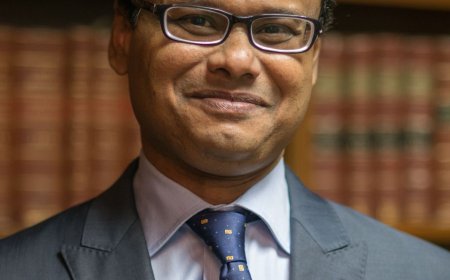
Dr Serajul I Bhuiyan is a professor and former chair of the department of Journalism and Mass Communications at Savanah State University, Savannah, Georgia, USA.