









































































Hasina Fires Blanks from New Delhi
Some analysts argue that Hasina may continue to serve as a strategic political asset in India’s Bangladesh policy, reflecting a Kautilyan approach that could be summarised as: “You have China; we have Hasina.”

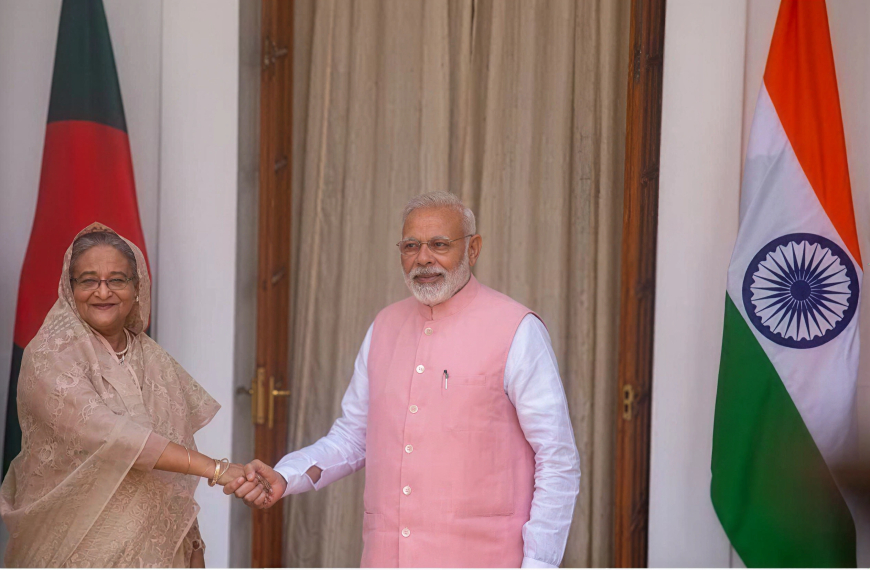
On July 10, the fugitive Sheikh Hasina, speaking from the safety of India, gave an interview to Reuters in which she declared her intention to return to Bangladesh this December, accompanied by several senior outlawed Awami League leaders who are also hiding abroad. The statement reportedly received wide international publicity.
Hasina acknowledged that she was fully aware of the consequences of such a return, including the possibility of arrest and, as she put it, “judicial murder.”
Given the political sensitivity of the matter, it is reasonable to assume that such a high-profile declaration was made only after careful consideration and, one assumes, with the knowledge of the relevant Indian authorities.
Predictably, her announcement -- however implausible many may consider it -- has triggered intense debate across Bangladesh. Television talk shows and social media platforms have been inundated with speculation and political commentary.
Public opinion appears deeply divided: A substantial majority opposes her return, an estimated 20-25% would welcome it, while a smaller segment remains indifferent.
Whether Hasina can actually return to Bangladesh is another matter altogether. Such a move would be fraught with formidable legal, political, diplomatic, and security challenges.
First, she reportedly possesses no valid Bangladeshi passport or travel document. Second, having left Bangladesh under highly controversial circumstances, questions may arise regarding her legal status under the country’s immigration laws.
Third, it remains uncertain whether the Indian government, given the security implications surrounding her, would facilitate or permit such a return.
Fourth, her physical presence in Bangladesh would almost certainly create an unprecedented law-and-order challenge, with the potential for serious confrontations between supporters and opponents.
Even if her return were somehow facilitated through an understanding between the two governments, her legal situation would remain unchanged. Having already been convicted in Bangladesh, she would almost certainly be taken into custody pending the disposition of the cases against her.
The government, in turn, would face the enormous responsibility of ensuring her safety under extraordinary security arrangements. Politically and administratively, she would become an exceptionally difficult figure to manage. It is equally difficult to envisage the President extending executive clemency in her case.
The more intriguing question, however, is why she chose this particular moment to make such a declaration. In my mind, the following motivating factors worked to undertake the step-
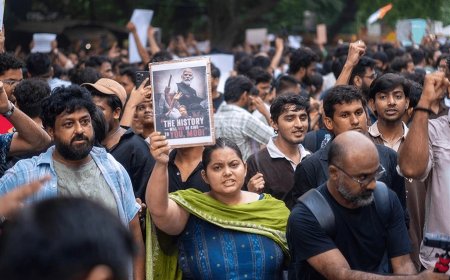
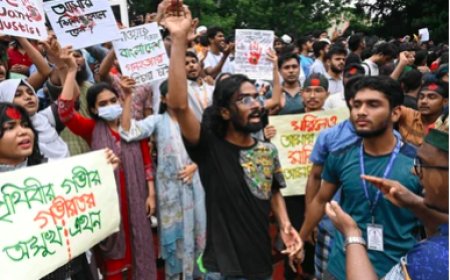
First, the month of July has acquired profound political significance since the student-led uprising that culminated in her removal from power two years ago. It's a month that evokes a melancholic psychological defeat for her and a possible end of her political career. Her announcement appears calculated to overshadow or diminish the symbolic importance of that movement.
Second, it came shortly after Prime Minister Tarique Rahman’s successful visit to China, a timing that could be interpreted as an attempt to divert public attention from an important diplomatic development.
Third, with the 81st session of the United Nations General Assembly commencing in September, some international actors may seek to revive discussions concerning Bangladesh’s political situation.
Fourth, local government elections are expected to begin in October. Her declaration could serve to re-energize the outlawed Awami League supporters and encourage greater political mobilization.
Finally, by announcing her intended return in December, she has effectively injected uncertainty into the country’s Victory Month celebrations. Whether or not she ultimately returns, the prolonged speculation itself may become a political instrument, energising her supporters and keeping her at the centre of national discourse.
For these reasons, the government should not dismiss the announcement as mere political rhetoric. It would be prudent to maintain an appropriate level of security vigilance and political preparedness. Underestimating the potential consequences could prove costly.
At the same time, the government should closely monitor the evolving political strategies of all major parties, including Jamaat-e-Islami. Bangladesh’s political history demonstrates that alliances often shift according to political expediency rather than enduring ideological commitments.
The experience of the mid-1990s serves as a reminder that unexpected political realignments are always possible.
There is also a broader geo-political dimension to this episode. Some observers may interpret the timing of Hasina’s declaration through the prism of evolving Bangladesh-India-China relations.
Prime Minister Tarique Rahman’s decision to prioritise China for a major bilateral visit, coupled with the absence of any indication of an early visit to India, has inevitably generated speculation regarding New Delhi’s strategic calculations.
Within this framework, some analysts argue that Hasina may continue to serve as a strategic political asset in India’s Bangladesh policy, reflecting a Kautilyan approach that could be summarised as: “You have China; we have Hasina.”
Whether this interpretation proves accurate remains to be seen. Between now and December, Bangladesh’s political landscape is likely to witness considerable speculation, strategic manoeuvring, and heightened public attention.
Whether Hasina’s declaration ultimately proves to be a genuine political initiative or merely another psychological operation will only become clear with time.
The author is a former Secretary to the Government and Ambassador.