












































![A Ledger of the Soul: Navigating the Allah-Bhagavant Nexus in a 19th-Century Puruṣākāra Jñāna Caupara [Gyan Chauper]](https://counterpointbd.com/uploads/images/202608/image_430x256_6a93baa3b09a7.jpg)






















Omar Shehab is a theoretical quantum computer scientist whose work bridges quantum algorithms, complexity theory, and programming languages for quantum computers. He earned his Ph.D. in Computer Science from the University of Maryland, Baltimore County in 2016, following undergraduate studies at Shahjalal University of Science & Technology. He has held research and teaching positions at the University of Southern California’s Information Sciences Institute, the U.S. Army Research Lab, and UMBC, where he taught theoretical computer science and quantum computing. At IonQ, Shehab focuses on developing methods to effectively harness trapped-ion quantum computers, with particular interest in hybrid quantum–classical architectures and identifying problems where quantum speedups can be realized. Currently, at IBM Thomas J Watson Research Center, Shehab is working on average-case hardness of quantum algorithms and quantum complexity theory. He has published extensively, contributed to patent applications, and delivered invited talks. His research has been funded by NASA, Department of Energy, and DARPA.
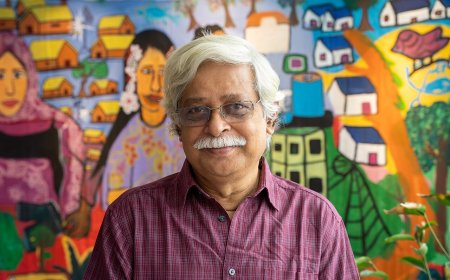
For decades, Bangladesh placed some of its heaviest moral burdens on Muhammed Zafar Iqbal's shoulders. When students needed someone, we called him. When science needed a champion, we called him. When education failed, we expected him to protest.

Bangladesh needs emergency protocols that operate before photographs go viral, independent technical review of every national question paper, public disclosure of examination failures, and a transparent remedy for affected candidates.

Why should this matter to Bangladeshi readers? The future of high-performance computing will likely be led by the United States and China.

A country becomes innovative not when its officials announce innovation, but when its inventors no longer need to beg them for the right to build.

The real problem is not device ownership. It is device access. And how you design that difference determines whether a policy quietly succeeds or loudly fails

He can keep the portfolio as a badge of party confidence. Or he can turn it into something rarer in our politics: A record. And if he wants that record to mean anything, he should begin by demanding answers from Facebook and YouTube.

If Bangladesh builds an SPR, it must not repeat either failure mode: Not scarcity through neglect, and not expansion without scrutiny. That, finally, is the real argument for a Bangladeshi reserve. Not a monument. Not another expensive ribbon-cutting exercise. A shield.

The education system of Bangladesh is not merely a ministry. It is one of the largest social systems in the world. Running such a system is not simply a policy challenge. It is an administrative challenge of almost unimaginable scale.
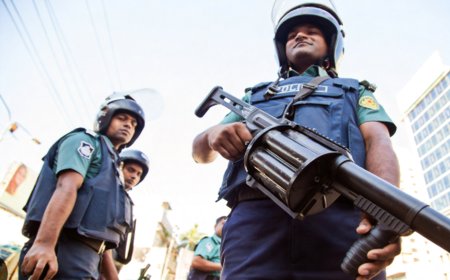
If unlawful killings by police are prosecuted while unlawful killings of police are ignored, the law becomes partisan. If mob killings are investigated while state killings are diluted, the law becomes cynical.

Who is the Facebook or Instagram of this era? Which AI platforms are being deployed into children’s bedrooms, classrooms and social lives without full transparency about internal research? Which companies are already measuring how certain prompts, filters or recommendation engines affect adolescent self-image, loneliness, or compulsive use?
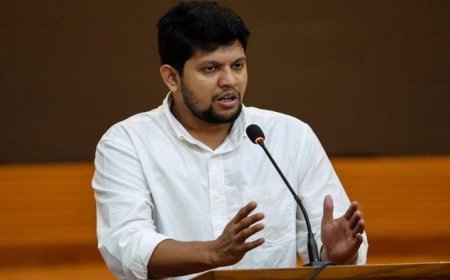
Second chances are possible. But history does not reward clever positioning or carefully worded distance. It honors courage, sacrifice, and fidelity to truth -- especially inconvenient truth.

Governments have changed. Elections have come and gone. Political narratives have shifted -- sometimes dramatically. Yet NCTB has remained reliably unable to perform its most basic function.

That is the real horror. If one clearly innocent doctor required thirteen layers of influence to secure bail, how many other innocent people are still inside -- unseen, unheard, and unrescued?

On this day, Bangladesh did not yet know what it would become. It only knew what it had endured. The newspapers recorded surrender, denial, diplomacy, return, and rebirth. The people carried something else entirely -- a heavy, wordless knowledge of survival. That knowledge, more than any headline, is what remains.

Neither Tarique Rahman nor Sajeeb Wazed Joy can claim moral leadership without embracing financial transparency. They owe the public answers not because they are accused men, but because they are influential men. They owe the public honesty because they seek to shape the future of Bangladesh.

If our leaders want to know where this road leads, they do not need to look far. Pakistan chose the path of appeasing extremists. The consequences have been catastrophic.