











































![A Ledger of the Soul: Navigating the Allah-Bhagavant Nexus in a 19th-Century Puruṣākāra Jñāna Caupara [Gyan Chauper]](https://counterpointbd.com/uploads/images/202608/image_430x256_6a93baa3b09a7.jpg)



















The Destruction of Islami Bank. And How to Fix It.
It is tempting, to view such a crisis as an aberration, an unfortunate deviation from an otherwise sound system. What has occurred at Islami Bank Bangladesh was not accidental; it was the predictable outcome of unchecked authority and weakened institutions

There was a time when Islami Bank Bangladesh PLC stood as a benchmark of integrity, an institution that fused financial discipline with the ethical promise of Islamic banking.
Its rise was not accidental; it was built on trust, professionalism, and a reputation for prudent stewardship. Today, that legacy stands profoundly diminished, not by market forces alone, but by years of deliberate institutional erosion.
What has unfolded since 2017 is not merely a story of mismanagement. It is a cautionary tale of how power, when left unchecked, can systematically hollow out even the most respected institutions.
Following a controversial restructuring of the board, widely believed to have been enabled through political alignment, the bank’s leadership was abruptly dismantled and reconstituted. Experienced professionals were sidelined, governance safeguards weakened, and a new hierarchy installed, one defined less by competence than by loyalty.
From that moment onward, the character of the institution began to change.
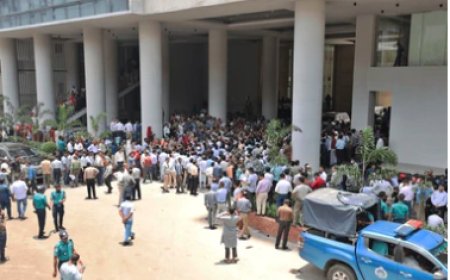
Recruitment, once governed by transparency and merit, reportedly descended into opacity and arbitrariness. Between 2017 and 2024, approximately 10,000 employees were hired, many without public advertisements, standardized examinations, or credible evaluation processes.
This was not strategic expansion; it was indiscriminate accumulation. More troubling still were reports that individuals with little or no background in finance, including shopkeepers, domestic workers, drivers, and day labourers, were placed into roles requiring technical expertise.
This is not a question of inclusion. Expanding access to employment is a laudable goal. But inclusion without qualification, due process, or accountability does not empower; it destabilizes.
Banking is a precision-driven industry, and when competence is replaced with convenience, failure becomes inevitable.
Equally disquieting are allegations of regional concentration and overt favoritism. Recruitment appears to have been disproportionately drawn from specific localities linked to influential figures.
The reported use of informal channels, such as localized collection of résumés, suggests a system that resembles a patronage network more than a professional human resources framework. Institutions cease to function when merit yields to proximity.
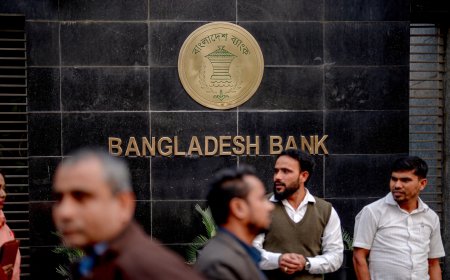
The consequences are no longer abstract; they are measurable and severe. According to Bangladesh Bank, non-performing loans at the bank have surged beyond 40% of total lending, an alarming figure by any standard.
At the same time, allegations of large-scale loan irregularities and capital flight, now under investigation by the Anti-Corruption Commission, have further eroded public confidence.
Yet it would be a mistake to treat these developments as isolated failures.
The recruitment scandal, as egregious as it is, represents only one facet of a broader institutional breakdown. At its core lies a profound failure of governance, where internal checks were dismantled, oversight proved inadequate, and institutional autonomy was subordinated to concentrated interests.
Recruitment irregularities, questionable lending practices, and financial leakage were not discrete events; they were interconnected manifestations of a system that had ceased to operate in the public interest.
And in banking, once trust is compromised, everything else begins to unravel.
The path to recovery, therefore, demands more than incremental reform. It requires clarity of purpose, institutional courage, and an uncompromising commitment to accountability.
First, workforce rationalization is unavoidable. An institution burdened with thousands of improperly vetted employees cannot remain viable.
Difficult as it may be, competency-based assessments must proceed, and those unable to meet professional standards must be transitioned out through lawful and transparent processes.
Second, the bank’s distressed assets must be isolated. Transferring non-performing loans to an independent asset management structure would allow the core institution to regain operational focus.
International precedents from post-crisis Indonesia to South Korea demonstrate that such measures, when executed with discipline, can restore financial stability.
Third, governance must be fundamentally restructured. Ownership concentration should be strictly limited, independent directors must exercise genuine oversight, and regulators must act as vigilant custodians rather than passive observers.
Reactive supervision is no longer sufficient.
Fourth, depositor confidence must be safeguarded above all else. Banking ultimately rests on trust. Any indication that those responsible for past abuse might regain influence would not merely undermine reform; it would extinguish it.
Finally, the broader framework of Islamic banking requires strengthening. Its foundation rests on principles of transparency, fairness, and ethical conduct. Without robust regulatory architecture and credible Shariah oversight, those principles risk becoming symbolic rather than substantive.
It is tempting, in moments like this, to view such a crisis as an aberration, an unfortunate deviation from an otherwise sound system. That would be a grave misreading. What has occurred at Islami Bank Bangladesh was not accidental; it was the predictable outcome of unchecked authority and weakened institutions.
The path forward is difficult, but it is clear. The question is no longer whether the bank can be restored; it can. The real question is whether there exist political will and institutional resolve to ensure that it is restored properly.
Because rebuilding a bank is ultimately a technical challenge.
Rebuilding trust is not.
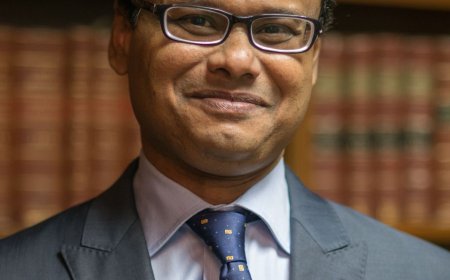
Dr Mohammad Nakibur Rahman is a professor of Finance at the University of North Carolina and the US spokesperson for Jamaat-e-Islami Bangladesh.