





























































In fact, for an American diplomat, Ambassador Peters sometimes sounded remarkably like a demanding Bengali mother: Bangladesh is already one of the ten most populous countries in the world, so naturally nothing short of becoming a top-ten country in every other respect should be acceptable.
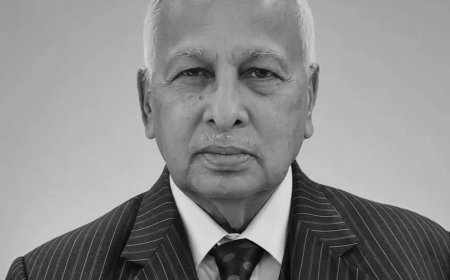
He understood that the success of North South University would serve as a practical demonstration that the newly enacted legislation would help develop Bangladesh. After all, he had been instrumental in helping create the legal framework that made the institution possible.
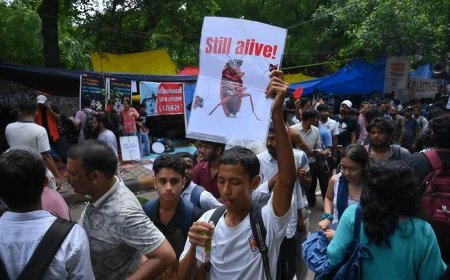
A more instructive comparison is India’s own protest wave of the mid-1970s -- and the political reckoning it produced for former Prime Minister Indira Gandhi.
If autonomy matters only in relation to one great power while compliance with another is rebranded as "technical cooperation," then Bangladesh has not escaped dependency. It has merely changed its address.
Everyone knows that to understand the legal nitty gritty is not everybody’s cup of tea. But everybody at least is entitled to one's common sense.
The real question is whether Israel can remain the kind of Israel that the world has known for the past half-century without American power standing behind it. On that question, the evidence points in only one direction.

AI is moving faster than any of them. The question is not whether algorithms belong anywhere near the battlefield. The question is who decides where the line is -- and whether anyone is really drawing it at all.

The goal is to have a unified and cohesive story, an antithesis to the common phenomenon of students accumulating certificates like trophies, so that when they finally face their goal, the student does not essentially become a detriment to the system.

International law and global stability are not distant abstractions for Bangladesh but essential pillars of economic resilience and national planning.
For the first time in decades, the United States risks strategic isolation within its own alliance network. If the United States is perceived as an unreliable negotiating partner, future mediation efforts -- both in the Middle East and beyond -- may suffer.

What we may be witnessing is not the eruption of uncontrolled conflict -- but a controlled application of force designed to close a 30-year nuclear standoff. History will not judge this moment by the explosions. It will judge it by what follows them.

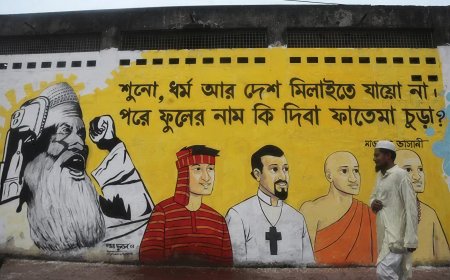
Certain cultural celebrations are deemed sinful by a segment, and overt religiousness seems inconsistent with culture by another group. Even in my own clan, I have seen relatives disown placing wreaths on the Shahid Minar as un-Islamic, versus those who believe that wearing a headscarf or burqa is being culturally backwards. However, I am grateful to have a place in the US where I can offer my prayers in Arabic and then pay respect to those who died defending the Bengali language, all on the same ground.
The question now is not only how America will wield its power, but how the rest of the world will respond to a superpower increasingly guided by transactional interests rather than shared norms.

The US has accidentally left a vacuum that Europe has been taking advantage of to establish itself as a geopolitical power. Europe does not have to remain hooked to the shackles of the dependency that was the Cold War, but now, it can move in its own direction and make new alliances and address what concerns it.
This is not peace. And it is not war. It is the controlled demolition of the Sykes-Picot agreement in favour of an integrated Middle East. Iran is reshaping its internal power structure and regional posture. The Middle East is not descending into chaos. It is being reorganized.
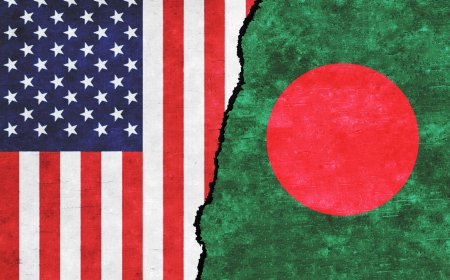
All things considered, it's remarkable that Bangladesh -- by no means a US ally or top partner -- is where it is right now: In a relatively stable place with one of the most unconventional and unpredictable US administrations in recent memory.