


































































Solving the Problem of Insolvent Banks
Unless we bail out bank depositors, we might experience bank runs, which could lead to economic collapse.


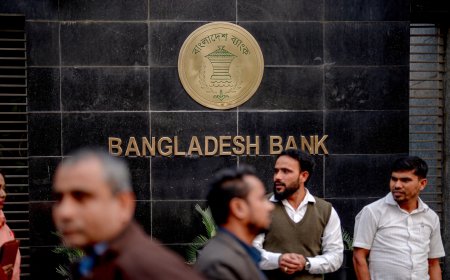
Newspapers have reported that Islami Bank recently faced a crisis of confidence. Depositors withdrew billions of Taka over just a few weeks in June. The surge in withdrawals was triggered by the appointment of Khurshid Alam as chairman of Islami Bank.
Khurshid Alam was rumored to be linked to the powerful S. Alam group, which controlled and looted Islami Bank during the AL regime. When the public no longer trusts a bank, and withdraws deposits en masse, the bank will eventually run out of cash.
Banking is the business of lending depositors’ money to companies and consumers. No bank in the world has enough cash in their vaults to return more than a small fraction of their depositors’ money.
When the loss of depositor confidence leads to massive withdrawals, a bank may experience a bank run. A bank run is when a bank is forced to close its branches because a large number of depositors have unexpectedly withdrawn money, and it has run out of cash.
A bank run usually leads to a further loss of confidence, which can lead to the bank being shut down.
The governor of the central bank has said that Tk 13,000 crore (Tk 130 billion) has been lent to Islami Bank. This action probably prevented a run on Islami Bank.
Khurshid Alam has been removed, but the real problem has not been remedied. Islami Bank is insolvent. On June 7, newspapers reported that Islami Bank has defaulted loans of Tk 95,000 crore (Tk 950 billion), more than 50% of its total loans.
Islami Bank is just one of several banks which were massively defrauded by powerful people during the AL regime. The fraudsters took over bank boards, and forced banks to lend to their own companies (or to companies owned by their cronies).
The borrowers imported over-invoiced (over-valued) goods, then defaulted on the loans. The bank directors and the colluding borrowers moved abroad after having moved the borrowed money abroad.
During the AL government, healthy banks were under pressure from the government to take over “weak” (insolvent) banks. These insolvent banks have suffered loan default to such an extent that they will not be able to return their depositors’ money unless they are bailed out.
Forcing healthy banks to take over insolvent banks is misguided. If I were the owner of a healthy bank, and the government asked me to invest money in an insolvent bank, I would say: “I have an obligation to protect my depositors’ savings. I will not invest in a insolvent bank unless the Government guarantees 100% of that investment.”
Instead of forcing healthy banks to bail out insolvent banks, the Government should bail out the insolvent banks. The bail-out cash can be raised by selling government bonds, which healthy banks will willingly buy.
The Government should invest bail-out cash as equity, not as loans. The Government will then become the majority shareholder of the insolvent banks, which will effectively be nationalized.
Nationalization will restore confidence in the insolvent banks, and prevent bank runs. People trust state-owned banks, because they know that the Government can sell bonds as needed to return the deposits held by state-owned banks.
Some state-owned banks like Janata Bank have huge default loans, but their depositors are not clamouring to withdraw their deposits. A promise by the Government to bail out depositors of an insolvent bank would probably prevent a run on that bank.
Newpapers have reported that the total classified loans in the banking sector are now over Tk 5.88 lakh crore (Tk 5.88 trillion). Such big numbers are difficult to visualize.
The cost of Padma Bridge was Tk 30,700 crore (Tk 307 billion). So the value of defaulted bank loans is enough to pay for 19 Padma bridges. To bail out the insolvent banks, the Government will probably have to sell close to Tk 5 lakh crore (Tk 5 trillion) worth of bonds.
This huge amount, Tk 5 trillion, is almost half as much as our Tk 9 trillion national budget. Selling so many government bonds will reduce economic growth.
When banks buy government bonds, they have less money to lend to companies. When the government sells lots of bonds, many companies will not get bank loans and won’t be able to grow.
One might ask, why bail out badly managed banks? Why not just allow them to shut down?
The problem is, if there is a run on a large insolvent bank (like Islami Bank), the public might lose confidence in the entire banking system, and rush to withdraw their deposits from healthy banks as well.
Shutting down insolvent banks is certainly an option, but it should be done after ensuring that depositors get their money back in an orderly fashion. If the government promises depositors that it will ensure the return of their deposits, bank runs can be avoided.
Just a few decades ago, most people in Bangladesh kept their savings in the form of cash, gold jewelry, and real estate. If people lose confidence in the banking system, that could again become the norm.
A loss of confidence in the banking system would mean that banks would have no deposits, and no money to lend. Without working capital loans from banks, healthy companies would shrink. Employment would shrink.
Unless we bail out bank depositors, we might experience bank runs, which could lead to economic collapse. That doesn’t mean that the insolvent banks must continue to exist.
When bailing out a insolvent bank, the Government will have the option of shutting the bank down after returning the depositors’ money. The bank’s remaining assets (loans and mortgaged collateral) can be transferred to a state-owned bank or asset management company. Some of the defaulted loans might be recovered by liquidating the defaulters’ mortgaged assets.
However, lawsuits against bank defaulters (and the bank directors who colluded with them) will take years to be resolved. If the defaulters and the colluding bank directors have moved overseas, and also moved the borrowed money overseas, they are beyond the jurisdiction of our courts.
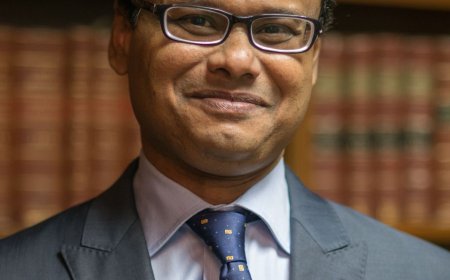
Kazi Zahin Hasan is one of the owners of Kazi Farms Group. He has a bachelor’s degree in economics from Oberlin College and a master’s degree from Columbia University. His companies have never defaulted on any bank loan.