






























































Why Did Urban Planning in Dhaka Fail So Miserably?
Disorder in Dhaka is not always accidental. It is often profitable.

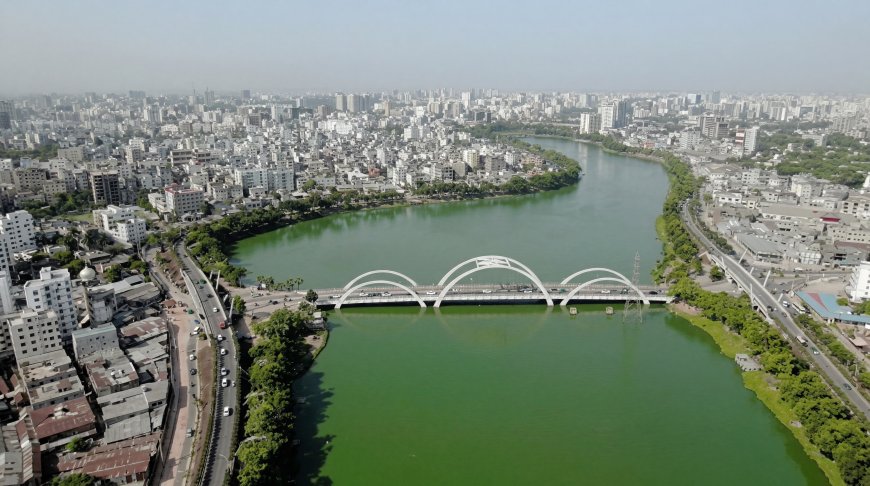
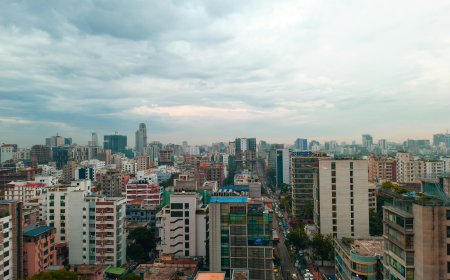
Dhaka’s urban misery is often explained as though it were destiny. The city is too crowded, too poor, too burdened by migration, too vulnerable to monsoon rains. There is truth in all of this, but not enough truth. Cities do not become unlivable merely because they are dense, poor, or flood prone. Many cities across Asia and Latin America have faced similar pressures and still managed, with varying success, to build more coherent systems of movement, housing, drainage, and public space.
Dhaka’s failure was not inevitable. It was produced.
The city did not collapse under the weight of growth alone. It was undone by a deeper failure of governance. Dhaka expanded without a coherent metropolitan logic linking land use, transport, drainage, housing, ecology, and enforcement.
The problem was not simply that the city grew too quickly. It was that the institutions meant to guide that growth were fragmented, weakly coordinated, and too often unwilling to impose discipline on land and infrastructure. Dhaka urbanized faster than the state could regulate it, and in some respects faster than the state ever seriously intended to.
At the center of this failure lies RAJUK, the Rajdhani Unnayan Kartripakkha, the capital development authority formally responsible for planning and development control. On paper, that should have created metropolitan order. In practice, Dhaka has long been shaped by a tangle of ministries, utilities, city corporations, transport bodies, and politically connected interests whose powers overlap without converging.
Roads are widened without resolving drainage. Buildings are approved without regard for transport capacity. Water bodies are encroached upon while flood management is discussed somewhere else. Public space is treated as leftover land. The city is administered in fragments, but never governed as a whole.
Nothing reveals this more starkly than Dhaka’s relationship with water. This is a deltaic city. Its canals, wetlands, ponds, floodplains, and lowlands are not decorative extras waiting for proper development. They are part of the city’s survival infrastructure. Yet for decades these spaces were treated as vacant land banks.
Wetlands were filled, canals were narrowed or blocked, and retention areas were surrendered to speculation. A city that should have learned to live intelligently with water instead behaved as though water were an inconvenience to be erased.
The result appears every rainy season. Streets flood after moderate rainfall. Water lingers because natural drainage routes have been severed or clogged. Neighborhoods cycle through inconvenience, contamination, and economic loss. The poorest residents bear the brunt because they are more likely to live in vulnerable areas with weaker infrastructure.
What is often described as natural hazard is, in large part, man made vulnerability. Dhaka’s waterlogging is not merely a monsoon problem. It is a planning problem.
Climate change now makes this failure more dangerous. Bangladesh is one of the world’s most climate exposed countries, and Dhaka is already both a refuge and a pressure valve for people displaced by environmental stress elsewhere. More intense rainfall, greater flood volatility, rising heat, and migration pressure will all deepen the city’s weaknesses.
In that context, every lost canal and every filled retention basin becomes more than a local planning error. It becomes a failure of climate adaptation. Dhaka has been dismantling the very ecological systems that should have formed the basis of its resilience.
Transport tells a similar story of delay and fragmentation. Dhaka allowed dense growth to accumulate before building a serious public transport backbone. For years, the response to congestion leaned on roads, flyovers, intersections, and traffic management, as though moving private vehicles more cleverly could solve a city whose underlying structure was already broken. But transport is not only about roads. It is about where people live, where they work, what they can afford, and how mobility is organized across the metropolitan area.
Dhaka reversed the correct sequence. Growth came first. Structure came later, if at all. Neighborhoods densified without reliable feeder systems. Bus services remained fragmented and poorly regulated. Commercial intensity grew without coherent transit planning. Roads were then asked to rescue a city whose land use decisions had already made road dependence inevitable.
To expect traffic engineering alone to fix this is rather like applying cologne to a collapsing building. It may improve the atmosphere for a moment, but the structure is still failing.
The popularity of the metro is important precisely because it reveals how much demand for dignified public transport always existed. Dhaka’s residents did not need to be persuaded to use mass transit. They had been waiting for it for decades. The metro’s success should be read not only as a transport achievement, but also as an indictment of how long the city waited to build what was so obviously necessary. The demand was there. The governance was not.
Housing deepens the crisis further. Dhaka’s housing problem is not simply a shortage of units. It is a crisis of affordability, location, and exclusion. Well located housing near jobs is beyond the reach of many lower and lower middle income households, while land values and regulations work against inclusive development in central and better connected areas.
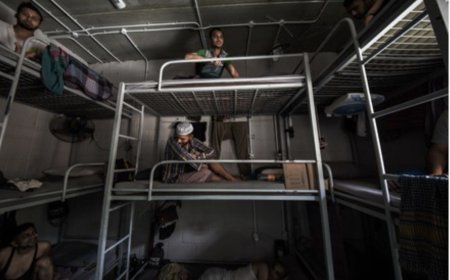
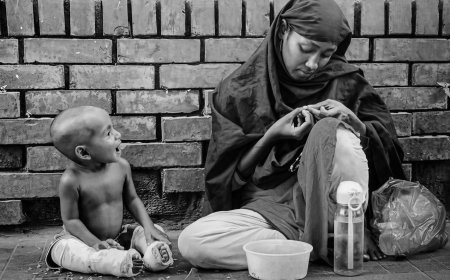
The poor are pushed outward or into informal settlements, often on environmentally risky land. Housing and transport then become one combined punishment. Those who keep the city running are forced to spend more time, more money, and more physical effort reaching the places where their labor is needed.
This is not simply inefficient. It is unjust. Informal settlements are often treated as symptoms of disorder, but many are the result of a formal city that excludes the very people who sustain it. When decent, affordable, and reasonably located housing is unavailable, informality becomes not an exception but an inevitability. Dhaka’s planning failure is therefore also a failure of social inclusion.
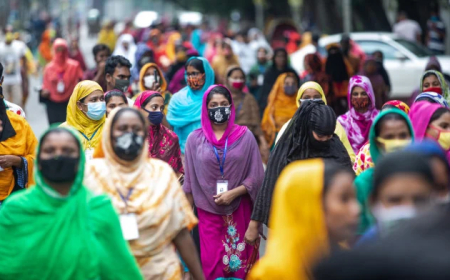
That exclusion is also gendered. Women experience the city’s failures through unsafe footpaths, poor lighting, hostile public transport environments, and the absence of dignified public space. Elderly residents, children, caregivers, and people with disabilities face their own daily negotiations with a city that seems designed to punish ordinary movement.
A broken pavement is an irritation for one person and a barrier for another. A badly lit bus stop is a nuisance for some and a source of fear for others. A city that neglects walkability and safety is not merely badly planned. It is socially indifferent.
Why, then, has reform been so weak? Because disorder in Dhaka is not always accidental. It is often profitable. Weak enforcement, discretionary approvals, politically connected land conversion, speculative development, and fragmented transport interests all create incentives to resist a more rational urban order.
Protecting wetlands restricts lucrative real estate expansion. Rationalizing bus routes threatens entrenched operators. Stronger development control reduces the value of political access. Affordable housing in better located areas challenges exclusionary land economics. Structural reform does not merely require technical competence. It threatens rents.
This becomes clearer when Dhaka is compared with cities that handled similar pressures more intelligently.
Singapore is not Dhaka, and no serious person should pretend otherwise. But it shows what institutional continuity looks like when long term vision is tied to enforceable planning rules. Seoul recognized that more roads were not enough and reorganized transit as an integrated public system. Curitiba aligned transport and land use instead of letting one chase the other. Medellín treated infrastructure as a tool of inclusion, not just circulation. Colombo, perhaps the most regionally relevant comparison, treated wetlands as flood infrastructure rather than as useless land awaiting profitable conversion.
These cities differ in wealth, politics, and scale, but they share one habit Dhaka has lacked. They protected strategic urban assets before they were fully consumed, and they gave planning enough authority to shape growth rather than merely lament it.
Dhaka is not entirely without hope. The metro is a clear success. Hatirjheel, despite its limitations, showed that water management, connectivity, and public space can be addressed together. Canal restoration efforts and the Blue Network idea begin from the correct premise that waterways are systems, not residual spaces.
Neighborhood level initiatives such as Shahjahanpur Jheel suggest that a more humane urbanism is possible, one that takes public space, greenery, walkability, maintenance, and everyday dignity more seriously. But these remain exceptions rather than doctrine.
What Dhaka now needs is not another handsome plan for shelves and seminars. It needs enforceable metropolitan coordination across land use, transport, drainage, housing, and ecology. It needs to treat wetlands and canals as protected infrastructure. It needs transport to shape growth rather than chase it. It needs housing policy that no longer pushes essential workers into fragile margins. And it needs to treat walkability, safety, and public space as fundamentals rather than ornament.
Dhaka failed not because it lacked intelligence, energy, or ambition. It failed because fragmented institutions, speculative land politics, transport delay, ecological disregard, and social exclusion were allowed to harden into a governing system. Yet the city is not beyond repair. Its future depends on whether its better instincts can be scaled into metropolitan discipline strong enough to outlast speculation, bureaucratic rivalry, and political impatience.
Dhaka has spent too long reacting to damage after it occurs. Its recovery will begin only when planning once again acquires the authority to prevent damage before it becomes destiny.
MK Aref is the co-founder of AniMedCare.