





































































Who Pays for Interest-Free Loans? We All Do.
Money is not free. Interest-free loans do not eliminate cost; they merely obscure it. Whether financed through budgetary allocations or institutional balance sheets, the subsidy embedded in such loans must ultimately be borne by someone.

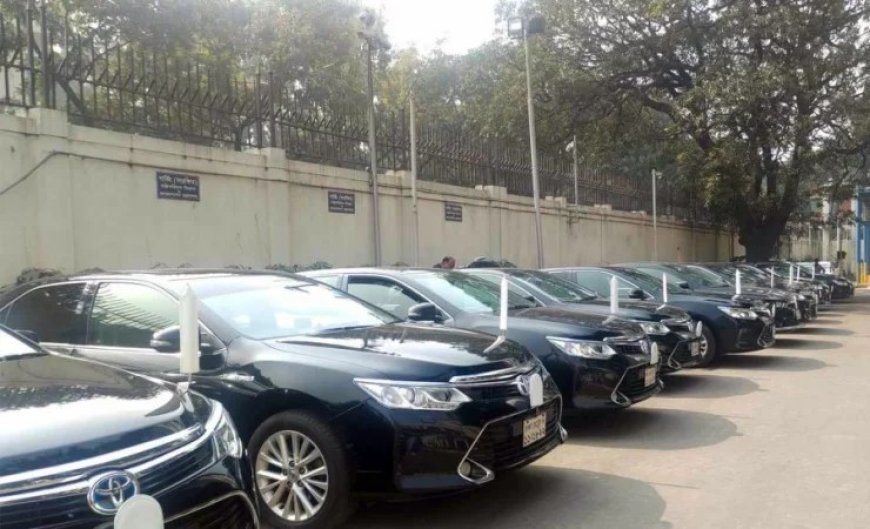
It is often the quietest policies that carry the loudest consequences. Among them is a long-standing but rarely scrutinized provision: Interest-free vehicle loans extended to senior public officials and select banking sector employees, including those in the central bank.
Under existing rules, officials of the rank of deputy secretary and above have been entitled to borrow up to Tk 30 lakh without interest to purchase personal vehicles, with repayment structured in a way that depreciation charges effectively settle the liability over time, with payment of a significant amount. In effect, the borrower neither pays interest nor bears the true economic cost of capital.
Yet, in a telling policy reversal, the government recently suspended this facility in response to fuel price shocks and mounting fiscal pressure. This single decision reveals more about the nature of the policy than years of its quiet continuation ever did. If the facility were truly benign -- merely an administrative convenience or a neutral compensation tool -- why would it be among the first to be curtailed during economic stress? The answer is straightforward: Because it carries a real, albeit hidden, cost.
The suspension is, in fact, an implicit admission that such benefits are not costless. They contribute to fiscal strain, foreign exchange demand (through vehicle imports and fuel consumption), and broader macroeconomic pressures. When fuel prices surge and external balances tighten, the continuation of such policies becomes difficult to justify -- even for the state that created them.
This brings us back to the fundamental issue: Money is not free. Interest-free loans do not eliminate cost; they merely obscure it. Whether financed through budgetary allocations or institutional balance sheets, the subsidy embedded in such loans must ultimately be borne by someone -- taxpayers, depositors, or the economy at large.
The inflationary dimension, while often dismissed due to the relatively small scale of these loans,cannot be ignored in principle. Any allocation of capital at zero cost encourages demand that would not exist under market conditions. It promotes consumption -- in this case, private vehicle ownership -- without a corresponding increase in productive output. Even if the direct impact on inflation is modest, the policy sets a precedent for non-market allocation of financial resources.
More importantly, the suspension during a fuel shock highlights another channel of cost: External sector pressure. Private vehicles increase fuel consumption, which in Bangladesh is heavily import-dependent. Encouraging vehicle ownership through subsidized financing indirectly raises demand for imported fuel, thereby exerting pressure on foreign exchange reserves. When global energy prices rise, this linkage becomes painfully visible, prompting reactive policy adjustments.
This raises an uncomfortable question: If a policy must be withdrawn during times of stress because it exacerbates macroeconomic vulnerabilities, should it exist in the first place?
Equally troubling is the opacity surrounding the true cost of this facility. The principal loan amount is only one component. Additional benefits -- maintenance allowances, fuel support, and other vehicle-related expenses -- are often embedded within institutional budgets, making it difficult to ascertain the full fiscal burden. The absence of transparent disclosure undermines accountability and weakens the credibility of broader fiscal policy.
At a time when governments call for subsidy rationalization, energy conservation, and prudent use of foreign exchange, the coexistence of such hidden benefits creates a contradiction. It becomes difficult to persuade citizens and businesses to accept higher energy prices or reduced subsidies when privileged segments continue to enjoy concealed financial advantages.
The issue of equity is equally significant. In a country where most individuals face positive -- and often high -- interest rates on personal loans, the provision of interest-free credit to a select group represents a clear departure from market principles. It creates a dual financial system: One governed by market discipline for the majority, and another shaped by administrative privilege for a few.
The recent suspension does not resolve this inequity; it merely pauses it. Unless the policy is fundamentally re-evaluated, it remains available for reinstatement when conditions improve, perpetuating the same structural imbalance.
The justification often offered for such benefits is the need to attract and retain talent in public service. While this is a valid concern, the method of compensation matters. Transparent salary structures, subject to taxation and public scrutiny, are preferable to opaque, distortionary perks. The latter obscure the true cost of employment and create incentives for preserving privilege rather than enhancing performance.
The link between such benefits and service delivery also remains tenuous. There is little evidence to suggest that ownership of a subsidized private vehicle significantly improves the efficiency or effectiveness of public officials. In many cases, official duties can be adequately supported through shared or institutional transport arrangements.
This points to a more rational alternative: Pooled transport systems. Instead of subsidizing individual ownership, the government and financial institutions could invest in centrally managed fleets that serve operational needs. Such systems would not only reduce costs but also align with broader objectives of energy efficiency and environmental sustainability.
The contrast with the real sector is particularly stark. Industries such as readymade garments -- operating under intense global competition -- cannot afford such privileges. They function within hard budget constraints, where every cost must be justified by productivity. The idea of offering interest-free vehicle loans to employees, without clear returns, is simply not viable in such an environment.
This divergence underscores a deeper structural issue: The insulation of certain sectors from market discipline. While the private sector must continuously adapt to cost pressures, parts of the public and financial sectors operate with embedded cushions that dilute incentives for efficiency.
The recent suspension, triggered by fuel shocks, inadvertently exposes this insulation. It demonstrates that when external constraints tighten, even entrenched privileges become vulnerable. But reactive suspension is not a substitute for proactive reform.
From a policy standpoint, the way forward lies in rationalization and transparency. If employee benefits are to be provided, they should be explicitly budgeted, clearly disclosed, and linked to measurable outcomes. Interest-free loans could be replaced with market-based credit, accompanied by targeted and transparent subsidies if deemed necessary.
More fundamentally, policies must be evaluated not only in terms of their immediate administrative convenience but also their broader economic implications. A benefit that appears minor in isolation can have cumulative effects -- on fiscal balance, external accounts, and institutional culture.
The episode of suspension due to fuel shocks offers an important lesson. It reveals that hidden costs eventually surface, often under conditions of stress. Policies that cannot withstand such stress without being withdrawn are, by definition, fragile.
In an economy facing multiple challenges -- exchange rate pressures, inflation, and fiscal constraints -- the need for consistency and coherence in policy is paramount. Every allocation of resources must align with the principles of efficiency, equity, and sustainability.
Interest-free vehicle loans for a select group may seem like a small issue, but they symbolize a larger disconnect between policy intent and economic reality. They raise fundamental questions about who benefits, who pays, and whether the system rewards productivity or privilege.
The recent suspension is a step, but only a temporary one. The real challenge lies in converting this moment of constraint into an opportunity for reform. Privileges that disappear in times of crisis are rarely justifiable in times of comfort.
Tashzid Reza works in a trade finance company operating as a liaison office in Bangladesh.