































































A Historic Celebration
Those of us who want to eradicate poverty from our societies should redouble our support for these organizations as they work to change the conditions under which the poor live and suffer. This would allow the poor to unshackle the chains of poverty and build fuller lives for themselves and their progeny.

On June 28, Grameen Bank kicked off a historic two-day conference at the Samajik Convention Center, a spacious, modern facility in Zirabo, Savar.
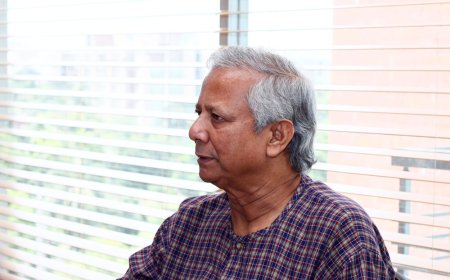
The subtitle captured the spirit of the event: “A Global Festival of Social Business, People, and Possibility.” The conference was described as a “celebration or festival” because it marked both the 50th anniversary of the founding of this iconic organization (in 1976) and the 20th anniversary of its receipt of the Nobel Peace Prize in 2006, shared with its brilliant 86-year-old, but still vigorous founder, Professor Muhammad Yunus.
The organization’s founding and its being awarded the Nobel Peace Prize are two “historic and deeply connected milestones” in the life of Grameen Bank. The Nobel Committee had recognized Professor Yunus’s conviction that “poverty is not created by the poor, but by the systems that surround them.”
Sadly, this simple yet revolutionary idea is still often overlooked. Even today, many development scholars who study poverty, and many educated members of society treat the poor with a degree of contempt, wrongly implying that they are lazy or lack ambition, and are therefore solely responsible for their misfortune.
The remarkable and well-documented success of organizations such as Grameen Bank, BRAC, and hundreds of other NGOs in Bangladesh and across the world, in empowering those “at the bottom of the pyramid” and lifting millions out of poverty should finally lay this misconception to rest. Unfortunately, it is a hard narrative to replace.
Those of us who want to eradicate poverty from our societies should redouble our support for these organizations as they work to change the conditions under which the poor live and suffer. This would allow the poor to unshackle the chains of poverty and build fuller lives for themselves and their progeny.
Notably, Grameen Bank and many development organizations have focused largely on the women, having discovered that women are often the mighty, but underappreciated asset within families, and can have an outsize catalytic impact on the upliftment and welfare of the entire family and the next generation.
On the first day of the conference, in a distinctly festive atmosphere, more than a thousand participants enjoyed a world-class program which focused on the organization’s history and the many achievements of Grameen Bank, and its sister organizations.
Among the speakers were Professor Yunus and some of his earliest associates, whose names are familiar to those who have followed the Grameen story: Nur Jahan Begum, the first formal employee of Grameen Bank; Professor Latifee, a colleague from the University of Chittagong who accompanied Dr. Yunus on his regular walking visits to nearby villages; Khaled Shams, the brilliant civil servant recruited out of retirement to help lead the organization and to especially manage its relations with government and the public sector.
Also on stage were some of the earliest borrowers -- women living in rural Bangladesh in endemic poverty at the time -- who courageously borrowed some of the first microcredit loans nearly 50 years ago and, over the following decades, transformed their own lives and those of their children and extended families.
Some of these “rags to riches” stories move listeners to tears and reaffirm our belief in the power of innovation, human courage, creativity, and determination to overcome entrenched poverty and escape the constraints imposed by the “lottery of birth.”
One of the panels on the first day focused on “Social Business: The Language of Peace in a Fractured World.” Among the panelists was Mary Robinson, the former President of Ireland, who joined remotely.
Under the moderator’s skillful guidance, the discussion explored how the concept of social business can influence a world that seems to move from crisis to crisis -- marked by endemic poverty, unemployment, extreme wealth and income inequality, and violent conflict. Lamiya Morshed a close associated of Prof Yunus was also a featured speaker.
It is not widely known that Grameen Trust and Foundation supported and inspired programs now operate in more than 60 countries. In this sense, the organization can be considered the “United Nations of NGOs.”
Few global organizations can match the name recognition or impact of Grameen Bank, which, along with BRAC, is among the largest development NGOs in the world.
Together, these impactful organizations have improved the lives of millions of low-income families in rural Bangladesh and other developing countries. This was done through their educational and proven anti-poverty programs, extending even to distant places such as Kosovo and Bosnia and Herzegovina.
These and many other non-government organizations from developing nations have demonstrated that governments need not bear the entire burden of development and poverty alleviation.
This is especially true where the public sector is weak, mired in political conflict, and plagued by corruption, NGOs have shown that disunity and corruption do not have to define a nation’s character.
Bangladesh, in particular, has built an impressive record of creating and nurturing some of the world’s most respected organizations dedicated to lifting the very poor out of despair, while enhancing the country’s reputation globally.
Rather than treating such organizations as competitors, politicians and the public sector would do well to study them, partner with them, and learn from their successes.
The setting for the conference was especially appropriate. Located just outside Dhaka in the Zirabo community near Savar, about 30 minutes from the capital, the Samajik Convention Center offers 1,995 seats in its main auditorium, 4,500 square meters of exhibition space, and banqueting facilities for up to 3,000 guests.
It was an ideal venue for celebrating the birth and global success of an organization that attracted hundreds of foreign guests and speakers.
This state-of-the-art facility features first-rate technology, with massive screens at the front and sides of the hall and a sound system that allowed everyone to follow and engage with the program. For those who missed the three-day conference, it is not too late to join the broader celebration. As the conference materials explain:
The occasion was described as, a festival, not a ceremony: Rather than a single commemorative event, the anniversary will be observed as a year-long global festival.
The festival will begin in Bangladesh, where the idea of microcredit first took shape in Jobra Village, and will formally open during Social Business Day 2026 in Dhaka.
From there, the celebration will continue throughout the year, spreading across countries, cities, communities, and villages worldwide.”
Professor Munir Quddus is the Endowed Professor of Economics at Prairie View A&M University near Houston, Texas.