







































![A Ledger of the Soul: Navigating the Allah-Bhagavant Nexus in a 19th-Century Puruṣākāra Jñāna Caupara [Gyan Chauper]](https://counterpointbd.com/uploads/images/202608/image_430x256_6a93baa3b09a7.jpg)




















The Forgotten Refugees
Bangladesh finds itself in a cruel diplomatic trap. Everybody says “patience,” but no one is stepping up to share the cost.

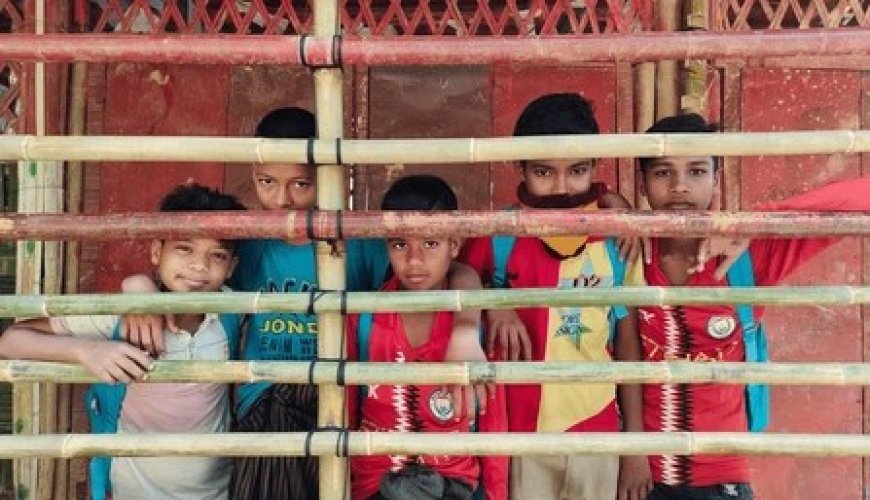
On the stage of global politics, all attention is focused on two only coordinates: Eastern Europe and the Middle East. As the drones buzz over Kyiv or the blast echoes in Gaza, triggering immediate outrage from the world’s various superpowers, an enormous humanitarian and geopolitical disaster bubbling away on the shores of Bay of Bengal has gone completely out of sight.
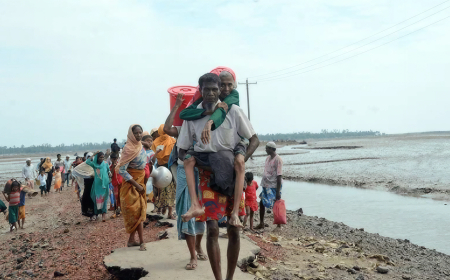
Military and humanitarian aid packages for Ukraine or Israel worth billions of dollars are pushed through Congress at a hair’s breadth, but near-pleas to donors for the absolute minimum needed to keep over 1.2 million Rohingya refugees trapped in Cox’s Bazar in Bangladesh afloat fall flat against closed doors.
In this distracted world, the Rohingya crisis is not a 'forgotten tragedy' anymore; it has turned into a ticking 'time bomb' for Bangladesh and the timer is quickly nearing zero.
It is no longer just a question of humanitarian shelter; it has turned into an acute dynamic threat to Bangladesh's national security, economy and existence.
Empathy Goes Bankrupt
In 2017, when the Rohingya were flooding into Bangladesh like a tidal wave, all the way from the Western world to the United Nations praised Bangladesh’s ‘humanity’. But over time, those words of praise have become hollow echoes.
Data from the United Nations High Commissioner for Refugees (UNHCR) ‘Joint Response Plan’ (JRP) data portal presents a grim picture. International donors are funding less than half of what is needed each year to meet the minimum requirements for the Rohingya. To fill the gap, Bangladesh is forced to bleed millions of dollars more from its own treasury.
Mustering the burden of hosting, feeding and treating 1.2 million foreign nationals for as long as our health can provide peace is equivalent to economic suicide for a country whose developing status teeters on the brink of graduating from the challenging sphere in 2026 by ending up on that list of LDCs. The sheer size of this population is having a long-term, negative impact on macroeconomic stability and the local labor market in Bangladesh, according to an analysis by the World Bank.
The Penalty for Regional Disorder
The most razor-edge, immediate and live fallout from the Rohingya imbroglio is Bangladesh's internal and border security. The camps are not so much simple shelters for needy refugees anymore; they now serve as safe havens for transnational crime cartels, human smugglers and armed militant organizations.
The simmering civil war inside Myanmar between the junta government and the Arakan Army (AA) is directly burning Bangladesh. International Crisis Group (ICG) research demonstrates definitively how the instability in Rakhine state is seeping across the border into Bangladesh. Many camps are dominated by armed factions ARSA, RSO and others who are perpetually fighting bloody turf wars to undermine each other.
Adding to the horror is the gruesome narcotics trade. These camps have emerged as the biggest transit route of Yaba and Crystal Meth (Ice) being smuggled from Myanmar. Thousands of unemployed and disillusioned Rohingya youth fall easily into the hands of this criminal underworld.
The dynamics of this threat means that Bangladesh's Border Guard (BGB) and law enforcement agencies are locked in a trench battle against it.
There are also direct, obvious threats to Bangladesh’s sovereignty in the form of mortar shells landing inside Bangladeshi territory or violations of its airspace as a result of Myanmar’s internal conflict.
Ecology and Demographics Soon Silent Death
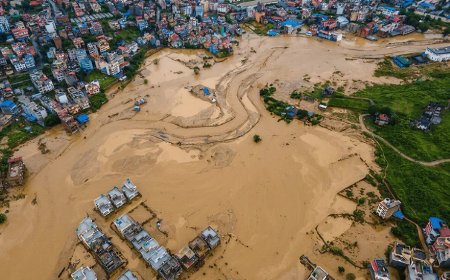
Studying the map of Cox's Bazar and Teknaf paints a worrying picture of environmental disaster. Thousands of acres of protected forests and hills have been burned to make room for one of the world’s largest refugee camps.
The corresponding environmental impact assessments from the remains of the palm oil plant were that water levels within the ground have dropped to frightening levels, and wildlife such as elephants have had their natural habitats entirely destroyed. The “demographic imbalance” is particularly troubling. In Ukhia and Teknaf, local Bangladeshis are now a minority in their own country. The upending of livelihoods and the inflated cost of everyday commodities have triggered an ostensible ‘social tension’ between the local populace and the Rohingya which can plunge into a full-blown communal conflict any given day.
The Geopolitical Trap and Diplomatic Hypocrisy
At its most frustrating, Bangladesh is hitting its head against the wall of superpower diplomacy hypocrisy. The United States and the European Union give lip service to human rights and democracy, but have been wholly unable to impose any meaningful economic or military sanctions on Myanmar.
On the other hand, both China and India are too preoccupied with protecting their own geopolitical and commercial stakes (namely deep-sea ports, gas pipelines, as well as the Kaladan project) in Myanmar. A number of Human Rights Watch (HRW) reports show just how utterly this the international community had failed to hold the junta government in Myanmar accountable. As a result, Bangladesh finds itself in a cruel diplomatic trap. Everybody says “patience,” but no one is stepping up to share the cost.
The Rohingya crisis is not merely a humanitarian issue; it is a dangerous time bomb ticking in the heart of South Asia. Global leaders appeared too distracted by the smoke of Gaza or Ukraine to appreciate the urgency of this crisis, but for Bangladesh it is a desperate reality.
If the international community fails to urgently turn its gaze towards implementing visible crippling pressure on Myanmar for repatriation, this bomb will not just detonate within Bangladesh’s borders.
The spillover effects of regional instability, terrorism and human trafficking will wash ashore all across the Bay of Bengal region, a potential that this “distracted world” would not be able to evade.
Md Shihab Uddin is an independent researcher and a student of Folklore and Social Development Studies at the University of Rajshahi.