

























































The Trauma of Being Bengali
Today, that familiar polarizing language can be heard on both sides of Sher-e-Bangla’s hated ‘false wall,’ a wall which has since devolved into a barbed wire fence, on which dead and dying Bengali bodies have been hung.
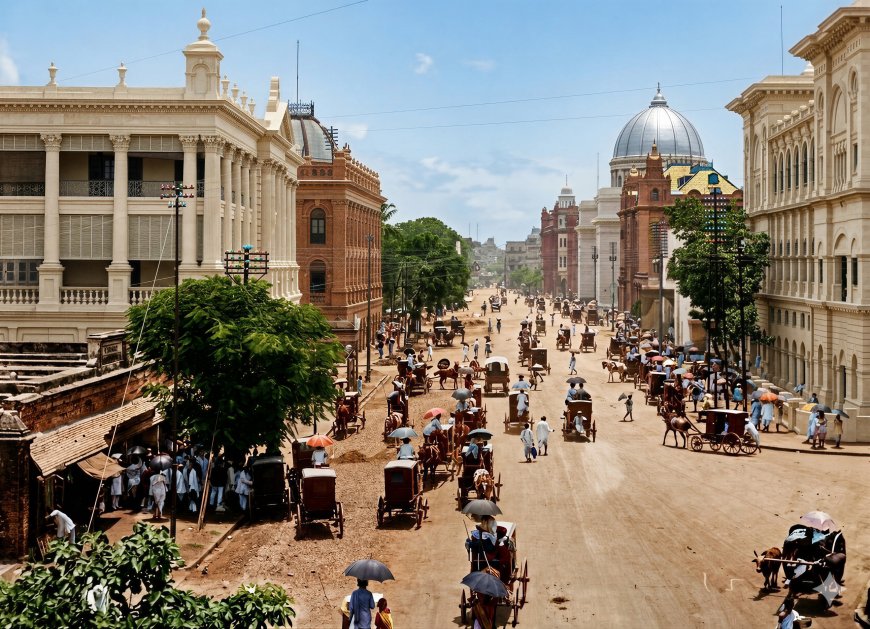
I arrive at Kolkata just over a week into Adhikari's reign and with about a week to go before Qurbani Eid. Stepping onto a plane in Dhaka and getting out in Kolkata is so entirely a domestic experience that even a fellow passenger had to wonder for a second if the flight had landed at the international terminal or not.
Arriving during the excessively humid month of Joishtho, when the mangoes are ripening and the krishnachuras are in bloom, all across the Delta, adds to the sensation of being right at home.
Right at home. Those three words can tell you an enormous amount about where the trauma of being Bengali began, but it will take us quite far into the past if we want to find the source of it, and we won't of course find it all.
In search of places that might feel like home, I've booked myself into the Calcutta Club, a fantastically decrepit piece of colonial history in the heart of Old Kolkata, and a province of 'clubland' the network of British-era clubs strewn across the old Empire, which people like myself have post-colonially inherited and which I enjoy using every time I get the chance.
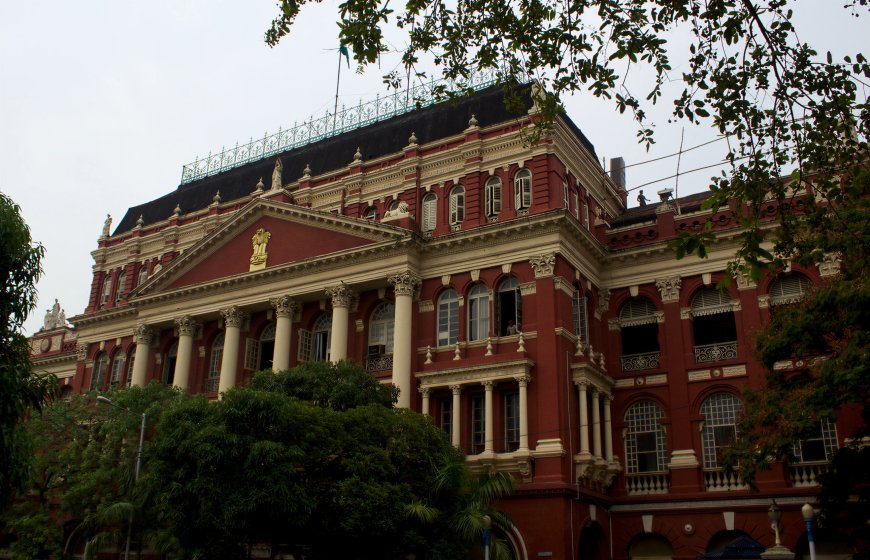
Image: Writers Building
But that's because I too am a piece of decaying colonial history and, love it or hate it, it has quite a lot to do with the type of Bengali I am, 'types of Bengali' being one of the main causes of the trauma of being Bengali. I don't hate it in fact, but that my type is completely on the way out is glaringly obvious.
From a decolonization point of view, 'good riddance’ may be in order, but many a wholesome baby will also be thrown out with this bathwater, or at least wholesome in ways that we ourselves regard them to be, and which maybe many of the other types don't.
Be that as it may, the fact that Old Kolkata was once the very 'praan kendro' of my type of Bengali, leaves very little room for dispute.
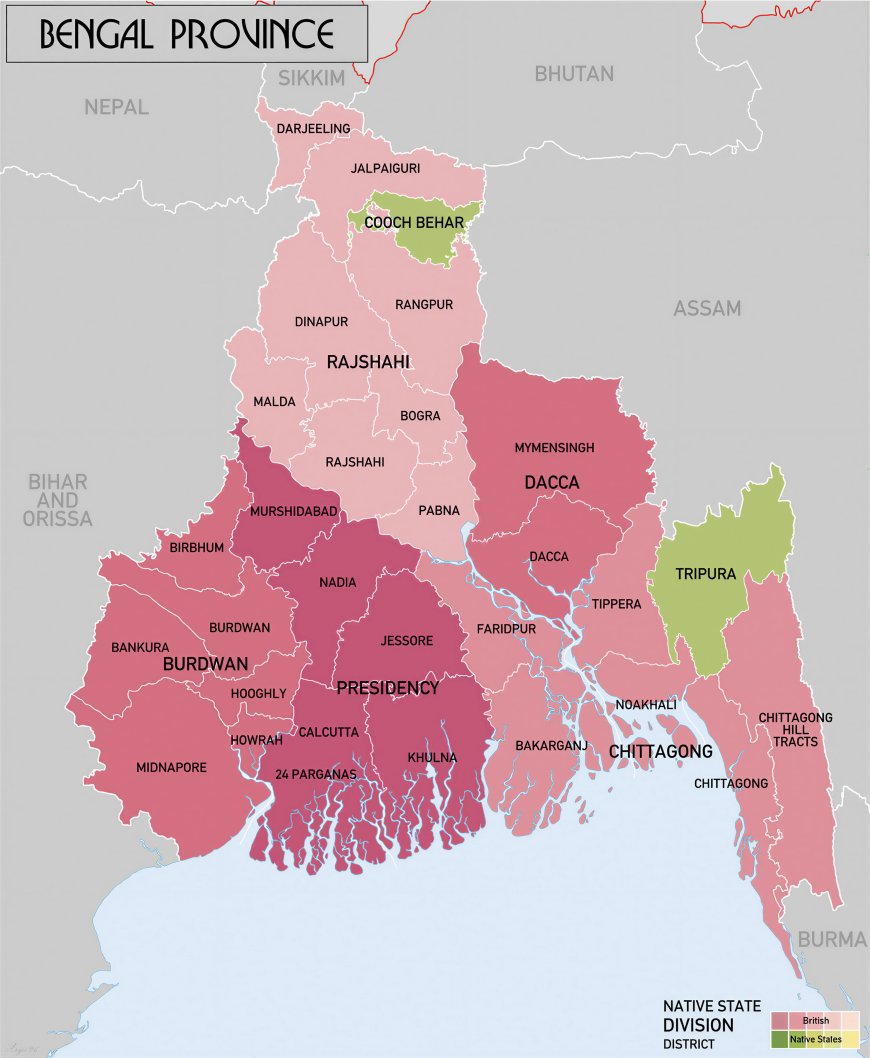
Image: Undivided Bengal
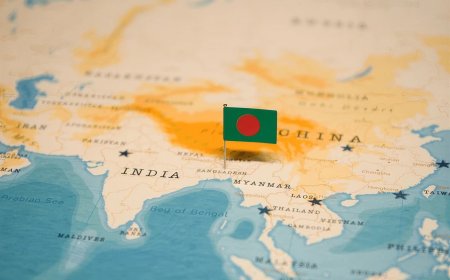
In an exploration into types of Bengali, almost everything that might be assumed to matter, does -- language, religion, class, region, education, urbanization, power, empire -- and all of these, in various combinations, continue to abuse the Bengali.
Just as I was preparing to fly this morning, I read the news about the fatal mosque shooting in the US which triggered my own Muslim fears about living in a world that continues to be hostile to Muslims, not least in a BJP run India, and now Bengal.
But Muslim hostility towards Hindus, in fact, is why Kolkata and I belong to two different countries, which in turn was born out of Brahmanical supremacism regarding Muslims, itself a response to Muslim contempt for Hindus and to a series of Islamic and European empires which created power displacements at the top of South Asian society.
The Depravity of Direct Action
That's a simplistic reading and far too clumsy to unpack in one go, but suffice it to say that the partitioning of Bengal may never have happened had it not been for Shyama Prashad Mukherjee’s reaction to the horrors of Direct Action Day.
On September 20, 1946, he delivered a seminal speech in the Bengal Legislative Assembly condemning the violence, which was to become the basis for the partitioning of Bengal. Following are some excerpts of the speech:
“ I have before me a summary of the speeches delivered by distinguished spokesmen on behalf of the Muslim League in every part of India and although it was said that the Direct Action Day itself was not the day for commencing direct action, it was at the same time pointed out that the war had begun, the days of peace and compromise were over …. what I am now telling the House is this that the members speaking on behalf of the Muslim League did not mince matters. Muslim leaders want Civil War.
[Khwajah Nazimuddin] came out very bluntly in Bengal and he said that Muslims did not believe in non-violence at all, Muslims knew what direct action meant and there were one hundred and one ways in which this was made clear by responsible League leaders.
Hatred of Hindus and jehad on the Hindu were declared in highly charged language. That was the background. I am not going to quote the papers, for I have not the time. You have read them and the general Muslim public have acted according to the instructions.
Now, Sir, what happened on the 16th? I shall not refer to the detailed speeches of other members. But I shall certainly hold responsible the Chief Minister of this province who lost his mental balance by saying in Bombay that he was going to declare Bengal to be an independent state.
A minister who comes forward and says ‘I am helpless, I could not save the people of the city because the Commissioner of Police would not listen to me’ will declare Bengal an independent state! Now, that was Mr Suhrawardy. He said he was going to carry on a no-rent campaign in this province. He was going to disobey law and order. His speech before the Legislative Council goes to show that he knew fully well that troubles were ahead.
Why did he allow the entire administration of law and order to collapse in the city? I shall say, Sir, it was a diabolical plan. I say Sir, there was a well-organized plan to make a lightning attack on the city that would take Hindus by surprise, properties were going to be looted and lives were going to be lost.”
Shyama Mukherjee followed up his words with actions. By December, he had set up the Bengal Partition League to take on the Suhrawardy-led all-Bengal plan and campaigned vigorously for this. It culminated in an official vote in the Bengal Legislative Assembly on June 20, 1947 which went to Partition and formally sealed the fate of a free and united Bengal.
S.P Mukherjee is largely responsible for the existence of the BJP and is among the ideological ancestors of men like Adhikari, who adhere to his ‘Bengali Hindu Homeland’ views, which is why their win in West Bengal is such a big deal.
But it is lazy to view Mukherjee as the man who divided Bengal or Suhrawardy as the man who tried to keep it intact. That would be doing a great disservice to complex men who lived in complex times.
Both Suhrawardy and Mukherjee were in so many ways the same ‘type’ of Bengali, and had spent time at this very Calcutta Club, the existence of which is a revolutionary act in its own right. It was the first one explicitly created as a club where a ‘no Indians’ policy could never exist.
Here they would have met with others like them, especially one Abul Kashem Fazlul Huq, the venerable ‘Sher-e- Bangla’, his father’s student and his own tutor, where they would have discussed the politics of their time.
All three men belonged to the glittering galaxy of brilliant Bengali lawyers and all three were members of the Bengal Assembly, which met at Writers’ Building, and where some of the best debates in South Asian political history raged on throughout the 20s, 30s and 40s. But it was Mukherjee and Huq, not Suhrawardy, who were the original proponents of a united Bengal.
In 1941, Mukherjee’s Hindu Mohashabha, Huq’s Krishok Proja Party, along with Netaji Subhash Bose’s Forward bloc, formed a coalition government in Bengal called the Progressive Coalition, whose primary objective was to preserve a united, regional identity for Bengal and counter the polarizing, sectarian narrative of the Muslim League, to which Suhrawardy belonged.
It also firmly opposed British imperial interference in Bengali affairs, a move that led to sustained antagonism between Fazlul Huq and British Governor John Herbert.
The Shyama-Huq Ministry was perhaps the best and last chance Bengal had of becoming something other than what it did, with Fazlul Huq as the Prime Minister, Shyama Mukherjee as the Finance Minister and Sharat Bose, who would have been the Home Minister, but for John Herbert who, citing his brother Netaji’s seditious activities, had him arrested the very day he would have taken office.
It was to be Herbert’s opening gambit in a series of acts designed to undermine the government.
This is because the Progressive Coalition represented a persistent thorn in the British side. It was a direct heir of Deshbondhu Chittaranjan Das’s 1923 Bengal Pact, the first serious attempt at mounting a constitutional resistance to British imperialist ‘divide and rule’ policies.
It was Deshbondhu’s Swaraj Party that began the fight back against British rule, and initiated Hindu-Muslim power sharing, the Bengal Pact, which had two main aims -- religious unity and independent administrative rights for Bengalis, both of which were also the main planks of the Shyama-Huq Ministry.
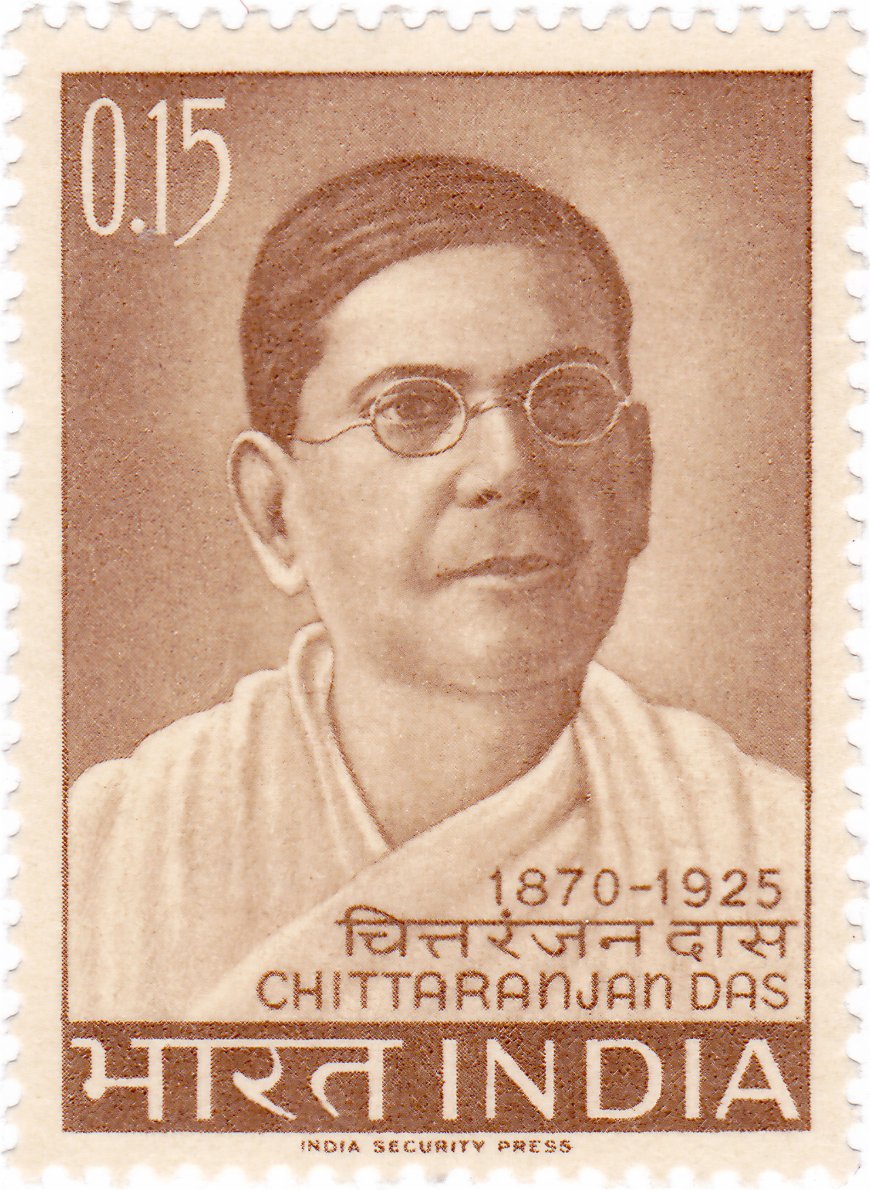
Image: CR Das stamp
So deep was the relationship between these two movements, that when Sharat Bose brought the Forward Bloc into the coalition he stated that the new government was completing C.R. Das’s unfinished business.
The Zeitgeist
The Bengal Pact didn’t exist in isolation, it was born during a time of increasing unity between Muslims and Hindus, politically, but also intellectually, when moving away from communal thinking looked, for a moment, like the direction of travel.
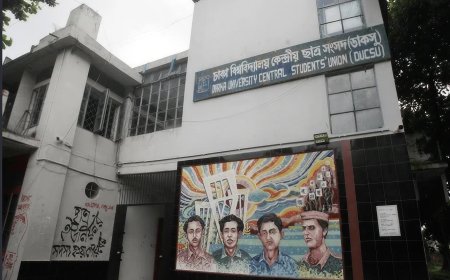
This wasn’t only happening in the capital Kolkata; in 1926, the Buddhir Muktir Chinta Movement sprung up at the newly minted Dhaka University, which was to become a watershed event in the cultural and intellectual history of Bengal.
It challenged orthodox Islamic conventions, advocated for humanism and began the journey towards progressive, secular traditions among Muslims in the region. Kazi Nazrul Islam and Dr Muhammed Shahidullah were key figures of this movement, which created a sort of Bengali Muslim who was not susceptible to attempts by the Muslim League or the Khilafat Movement to use religion as a galvanizing force.
The relevance of such a Bengali Muslim can scarcely be overstated in the wake of the ‘Tawhidi Janata’, who tellingly, use the words ‘direct action’ in several of their rally cries.
It is crucial to note that the movement at Dhaka University was spearheaded by Atraf Muslims and not Ashraf ones, the distinction making an enormous difference as to how either group viewed Bengal’s cultural, linguistic and literary heritage.
It also affected their political orientation. Ashraf Muslims, mostly landowners and Urdu-speaking, were more comfortable in the notion of a Muslim homeland with a common Islamicate culture. i.e. a Pakistan, than they might have been in the notion of a shared Bengali space.
Such views were espoused by the prominent Bengali judge and Suhrawardy’s father in law, Sir Abdur Rahim in 1926, during the 17th session of the All India Muslim League where he said,
“Any of us Indian Muslims travelling in Afghanistan, Persia, Central Asia, among Chinese Muslims, Arabs, and Turks would at once be made at home and would not find anything to which we are not accustomed. On the contrary in India we find ourselves in all social matters aliens when we cross the street and enter that part of the town where our fellow townsmen live”
These attitudes were common among Ashraf Muslims across India who had notions of identity that were entirely incongruent with the lived reality of the majority of Muslims in Bengal, who had shared space, language, blood and often even spiritual views with other Bengali communities for the better part of 500 years.
It is interesting to note that Justice Rahim’s son J.A. Rahim was one of the founders of Bhutto’s Pakistan People’s Party, which faced off with the Awami League in 1971.
In the 1920s and 30s, Ashraf landed interests were largely represented by the Muslim League while Atraf Muslims, the majority, traditionally voted with Fazlul Huq’s KPP which attempted to redress economic disparities brought about by both Muslim and Hindu landlords. Huq routinely accused the Muslim League’s Urdu-speaking leadership of using Bengal's majority numbers for all-India political leverage, without caring for Bengal’s heritage or interests.
When he broke his alliance with the League to form a coalition government with Mukherjee, he emphatically proclaimed,
“I will never allow the interests of 33 millions of the Muslims of Bengal to be put under the domination of any outside authority however eminent it may be.”
But events during the 1940s, aided on by British collusion, dramatically altered the political landscape against his favour. In 1942, Shyama Mukherjee resigned from the government over the British governor’s interference in matters that were to be the purview of the elected Assembly. In his resignation letter he wrote:
“The present administrative system allows the Governor and his bureaucrats to rule over the heads of the ministers... You have treated the cabinet with mock respect, while implementing policies that are crushing the life out of Bengal."
Fazlul Huq too faced intense pressure from the Governor when he attempted to challenge the British ‘scorched earth’ policy which was being pursued during World War II. Prime Minister Huq and his ministers refused to give effect to this policy, but Governor Herbert simply bypassed the elected cabinet and instructed white ICS officers to seize rice stockpiles behind the ministry's back, leading to the famine of 1943 in which three million Bengalis lost their lives.
Huq also tried to fight him on the use of Indian soldiers during the war by demanding that a civil defence force, answerable to the Assembly, be created so that Indian soldiers could be placed under local control instead of under the martial dictates of white officers. Once again, Herbert refused to acknowledge the authority of the elected officials.
The Beginning of the End
The government did not accept this subservient status. They put on official record that the Governor was behaving like an autocrat and operating a shadow government through his British secretaries.
Herbert decided that the government had to fall. In an orchestrated conspiracy employing deceit and dishonesty, he compelled Huq to disband his cabinet in favour of an elected all-party national government, explained as a necessary war time measure.
He extracted a signature under duress, threatening to dissolve parliament altogether and implement Governor’s Rule under wartime emergency powers if Huq refused to sign. Huq signed, Herbert reneged.
He implemented Governor’s Rule for one month, did not hold a fresh election or allow an all-party government, but instead, appointed Khawaja Nazimuddin’s pro-British, communalist Muslim League as the ruling party and in doing so rewarded obedient conservatives by punishing independent liberals.
By 1946, the Muslim League, with British patronage, had successfully injected communal politics into the Bengali arena, overtaking the ideals of the Bengal Pact and the Buddhir Muktir Chinta Movement.
It was able to re-position itself as a party for the people against oppressive landlords, recast, disingenuously, as Muslims and Hindus respectively, to co-opt the Atraf vote. Amidst promises of emancipation in a Muslim homeland, Suhrawardy won the election and formed a coalition government with independents and European MLAs.
It is of vital importance to note here that Suhrawardy’s statement in July 1946, about a united independent Bengal was not a reflection of the same sentiment he expressed in April 1947, which called for a Bengal Free State.
In 1946, Bengal was the only province in all of India that had a Muslim League government and Suhrawardy, as a staunch Muslim Leaguer, was talking about taking Bengal out of India to form a Muslim country, a smaller version of Pakistan, should the larger demands for a full-fledged Pakistan not be met. This is what Direct Action Day was intended to achieve, and it is in this context that Mukherjee’s Bengal Partition League was created.
By April 1947, Mukherjee had successfully lobbied for the partition of Bengal, and Suhrawardy, realizing that a divided Bengal would be catastrophic for the province but seeing that it was too late to prevent Bengali Muslims from wanting independence from India, scrambled to create consensus for a united independent Bengal that reflected the ideals of the Bengal Pact; a Hindu-Muslim sharing of power, administrative independence, secular, unified Bengal.
The two men had traded places, with Mukherjee now an advocate of communal interests and Suhrawardy a proponent of a non-communal independent Bengal. It was too late unfortunately, as the fabric of Bengal’s uniquely syncretic society was already stained by the blood he had helped to spill.
Sher-e-Bangla A.K Fazlul Huq, the first Muslim Mayor of Kolkata and first Prime Minister of Bengal became the Chief Minister of East Pakistan and managed to finally break the Ashraf and Urdu stranglehold over his country, following the 1952 language movement and the 1954 Muslim League defeat by the Jukto Front, a Huq-led coalition.
But by then the vivisection of Bengal had already happened and a crestfallen Huq, in a public address in 1954 at his beloved Kolkata, declared,
"I have reached the final stage of my life. I have no more desires. If I can begin the work of removing this false wall between the two Bengals, I will consider myself blessed."
He followed this up with, “I do not accept the division of Bengal” and called the people who divided his ‘golden country’ enemies of the nation. He finished with the controversial statement, “Pakistan is an enigmatic word; it is the creation of those who have vested interest in it.” for which his Jutko Front cabinet was dissolved by the central government in Pakistan and he was placed under house arrest as a traitor the moment he returned to Dhaka.
Husseyn Shaheed Suhrawardy went on to have a profound influence on Pakistani politics, but Bengali Muslims remained dispossessed and what was supposed to be the solution to a problem became a problem in itself. Recognizing that communalism was not the thing actually abusing Bengalis, Suhrawardy threw his weight behind Maulana Bhashani’s breakaway faction, the Awami Muslim League, which was led by Bengali Muslims like Ataur Rahman Khan, and Sheikh Mujibur Rahman and emerged as the party representing East Bengali rather than Muslim interests.
Along with Bhashani, he was part of Huq’s Jukto Front government and though an Ashraf Muslim, Suhrawardy can rightly be credited with continuing to fly, albeit as an afterthought, the tattered flag of a non-communal, Bengali-centric polity, of which his Awami League became the vanguard.
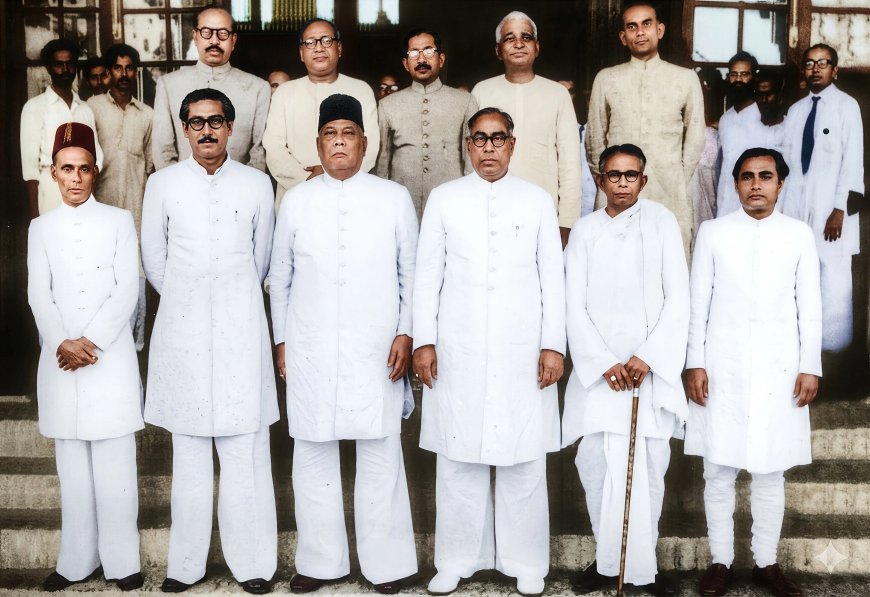
Image: Jukto Front Cabinet
In 1971, the country he had hoped for in 1947, an independent secular Bengal, did in fact arrive, just not wholly, but the bitter irony is that it is now being challenged by the country he wanted in 1946, and both countries carry the trauma of being Bengali - trauma inflicted anew in 2024 by the Awami League itself.
Shyama Prasad Mukherjee also went on to have a profound influence on Indian politics. He left the Hindu Mahashabha shortly after Partition, joined Nehru’s cabinet but left that as well to create the Bharatiya Jana Sangh.
The Sangh later collaborated with the RSS to attempt a transformation of India's cultural and civilisational landscape through long term socialization programmes. They famously collaborated in trying to integrate Goa and Kashmir, where Mukherjee was arrested and subsequently died in prison.
But his death galvanized the union between the two organizations, giving birth to the BJP. And so Adhikari’s win in West Bengal is more than just a political victory; it is Mukherjee’s homecoming.
Adhikari routinely represents East Bengali Hindu refugees, raises the spectre of a Muslim demographic threat as well as the plight of Hindus in Bangladesh and references Mukherjee’s Bengali Hindu Homeland, all of which reminds us that Bengali Hindu trauma remains alive and well.
And here is where the story really begins. Far away from the story of privileged, colonial Bengalis, the real story of the land has everything to do with traumas inflicted, not only on the Body Politic of Bengal, but on the bodies of Bengalis.
And this is why those three words ‘right at home’ matter as much as they do. Systematic violent displacements since 1947 have meant that feeling right at home in Bengal is tied to which type of Bengali you were born as, and where.
Bengali Bodies
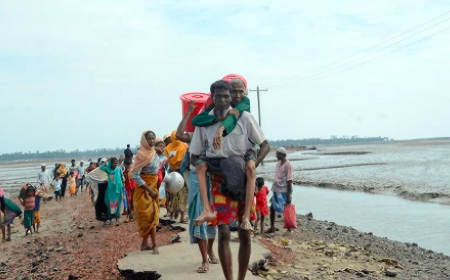
Hindus in East Bengal have very much felt not at home, where their lives and hundreds of years of history have been violently uprooted.
Their displacement hasn’t stuck to the script of pre-Partition myth-making either, which would require it to affect only landlords or wealthy Hindus with palatial homes, but has also included scientists like Satyendra Nath Bose, filmmakers like Ritwik Ghatak, actresses like Suchitra Sen, poets like Jibanannada Das, artists like Ganesh Haloi, politicians like Jogendronath Mondal and philanthropists like R.P Saha -- people who had little or nothing to with the plight of downtrodden Muslims.
But it has mostly involved the ordinary Hindu villager or shopkeeper, people who were once allies of their Muslim counterparts in their common struggle against class oppression, as we will see a little later. But first, a little about their plight.
In 1950, state-sanctioned murder, loot and arson in Barisal, Comilla and Dhaka claimed thousands of lives and led to a mass exodus of refugees into India. Soon after, in 1964, riots caused by rumors and political manipulation led to thousands of more deaths, with mobs targeting Hindus in Dhaka, Narayanganj, and Khulna.
The liberation war of 1971 was especially brutal for Hindus, who were actively sought out and killed by the Pakistani military and its collaborators, and in the 1990s, following the Babri Masjid incident, retaliatory mobs systematically targeted Bangladeshi Hindus, destroying temples and homes.
In 2001, following the victory of the BNP-Jamaat coalition, hundreds of cases of extortion, rape and forced land seizures from Hindus occurred, the bigotry only thinly veiled as reprisal attacks against supporters of the Awami League.
More recently, in 2021, mobs triggered by social media allegations of blasphemy attacked over 80 pandals during Durga Puja. leading to multiple deaths and the torching of Hindu neighbourhoods in Comilla, Chandpur and Rangpur.
Since 2024, a systemic weaponization of blasphemy allegations has become the new cover for murder, displacement and land theft, with standout events being the Hazari Lane violence in Chittagong and the arrest of ISKON leader Chinmoy Krishna Das. But nothing represents the threat to Hindus quite as graphically as the gruesome public immolation of Dipu Chandra Das.
In West Bengal, Muslim Bengalis have fared only slightly better, but they too have been subjected to retaliatory violence in 1950 and 1964, with thousands being killed or displaced. Periods of stable government in the state succeeded in curbing the extreme violence of preceding decades, but Muslims continued to sink into obscurity throughout the following ones.
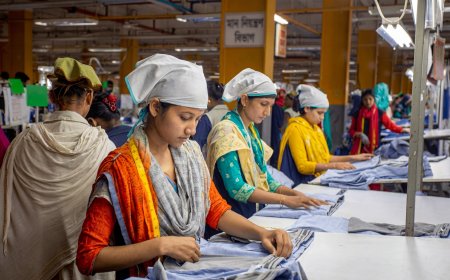
Despite accounting for nearly 30% of the state’s population, Bengali Muslims occupy less than 7% of government jobs. They continue to lag behind in literacy, access to housing and formal banking structures, leaving the vast majority ghettoised and concentrated in low-income, informal labor across West Bengal.
Prior to Adhikari’s win, voter deletions designed to weed out illegal immigration disproportionately affected Muslim-majority areas like Murshidabad, Malda and North 24 Parganas.
Following the declaration of results, widespread violence broke out in Kolkata, Birbhum, Howrah and Murshidabad with independent observers reporting that Muslim communities were specifically targeted and mobs vandalized Muslim-owned businesses, markets and residences, resulting in multiple fatalities.
Mosques have also been targeted and damaged and there has been widespread arson resulting in entire Muslim neighborhoods being destroyed. All of this is buoyed by an aggressive narrative which casts local Bengali Muslims as illegal Bangladeshi immigrants.
Statements by leaders promising the use of "bulldozers for infiltrators" has normalised an environment of vigilante violence, and this combination of force and structural pressure has left the community uniquely isolated; millions of Bengali Muslims are trapped between targeted physical violence and a legal apparatus that has stripped them of their voter IDs, in preparation to potentially expel them over the border.
It is worth remembering here that Bengalis Muslims were persecuted in East Bengal as well, at the hands of the Pakistani establishment.
The Economics of Abuse
Before it was conveniently spun into a communal cause, Bengalis were well aware of what, or more accurately who, created the trauma they have been living with for several generations. Since as early as the 1700s and the Great Bengal Famine, the Abuser-In-Chief of Bengalis has always been an economic exploitation.
In that famine the East India Company aggressively raised tax rates from 10-15% to over 50%, utilising brutal coercion tactics to collect revenue from impoverished farmers. To maximize exports, the Company then forced the farmers to cultivate cash crops like opium and indigo drastically reducing local food production.
And if that wasn’t enough, Company officials and local collaborators proceeded to hoard existing rice stocks and artificially drive up food prices, turning a profit while millions starved.
This pattern became the modus operandi of capital in Bengal, the East India Company’s depredations gave way to the Permanent Settlement Act which created the zamindari structure, eventually replaced by modern commercial investments, but the method has always been the same – keep wages low, squeeze out profits, tax heavily, rule brutally and very importantly, keep the people divided. But the people have not always been so easily divided, and when they haven’t been, they have been able to mount a capable resistance.
The Fakir Sanyasi Rebellion between 1763 and 1800 is perhaps the first popular armed struggle against British colonial rule in Bengal, as well as an early example of inter-communal cooperation.
It was launched by Hindu ascetics and Muslim Sufis, who were later joined by displaced farmers from the Great Famine, Nawab Sirajuddaula’s de-commissioned soldiers and starving local artisans.
The East India Company’s restrictive tax on religious pilgrimages and the ruthlessness of Company officials during the famine prompted this highly organized fighting force to use guerrilla warfare against British outposts -- seizing government treasuries, and intercepting revenue convoys.
Led by Majnu Shah and Bhabani Pathak as well as the female revolutionary Devi Chaudhurani, the rebels raided Company factories to distribute looted grain and money to the starving people, and were an unstoppable force for well over a decade.
Then there was the Indigo Revolt, which remains one of the best examples of class solidarity and communal unity in Bengali history. The struggle was purely an economic and social one, and religious polarisation was singularly ineffective because the revolt’s leadership, which came from members of both faiths, encouraged Hindu and Muslim farmers to work together towards their collective economic emancipation.
Hindu and Muslim farmers maintained a unified position of refusing to plant indigo and collectively boycotted the planters' agents, and it was this unshakable, non-communal cooperation that brought the exploitative system in Bengal to an end.
In the 1870s, another similar revolt, the Pabna Uprising, also remained fiercely non-communal despite attempts by wealthy landlords to frame it as a religious conflict between ‘savage’ Muslim mobs and ‘benevolent’ Hindu nobles.
A Pabna Agrarian League was formed by Hindu and Muslim leaders which launched a movement focused on economic justice for all exploited Bengalis. When the League declared a strike, Hindu and Muslim farmers collectively refused to pay taxes and even pooled their resources to invest in a legal defense fund which hired lawyers to fight eviction notices.
Their actions succeeded in forcing the British government to pass the Bengal Tenancy Act of 1885.
Today, that familiar polarizing language can be heard on both sides of Sher-e-Bangla’s hated ‘false wall,’ a wall which has since devolved into a barbed wire fence, on which dead and dying Bengali bodies have been hung.
In Bangladesh, religious nationalists take aim at India, secularism, Bengali culture and the syncretic mysticism of the Sufis. They encourage a hatred of all things ‘Hindu’ within which they include particular Bengali words and practices, even clothes.
And just as before, political actors fan this fervor to create mobs, which they sinisterly call ‘pressure groups’ and marginalize their political rivals by creating dichotomous narratives of an implicitly communal nature.
They lie, manipulate and use the brutalized bodies of Bengalis, dead or alive, to take power and benefit their benefactors.
In West Bengal, virtually the same language is used to do exactly the same thing, and all the while ordinary Bengalis, driven by the hope of economic emancipation and social justice, by the dream of a chance to escape the centuries’ old exploitation and be restored to dignity and freedom, by faith in their leaders who promise them representation, for a rightful share in the prosperity of their own land, they kill and die and rewrite the trauma of being Bengali on their own bodies and on the bodies of their victims.
Zeeshan Khan is the author of 'Right to Passage -- Travels Through India, Pakistan and Iran' and a barrister from Middle Temple.