

























































Did Washington Project Power or Cede the Strait?
The US-–Iran memorandum ended a war on American terms. But the fine print on the Strait of Hormuz, like the rise of the mediators who brokered it, tells a more complicated story.
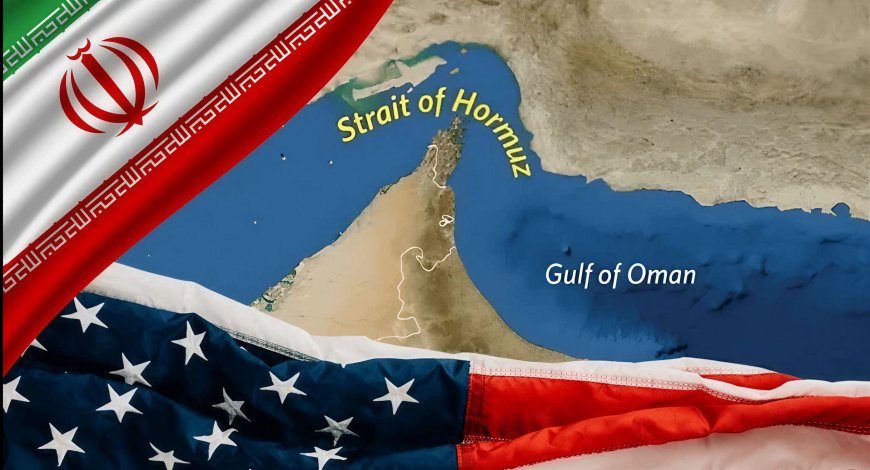
When Donald Trump put his signature to the Islamabad Memorandum of Understanding (reportedly at a dinner near Versailles, with Iranian President Masoud Pezeshkian countersigning in Tehran), the optics were of an unalloyed American triumph. A fifteen-week war that began with the 28 February strikes by the United States and Israel was being declared over; the naval blockade lifted, the Strait of Hormuz reopened, and Iran reaffirmed it would never build a bomb.
The president warned that any Iranian violation would see Washington “go right back to dropping bombs”. Yet read against both its own text and the diplomacy that produced it, the memorandum is a far more ambiguous instrument than the victory lap suggests.
The question that matters for this region is whether the MOU is an exercise in American power projection or a document that quietly enlarged Iran’s leverage, above all, over the world’s most important oil chokepoint. The honest answer is that it is both. And the clearest winners may not sit in Washington or Tehran at all, but in Islamabad and Beijing.
The Strait, and the Law It Bends
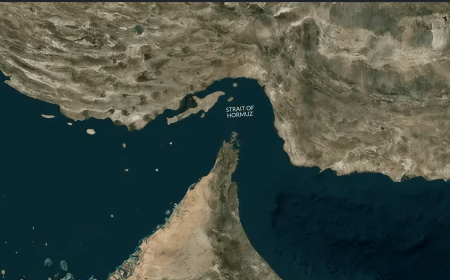
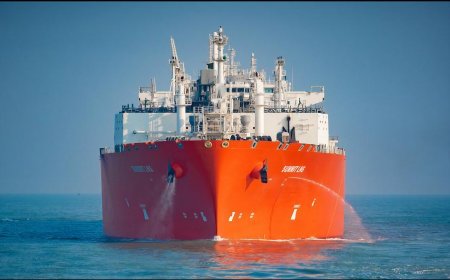
Before the war, passage through Hormuz was governed by one of the firmest norms in maritime law. Under Part III of the UN Convention on the Law of the Sea, straits used for international navigation fall under a regime of “transit passage”: Bordering states may neither suspend nor impede transit, nor levy any charge on vessels merely for passing through.
Neither the United States nor Iran has ratified the convention, though Washington has long and correctly maintained that the right has hardened into custom binding even on non-parties, and the U.S. Navy has enforced it through a freedom-of-navigation programme since 1979. The pre-war baseline, in short, was free, unimpeded, charge-free transit.
The memorandum subtly rewrites that baseline. Paragraph five commits Iran to ensure safe passage for commercial vessels “with no charge, for 60 days only”. That phrasing, as CNN noted, did not appear in the earlier draft. The clause is revealing precisely because of what it implies: That once the window closes, charges may resume. Iran’s First Vice-President, Mohammad Reza Aref, has already said Tehran will retain control of the strait and that vessels should “contribute to the cost of services” for safe navigation.
The machinery is built: A Persian Gulf Strait Authority that demands permits and has reportedly collected up to $2 million per transit, paid in yuan. Maritime-law specialists are blunt that repackaging tolls as “navigational services” does not cure the breach: The substance of the invoice is the same.
For the U.S. Navy, paragraph four carries the quieter concession. Washington undertakes to withdraw its forces “from the proximity of” Iran within 30 days of a final deal. Having forced destroyers into the strait for minesweeping during the war, the United States now accepts distance, with its ships more plausibly holding in the Gulf of Oman than transiting Hormuz at will.
Layered onto a $300 billion reconstruction fund, the release of frozen assets and a pledge to terminate all sanctions under a final accord, the package amounts to one of the most lucrative settlements Tehran has ever secured. If the final deal entrenches an Iranian–Omani administration of the waterway, the post-1979 principle of toll-free, unimpeded passage will have eroded on America’s watch.
The Spoiler in Beirut
The memorandum declares an end to the war “on all fronts, including Lebanon.” Israel, which is not a party, flatly rejects that reading, and the gap is the agreement’s most dangerous fault line. Netanyahu was reportedly kept in the dark during the final round, learning details only by calling contacts in the Trump administration. He insists Israel will “preserve its freedom of action” and remain in Lebanese “security zones,” while Defence Minister Israel Katz says the IDF will hold its positions in Lebanon, Syria, and Gaza.
Israeli strikes on Beirut twice nearly derailed the talks, and the first fatality after the deal’s announcement came in an Israeli drone strike in the south. Iran’s Khatam al-Anbiya command has threatened a “hard response” if the offensive against Hezbollah continues.
Trump’s irritation is undisguised. He called Netanyahu “a very difficult guy” who “should be very thankful to us,” and posted that a morning strike on Beirut “should not have happened.”
The structural problem is plain: A U.S.–Iran ceasefire that an American ally can puncture at will in Lebanon exposes the limits of Trump’s leverage over a partner he cannot fully restrain, and it hands Tehran a standing grievance with which to test the whole arrangement.
The New Shareholders
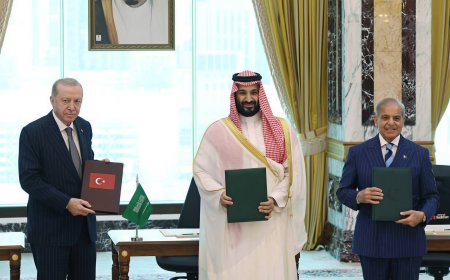
If two capitals are gained without ambiguity, they are Islamabad and Beijing. Pakistan, until recently written off by Washington as a “troublemaker”, engineered the first high-level U.S.–Iran contact since 1979. The channel ran through Field Marshal Asim Munir, whose rapport with Trump dates to a 2025 White House lunch and Pakistan’s pointed nomination of the president for a Nobel Peace Prize. Crucially, Pakistan does not recognise Israel and so carries no baggage that Tehran would reject.
Qatar, Saudi Arabia, Turkey, and Egypt assisted, yet Islamabad held the pen, which the Council on Foreign Relations’ Joshua Kurlantzick called a “remarkable role change” for a state long treated as a pariah.
China is the silent co-author. Beijing imports roughly a third of its oil and gas through Hormuz, which helped bring Iran to the table, and co-signed an earlier peace plan with Pakistan. At their summit in Beijing in May, Trump pressed Xi Jinping for help reopening the strait while conceding rhetorical ground on Taiwan and status.
One European observer’s verdict, that “the US is fighting without winning, China is winning without fighting”, captures the asymmetry neatly. A waterway where some transit fees are now settled in yuan, reopened in part through Chinese diplomacy, is not obviously a theatre of American primacy.
A Weaker JCPOA?
Measured against the 2015 Joint Comprehensive Plan of Action, the memorandum is thinnest precisely where it matters most. The JCPOA ran to 109 pages, capped enrichment at 3.67 percent, cut Iran’s stockpile by 97 percent, and embedded intrusive IAEA verification. The MOU is a 14-point framework that defers the nuclear core (Iran’s roughly 440 kilograms of uranium enriched to as high as 60 percent) to talks over the next 60 days, offering only a “minimum methodology” of on-site down-blending under IAEA supervision.
Iran’s promise never to build a weapon is no fresh concession: It dates to the Non-Proliferation Treaty and was restated in the JCPOA. Missiles and regional proxies are excluded entirely. The administration’s claim to superiority, therefore, rests less on text than on coercion: Defence Secretary Pete Hegseth’s insistence that “the military option is there” and the president’s standing threat to resume bombing.
The veterans of the last deal are sceptical. Wendy Sherman, who led the JCPOA negotiations, has warned that a maximalist demand for capitulation cannot work with Tehran; the former envoy Robert Malley notes that trust is near an all-time low and that the leadership that signed in 2015 is dead. The fairest verdict is neither clean win nor simple retreat, but fallback: Washington has traded the JCPOA’s verifiable non-proliferation architecture for a war-termination framework underwritten by the threat of force, stronger on deterrence yet weaker on durable verification.
So was Islamabad a projection of American power or a concession to Iran? It was a war Washington won on the battlefield, and a peace it is now struggling to dictate. Trump halted the fighting and reopened the oil lanes, but at the price of legitimising Iranian management of Hormuz, tolerating an Israeli veto in Lebanon, and elevating Pakistan and China as guarantors of an order the United States once underwrote alone.
For Dhaka and the wider Global South, that is the memorandum’s real lesson: The post-1979 Gulf, so long policed from Washington, is becoming a more crowded and negotiable space. Whether the coming 60 days yield a durable settlement or merely a pause before the bombs the president has promised will decide which reading was right.
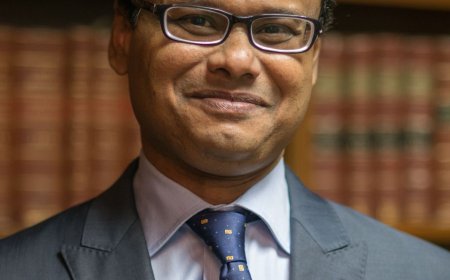
Arman Ahmed is the founder and president of DhakaThinks, a youth-led think tank in Bangladesh, and a research analyst at the Spykman Center in Paris.