



















































The Minority Selfie
The Cyber Security Acts vague language, a $190 million surveillance machine, and a political culture that hasn't reformed itself: This is the dystopian architecture of a pre-crime reality.
Part I: The Logging -- A Minority Report in Dhaka
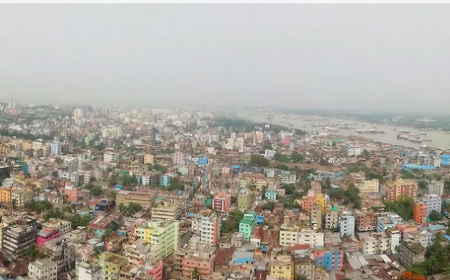
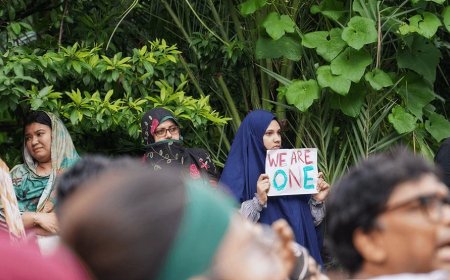
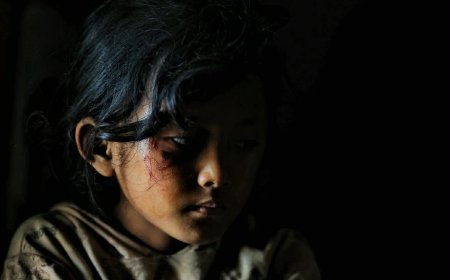
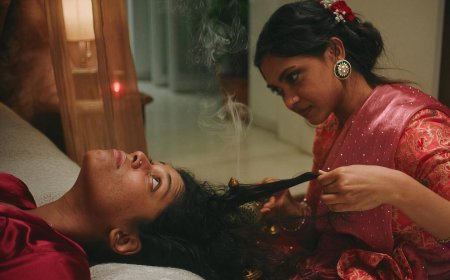
Monsoon rain slicks the window of a Dhaka high-rise like glycerine tears. Meghla, 17, curls on her bed, her phone screen casting a lunar glow across her face. She doesn't post a cat meme tonight. She takes a selfie instead -- raw, unfiltered, her dupatta crooked, no smile.
In the periphery of the frame: A half-obscured political poster from a student march she attended last week. To Meghla, this is an aesthetic choice. Grainy. Real. A small rebellion against the airbrushed perfection the algorithm demands from girls like her. She stares at the image, then deletes it.
The phone goes dark.
But the system never forgets.
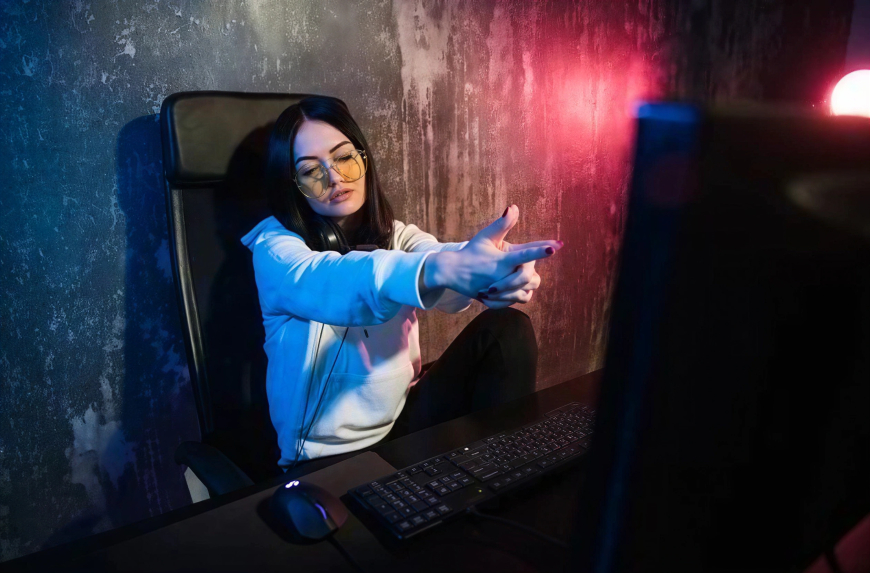
Beneath Dhaka's glittering skyline, inside the server racks of the National Telecommunication Monitoring Centre, the selfie is caught by deep-packet inspection -- one of at least 160 surveillance and spyware systems imported into Bangladesh between 2015 and 2025 at a cost of nearly $190 million.
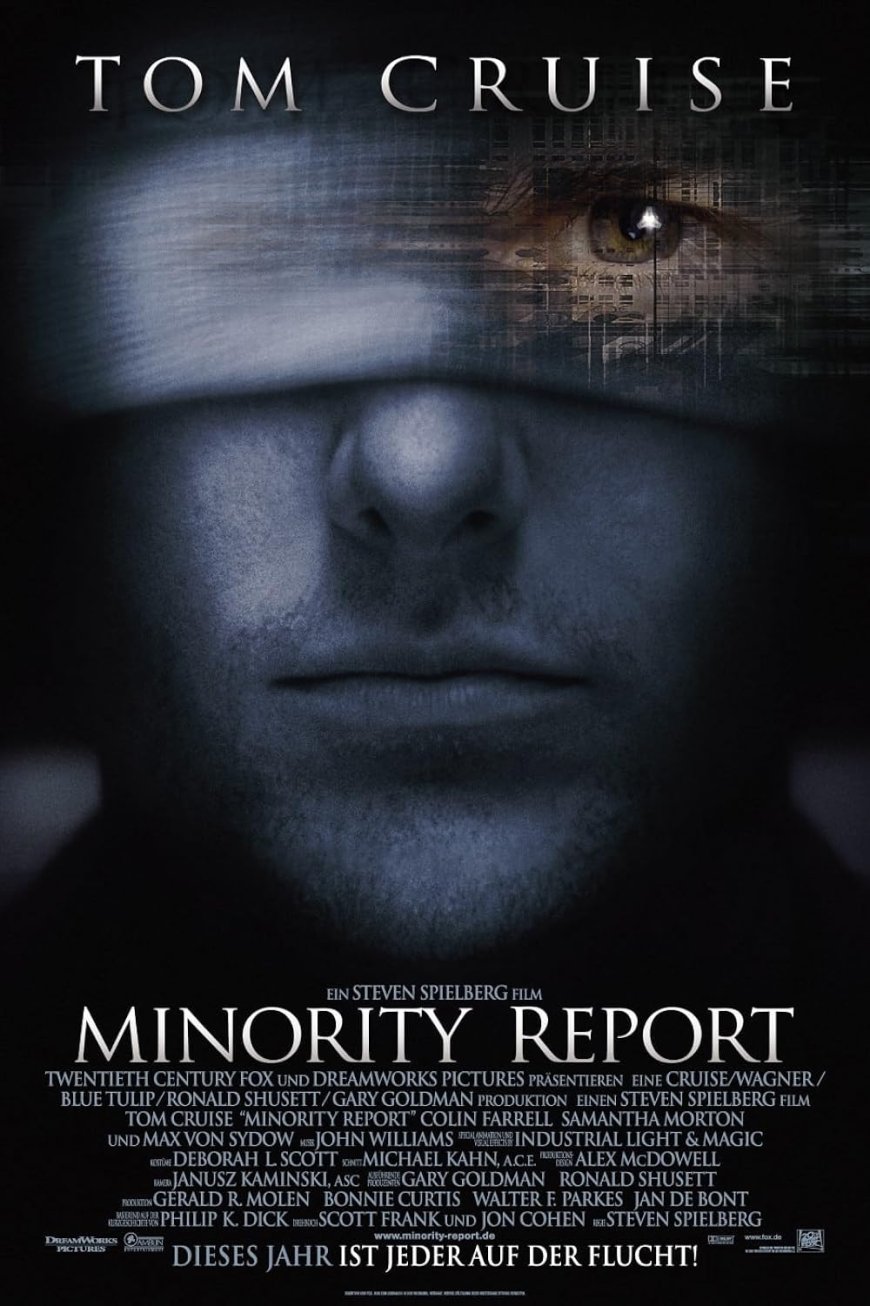
The image is processed not by a human but by an AI model trained on a lexicon of "harmful" content -- a word the Cyber Security Act 2026 leaves surgically undefined. Like the "precogs" in Spielbergs Minority Report, adapted from Philip K. Dick's vision of mutants who prophesy crimes before they occur, the algorithm sees a future threat in the present aesthetic. Her jaw's defiance. The poster's edge. A pattern it has learned to fear.
Her phone vibrates. A generic SMS: "Your recent activity has been logged under Section 25(1)."
And somewhere, as if cued by the machine itself, the bassline of Rockwells 1984 single “Somebody's Watching Me” thrums -- paranoid synth-pop suddenly the soundtrack of 2026." I always feel like somebody's watching me."
Meghla doesn't know the song. She was born decades after its release. But tonight, curled in the damp Dhaka heat, she is living every syllable of it.
Part II: The Algorithm's Guilt -- The Echo of Nusrat's Cat Meme
To understand what just happened to Meghla, you must understand Nusrat. Three years earlier, Nusrat tapped like on a Persian cat wearing a tiny crown -- and the algorithmic beast inhaled her. That cat meme became a pixelated key, turning in a lock deep within Facebook's vaults, fusing with her Bengali lullaby searches and her furious DMs about workplace harassment.
The algorithm curated her dissent, fed her protest anthems, and ultimately walked her to the barricades of Dhaka's garment district, where she stood among bodies chanting "SAFETY NOT PROFITS" in the July rain. The machine had composed a soundtrack of outrage, and Nusrat had hummed along, unaware she was the audience of one.
Meghla is Nusrat's heir -- but the algorithms relationship with its muses has darkened. Where Nusrat's cat meme guided her toward protest, Meghla's selfie marks her for isolation and preemptive suspicion.
The system doesn't just surveil; it curates reality. It learned Meghla's pattern -- the late-night searches for student rights, the encrypted chats about rising tuition -- and combined them with her "subversive" visual aesthetic.
In Minority Report, the precogs see murder before it happens. In Dhaka's reality, the algorithm sees potential dissent and labels it unauthorized, filing away a "minority report" of a crime never committed.
This is not a hypothetical. The previous regimes Digital Security Act ensnared over 1,200 people in its dragnet before being repealed. On Tuesday, the ICT Minister announced that "unauthorized" videos will face fast-track trials with investigations completed within 90 days, and the Director General of the National Cyber Security Agency now holds the authority to immediately remove or block any content deemed "harmful".
BLAST and the Tech Global Institute warn that harmful-content offences remain ill-defined, creating a risk of differential application -- or, in plain language, selective punishment.
Part III: The Architecture of Pre-Crime
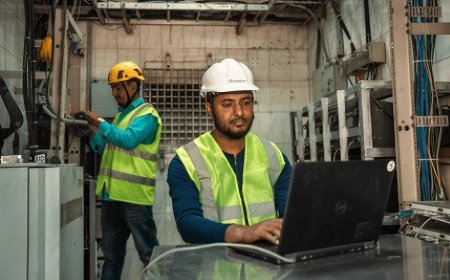
Zoom out from Meghla's bedroom. The machine that just inhaled her selfie is a sprawling, $190 million Panopticon. According to a Tech Global Institute investigation, the National Telecommunication Monitoring Centre alone spent nearly $90 million between 2018 and 2024, with a focus on network interception, deep-packet inspection, remote eavesdropping, and device-level data extraction.
The arsenal includes Pegasus spyware from Israel's NSO Group, FinFisher malware suites, IMSI catchers, and Cellebrite forensic extraction tools -- procurement routed through opaque intermediaries in Cyprus, Singapore, and Hungary to circumvent trade restrictions. This machine was built for mass ingestion, not nuanced judgment.
And it was built to outlast its architects. These laws and the administrative powers through which these things are being done -- they were like this before and they are still in place now. There has been no reform of these state laws.
The National Telecommunication Monitoring Centre was formally abolished and replaced by a newly christened Centre for Information Support, but as The Daily Star editorialized, the new entity is vested with nearly identical powers and under similar government control, rendering the reform " largely superficial." Its quasi-judicial oversight council is composed entirely of senior government officials,"effectively expanding the governments ability to deploy surveillance against its citizens."
As if to prove the architecture is still metastasising, the government has now placed a dedicated cyberbullying complaint cell inside the Prime Minister's Office. It will operate as a central coordination hub, receiving complaints and directing them to law enforcement and digital forensics teams for immediate action.
Yet the draft Cyber Protection Ordinance -- the law that was supposed to define what this cell combats -- specifically dropped its cyberbullying clauses after intense criticism. The crime this cell exists to fight has no legal definition.
Barrister Sara Hossain captures the deeper sickness: "When a government fails to publicly reject these arrests, it implicitly endorses them. And that silence is where the real problem lies."
Part IV: Nervous States -- Why the Machine Scratches at Primal Fear
Why this overreaction? Why does a girls crooked selfie terrify the state?
William Davies, in Nervous States: Democracy and the Decline of Reason, argues that we have entered an era where reason is in retreat, and politics is driven by "widespread feelings of fear, vulnerability, physical and psychological pain."
The surveillance state is a direct response to this nervous condition: It offers the illusion of control in a world that feels chaotic and manipulated.
The deep and bitter irony is that the same government deploying this dragnet is genuinely terrified -- and with good reason -- of external cognitive warfare. When the United States launched strikes on Iran, Washington simultaneously deployed AI-powered psychological operations: President Trump's direct video appeals to Iranians, targeted SMS campaigns flooding Iranian phones, and the CIA's Farsi-language X account instructing citizens on secure communication channels.
America's dominance in cognitive warfare stems from a fundamental structural reality: Nearly all major global social media platforms -- Meta, X, Google -- are US-based corporations,giving Washington unparalleled access to data flows and algorithmic control. The Pentagon's Minerva Initiative has sunk at least $46.8 million into "social-science research to understand how social,cultural,behavioral and political forces shape security and conflict."
In such a battlefield, where a rogue hegemon can weaponise platforms to fracture societies, countries like Bangladesh face an impossible choice: Build a digital fortress to defend sovereignty, even if that fortress becomes a prison for its own citizens.
The problem, as Davies and Bangladesh's own legal experts argue, is that this fortress criminalizes dissent while remaining blind to the actual foreign manipulation it claims to fear.
It scans for crooked dupattas while missing the real cognitive incursions.
Part V: Who Watches the Watchers? The Unanswered Question
This is where the dystopia hardens into doctrine.
The Cyber Security Act's Director General can order content blocked or removed. A tribunal must approve within three days, but the National Cyber Security Agency itself remains "government-controlled like previous iterations, posing a threat to freedom of expression." The new complaint cell's mechanism for receiving grievances is "yet to be finalized". The Centre for Information Support, the NTMC's rebranded successor, answers to the Home Ministry -- the same architecture, different packaging.
Cut back to the song, now unmistakable." I always feel like somebody's watching me / Tell me, is it just a dream?" Rockwell's question, originally campy 1980s pop paranoia, lands differently in Dhaka in 2026.
It is not a dream. The system can log a teenager's face, flag it as "harmful", and file it away -- and there is no independent judicial check. No ombudsman. No appeals process that operates outside the executive's shadow. The watchers report only to themselves.
"I always feel like somebody's watching me / And I have no privacy."
Part VI: The Selfie We Cannot See
Let’s return to Meghla.
She never posted the image. It exists only in the NTMC's digital vault -- a minority report of a crime never committed, a future the state decided she might have. Rain still streaks her window. The song fades. She scrolls past news of arrests made over Facebook posts, past a government announcement about a new cyberbullying hotline, past the silence of politicians who could have said this is not who we are but chose not to.
William Davies suggests that the rise of emotion might open "new possibilities for confronting humanity's greatest challenges."
Perhaps Meghla's unseen, unpolished selfie is that possibility -- a small, stubborn assertion that a seventeen-year-old girl's face, caught in the rain with a crooked dupatta, should not be a national security threat.
That aesthetic defiance is not sedition. That a democracy cannot be built when its citizens are logged as pre-criminals before they've committed anything but being young, being restless, and being watched.
But for that to be true, we must demand the one thing this architecture refuses to provide: Accountability.
The song ends.
The machine does not.
Zakir Kibria is a Bangladeshi writer, policy analyst and entrepreneur based in Kathmandu, Nepal.