




































































Can We be an Alternative to the Strait of Malacca?
There is the India-shaped hole in the map. By excluding New Delhi, Beijing has made the corridor more diplomatically tractable, but it has also converted an economic connectivity project into a more explicit piece of the China-India strategic contest in the Bay of Bengal.

When war-risk insurers began quoting premiums for tankers transiting the Strait of Hormuz at three to ten times their pre-crisis rate earlier this year, the shock was felt as far away as Kunming.
Crude oil spiked to roughly $126 a barrel in March 2026 -- the sharpest energy shock since the 1970s -- and even after a partial reopening of the strait, shipping has not normalized yet, with insurance costs and tanker backlogs still distorting trade routes.
For China, the Iran-USA-Israel war was not simply a Middle East crisis, but a confirmation of an anxiety that has shaped Beijing's strategic thinking for over two decades, that China's economy can be held hostage by chokepoints that it does not control.
This sizing up of Hormuz has motivated China to revive a dormant, decades-old idea -- an overland corridor running from Yunnan province through Myanmar to the ports of Bangladesh -- with fresh urgency and a new name -- the China-Myanmar-Bangladesh Economic Corridor (CMBC).
The Dilemma That Started It All
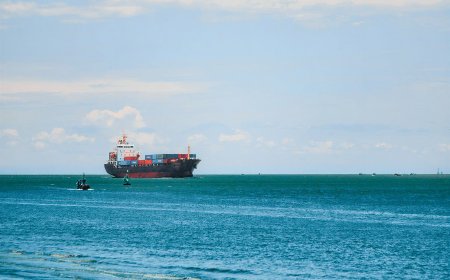
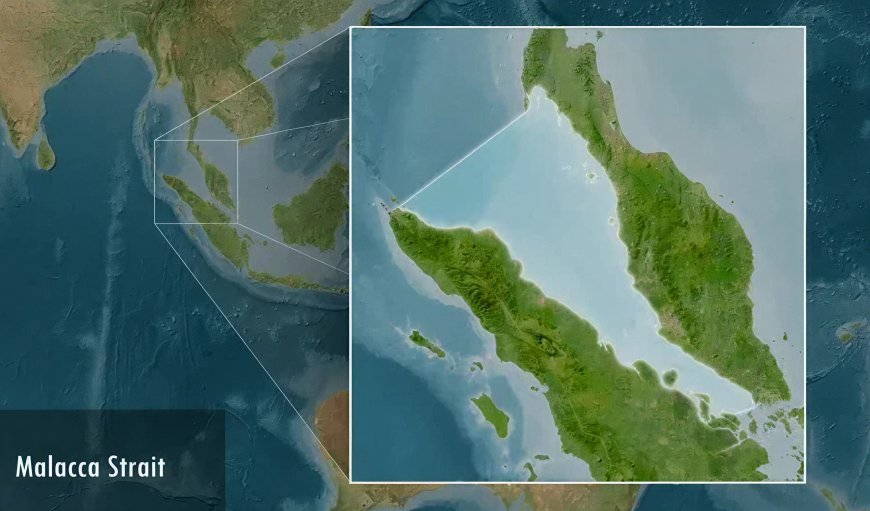
The term "Malacca dilemma" was named by then-President Hu Jintao in 2003 to describe China's vulnerability to disruption at the Strait of Malacca -- the narrow passage between Sumatra and the Malay Peninsula through which more than 60,000 vessels pass every year, carrying roughly a quarter of all global maritime trade, including an estimated 75 to 80 per cent of China's imported crude oil.
If a strait like this were ever blocked -- say, by the US Navy from the South China Sea -- it could pose a high risk to China as a rising global power.
The United States also views the Strait of Malacca as a critical geo-political chokepoint. They expanded their strategic and defense cooperation with Indonesia, allowing their military aircraft and naval ships to pass through the strait, thereby enhancing their maritime awareness and monitoring capabilities.
Since then, China has pursued a genuinely multi-pronged hedge by building pipelines from Kazakhstan and Russia, a strategic petroleum reserve of nearly 1.4 billion barrels, port investments across the Indian Ocean under the so-called "String of Pearls" (Gwadar in Pakistan, Hambantota in Sri Lanka, Kyaukpyu in Myanmar), and now the Pinglu Canal in Guangxi, due for trial navigation in September 2026.
Yet even taken together, these overland and alternative routes carry a combined capacity of roughly 1.5 million barrels a day -- a fraction of the 7.9 million barrels that flow to China through the Strait of Malacca daily. The dilemma, in other words, has never been solved. It has only been managed.
Hormuz as an Accelerant, Not Origin
What changed this year was not the logic but the evidence. The closure of Hormuz due to the Israel-USA-Iran war demonstrated that a chokepoint does not need to be physically closed to become useless -- it only needs to become uninsurable. Commentary following the Hormuz shock has explicitly argued that a Taiwan contingency could trigger the same insurance-driven paralysis at Malacca, especially given the expanded USA-Indonesia defense partnership signed this spring.
For Beijing, that is precisely the scenario the “dilemma” was named for in 2003, and the situation of Hormuz has now shown a live rehearsal of how it could unfold. This rehearsal shows more than any single pipeline economics, which motivates Beijing to dust off a South Asian connectivity plan that had been gathering dust for a decade.
From BCIM to CMBC
The original Bangladesh-China-India-Myanmar (BCIM) Economic Corridor traces back to 1999, known as the “Kunming Initiative,” and was formally endorsed by all four governments in 2013 -- envisioning road, rail, and energy links stretching from Kunming to Kolkata via Mandalay and Dhaka. It never got past the concept stage.
India withdrew from the project as it folded into the Chinese Belt and Road Initiative (BRI) and also worried about how the China-Pakistan Economic Corridor's route through Kashmir affected its own territorial claims.
The corridor now on the table is narrower -- it drops India out altogether. The proposal gained fresh momentum during Bangladesh’s newly elected Prime Minister Tarique Rahman's official visit to Beijing in June, where Xi Jinping voiced support for advancing what is now called the China-Myanmar-Bangladesh Economic Corridor (CMBC), alongside Chinese interest in modernizing the ports of Chittagong and Mongla.
The route would run from Kunming to Mandalay, branching to Yangon and the deep-sea port at Kyaukpyu on one side, and onward through Myanmar's Rakhine state to Bangladesh's Chittagong and Cox's Bazar on the other.
The strategic logic is not subtle. For landlocked Yunnan, the corridor promises a shorter overland route to the Bay of Bengal, reducing dependence on the much longer maritime detour through the Strait of Malacca and the South China Sea. For China more broadly, it is one more redundant artery in the same hedging strategy that produced the Myanmar oil and gas pipelines to Kyaukpyu, operational since 2013 and 2017, respectively.
It is, in short, exactly the kind of dual-track insurance policy the Hormuz shock has made newly fashionable in Beijing's strategic planning.
Read with Caution
The CMBC can be a real hedge, but it is not a real alternative to Malacca, and treating it as one risks overselling both its economic promise and its geo-political stability.
First, the numbers do not add up to a substitute. Even China's most mature overland bypass -- the Myanmar pipeline corridor that the CMBC would extend -- moves only a small fraction of what transits the Strait of Malacca on a daily basis. A rail-and-road corridor through Rakhine, however useful for regional trade, will not carry oil tankers' worth of energy. It diversifies, not displaces.
Second, Myanmar itself is the corridor's weakest link, and has been for years. Since the 2021 military coup, the country has fractured. A 2026 UN Security Council briefing, corroborated by BBC mapping, found that the junta controls only about a fifth of national territory, with resistance forces and ethnic armies holding roughly 42% and the rest contested. The consequences are not hypothetical.
A Chinese-backed power plant at Kyaukpyu -- the very port the corridor depends on -- was progressively dismantled and relocated as fighting closed in during 2024 and 2026, after the plant had already been suspended over gas-supply and payment disputes with the junta.
The Kyaukpyu deep-sea port project, first agreed with CITIC Group in 2009 and formally tendered in 2015 for $7.3 billion, remains years behind schedule. Any corridor built on this foundation inherits Myanmar's civil war as a permanent operational risk, not a temporary inconvenience.
Third, Bangladesh has strong reasons to keep this at arm's length rather than embrace it wholesale. Dhaka is already pursuing more bankable connectivity projects -- the World Bank-backed expansion of Chittagong's Bay Terminal and the Japanese-financed Matarbari deep-sea port -- that do not depend on stability in a neighboring civil war.
Bangladesh's government has, sensibly, kept the CMBC “under review” rather than offering formal endorsement. They are preserving strategic flexibility rather than tying their port infrastructure to a route through one of the world's more unstable conflict zones.
Fourth, and this is the part that should trouble Dhaka the most, China has openly tied the corridor to the Rohingya crisis, and that linkage looks less like goodwill than leverage.
During Tarique Rahman's Beijing visit, Chinese officials paired the corridor proposal with a pledge to facilitate dialogue with Myanmar on Rohingya repatriation. Beijing's ambassador in Dhaka has since gone further, stating that the corridor and the Rohingya issue are interrelated and that the project may give repatriation extra momentum.
On paper, this sounds like a bonus for Dhaka, but in practice, it reads as a trade where Bangladesh gets Beijing's help, nudging a crisis it desperately needs resolved -- the country is currently hosting well over a million Rohingya refugees, with humanitarian funding chronically short -- in exchange for buying into an infrastructure project running through the same Rakhine territory the refugees fled. A territory that had been under the junta’s control since December 2024 has since been controlled by the Arakan Army -- a non-state armed group -- which China would have to negotiate directly with.
Dangling repatriation as a sweetener for corridor buy-in gives Bangladesh a strong incentive to say yes to a project whose economics and security case are otherwise shaky -- which is exactly why it deserves scrutiny rather than gratitude.
Finally, there is the India-shaped hole in the map. By excluding New Delhi, Beijing has made the corridor more diplomatically tractable, but it has also converted an economic connectivity project into a more explicit piece of the China-India strategic contest in the Bay of Bengal.
That may invite New Delhi's countermeasures -- deepening its own Act East policy and BIMSTEC-linked connectivity -- rather than regional cooperation, which is a strange outcome for a project ostensibly about trade facilitation.
The Honest Assessment
China's pursuit of alternatives to the Strait of Malacca is neither new nor irrational. The vulnerability that Hu Jintao named in 2003 is real, and the Hormuz war has shown, in the starkest terms yet, how insurance markets rather than navies can strangle a chokepoint.
But the CMBC, like the Myanmar pipelines and the Pinglu Canal before it, is best understood as one more redundant thread in a decades-long risk-diversification strategy -- not the emergence of a genuine substitute for the strait that still carries the overwhelming majority of China's energy lifeline.
Until Myanmar's civil war resolves into something resembling a functioning state, and until Bangladesh commits capital rather than caution, the corridor will remain what BCIM was for over twenty years -- a compelling map, and very little else.
Ahamed Jobayer is a recent postgraduate in International Relations from South Asian University, New Delhi.