



















































![A Ledger of the Soul: Navigating the Allah-Bhagavant Nexus in a 19th-Century Puruṣākāra Jñāna Caupara [Gyan Chauper]](https://counterpointbd.com/uploads/images/202608/image_430x256_6a93baa3b09a7.jpg)





















Looking Beyond LCs
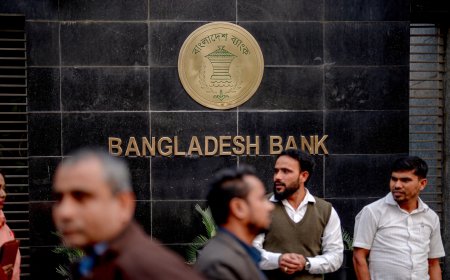
Bangladesh Bank’s circular issued on June 11 represents a timely, strategic, and forward-looking shift toward the development and facilitation of alternative trade finance mechanisms.

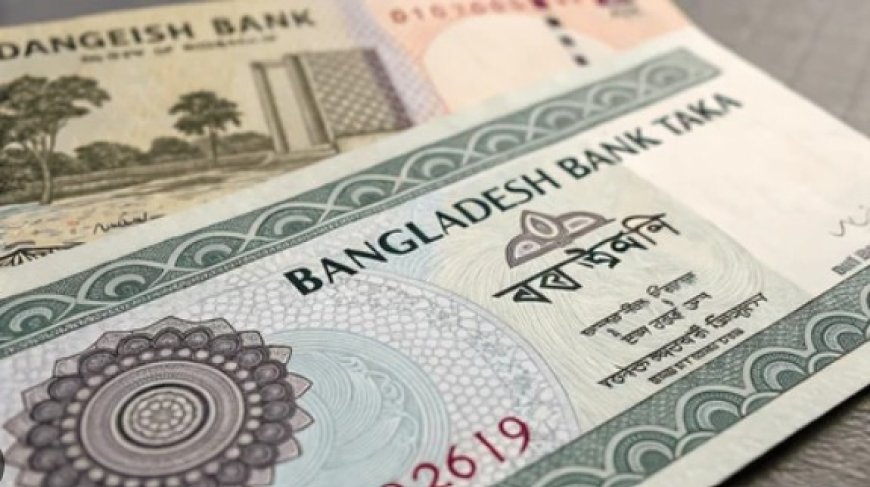
Bangladesh’s external trade architecture has historically been anchored in the use of Documentary Letter of Credit (LC), a globally recognized and secure instrument that has played a critical role in mitigating payment and performance risks.
For decades, this system has provided comfort to exporters, importers, and banks alike by ensuring that transactions are backed by formal banking commitments.
However, as global trade finance continues to evolve toward greater flexibility, speed, and cost efficiency, an overreliance on LCs has increasingly been seen as a constraint rather than a strength.
In this context, Bangladesh Bank’s circular issued on June 11 represents a timely, strategic, and forward-looking shift toward the development and facilitation of alternative trade finance mechanisms.
Importantly, the circular does not attempt to dismantle the LC regime. Instead, it adopts a pragmatic and balanced approach by reaffirming that LCs remain a valid and widely accepted instrument.
This reassurance is essential, particularly for risk-sensitive sectors and new trade relationships where trust and enforceability are still developing.
At the same time, the central bank has clearly acknowledged that modern global trade is no longer confined to LC-based transactions.
Increasingly, international commerce relies on a diverse ecosystem of instruments such as open account trade, documentary collection, and supply chain finance (SCF), including factoring and receivables financing. These instruments provide businesses with the flexibility to negotiate competitive terms, optimize working capital, and respond quickly to market dynamics.
One of the most significant contributions of the circular is its formal regulatory recognition and facilitation of alternative trade settlement mechanisms. Authorized dealer (AD) banks are now explicitly permitted to support advance payments, open account exports, and documentary collection arrangements, including Documents against Payment (DP) and Documents against Acceptance (DA).
While these instruments were not entirely absent from the regulatory framework, their broader acceptance and structured endorsement mark a clear policy shift.
The allowance for import transactions without LCs under purchase and sales contracts is particularly noteworthy. This provision effectively transitions the system from a bank-intermediated, guarantee-heavy model to a more contract-driven and relationship-based framework.
In doing so, it aligns Bangladesh with international practices where open account trade dominates, especially among trusted trading partners. At the same time, the circular prudently clarifies that banks will not assume payment obligations unless separately contracted, thereby limiting undue risk exposure within the banking system.
Another important feature is the liberalization and rationalization of advance payment provisions. The circular permits advance payments up to specified thresholds without requiring repayment guarantees, while also establishing a clear and time-bound approval mechanism for transactions exceeding those limits.
The introduction of a 48-hour disposal window for urgent cases is particularly significant, as it addresses a long-standing concern among businesses regarding delays in regulatory approvals. This measure alone has the potential to significantly improve transaction efficiency and responsiveness in time-sensitive trade operations.
Perhaps the most transformative element of the circular lies in its emphasis on supply chain finance (SCF). Globally, SCF has emerged as a powerful mechanism for optimizing liquidity across supply chains, particularly in an era where just-in-time production and global value chains dominate trade patterns. By encouraging banks to develop structured SCF solutions, the central bank is opening new avenues for financial innovation.
Reverse factoring, or buyer-led financing, is a key component of this strategy. Under such arrangements, financing is extended against invoices approved by creditworthy buyers, allowing suppliers to receive early payments while buyers settle obligations at maturity. This model effectively transfers credit risk from smaller suppliers to stronger buyers, thereby enabling lower financing costs and improved liquidity.
For Bangladesh, where a large proportion of exporters are small and medium enterprises, the implications are profound. Access to early payment can significantly reduce working capital constraints, enhance production capacity, and improve competitiveness in international markets.
The circular also accommodates supplier financing and importer financing under usance import arrangements. By allowing banks to discount accepted usance bills on a non-recourse basis, exporters can realize proceeds early without increasing the financial burden on importers.
This feature not only enhances liquidity but also aligns with global best practices in trade finance. It reflects a nuanced understanding of how financing can be structured to benefit all parties within a transaction.
Equally significant is the central bank’s emphasis on digital trade facilitation. The encouragement to adopt electronic and digitized trade processing systems marks a critical step toward modernizing Bangladesh’s trade infrastructure.
The acceptance of electronic documents, including invoices and transport records, subject to proper verification and legal enforceability, can dramatically reduce processing time, lower operational costs, and minimize errors. In a world increasingly driven by digital platforms and paperless trade ecosystems, such reforms are essential for maintaining competitiveness.
However, the circular also recognizes that digital transformation must be accompanied by robust safeguards. The provision allowing for the use of physical documents where necessary -- whether due to legal requirements, contractual obligations, or risk considerations - ensures a smooth and secure transition rather than a disruptive overhaul.
From a regulatory perspective, the circular strikes a careful balance between liberalization and prudential control. Banks are required to adopt a risk-based approach, including robust credit assessments, defined exposure limits, comprehensive documentation, and continuous monitoring of transactions.
The broader economic implications of this reform are substantial. By diversifying trade finance mechanisms, Bangladesh can significantly enhance the efficiency of capital utilization within its external sector. Exporters stand to benefit from improved cash flow and faster realization of proceeds, while importers gain access to more flexible payment arrangements.
For banks, the shift opens up new product lines and revenue streams, encouraging innovation and competition within the financial sector.
Moreover, the move brings Bangladesh closer to global trade finance practices. In many advanced economies, open account trade accounts for the majority of transactions, supported by strong legal frameworks, credit information systems, and digital infrastructure. By gradually transitioning toward such a model, Bangladesh can deepen its integration into global value chains and attract greater participation from international buyers and investors.
The implications for ease of doing business are equally compelling. Reduced reliance on cumbersome documentation, faster processing times, and more flexible financing options can significantly improve the business environment.
For exporters seeking to expand into new markets, the ability to offer competitive payment terms can be a decisive advantage. Similarly, importers can optimize their procurement strategies through more efficient financing arrangements.
Nevertheless, the success of this initiative will depend on effective implementation. Banks will need to invest in technology, human capital, and risk management systems to support these new instruments.
Training and awareness programs will be essential to ensure that both bankers and businesses understand the opportunities and risks associated with alternative trade finance mechanisms. At the same time, legal and institutional frameworks may need to be further strengthened, particularly in areas such as enforceability of electronic documents and dispute resolution.
In addition, coordination among regulators, financial institutions, and trade bodies will be crucial. The transition from an LC-dominated system to a more diversified trade finance ecosystem cannot happen overnight. It requires a phased approach, supported by continuous monitoring, feedback, and policy refinement.
It can be said that June 2026 circular represents a landmark step in the evolution of the country’s trade finance landscape. By opening the door to alternative mechanisms while maintaining the integrity of the existing LC framework, the central bank has laid the groundwork for a more flexible, efficient, and globally aligned system.
If implemented effectively, this reform has the potential to significantly enhance ease of doing business, strengthen the resilience of the external sector, and position Bangladesh more competitively in the global trading system. It is, in every sense, a move in the right direction -- one that reflects both strategic foresight and practical pragmatism.
Nasrin Sheely is an analyst and commentator based in Dhaka, Bangladesh, specializing in banking, economic policy, and international trade.