











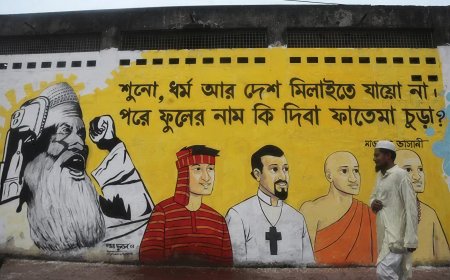












































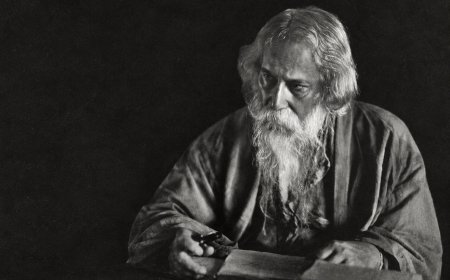
The development of Bengali nationalism around Rabindranath cannot be understood merely as a Hindu-Muslim cultural conflict. It was intertwined with language, power, and the right to determine one’s own identity.
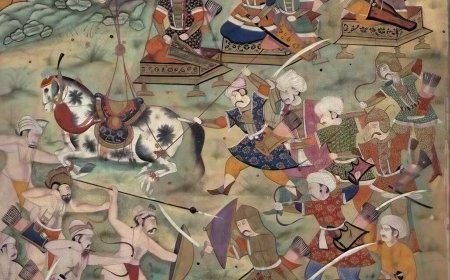
In South Asia, his legacy is known as one of the final Pathan chiefs who defied an empire and lived on his own terms until the very end.

For music lovers of my generation in Bangladesh, those names bring back fond memories. Music then required effort. Albums had to be found, borrowed, bought or recorded, and collections grew slowly.

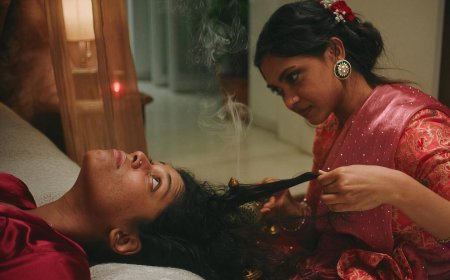
A film begins as something completely private. It lives inside you. And then you try to give it a life outside yourself.

The feeling had already taken root, silent and complete, somewhere he could not reach to tear out. And already, deep in the grammar of a lifetime, he could feel the old instinct stirring: The wall beginning, stone by patient stone, to rebuild itself.

The irony is brutal. The same patriarchal system that renders her life intolerable also provides the only sanctioned route out of it.

The novel ends with a revolution. It ends with violence, bloodshed, and irreparable loss. But in that loss, lies a freedom, a sense of ownership of one’s identity, of standing with what one believes in.

In the hands of Flaubert, Lawrence or Duras, lust becomes a way of exposing the small humiliations, private fantasies and enormous vanities that people spend their lives concealing.

Horror films can provide feminists with analytic tools to fight complacency and despair. Saturating viewers/witnesses with discomfort, they show the fragility of the symbolic order and open up ways toward alternative imaginaries.
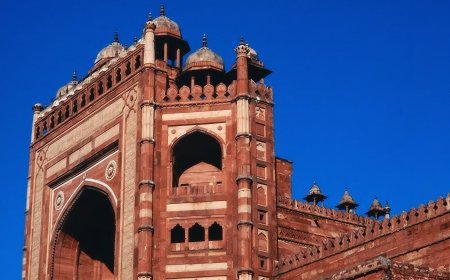
What if Salman Rushdie's Mughal-Florentine fever dream was the film South Asia desperately needs right now?

Today, Faridpur is known for the folk music of Jasimuddin, jute and fish trade, and being a railway hub. However, the Fort of Bhushna is an obscure site in ruins, with most of the bricks removed and overgrown shrubs and trees surrounding the site.

Hi isn’t a message. It’s a doorbell. Say the thing, or call. I might even pick up.
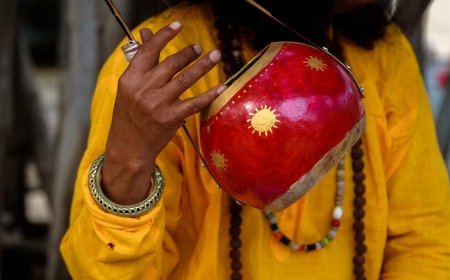
Bangladesh’s identity was never meant to be dictated by an elite minority, nor silenced by fundamentalist threats. The real sound of the nation is already playing; it is time to secure the stage and let it resound.
![A Ledger of the Soul: Navigating the Allah-Bhagavant Nexus in a 19th-Century Puruṣākāra Jñāna Caupara [Gyan Chauper]](https://counterpointbd.com/uploads/images/202608/image_430x256_6a93baa3b09a7.jpg)
Taken together, the visual, linguistic, and material evidence suggests that this folio preserves a rare intellectual milieu in which Persianate and Indic traditions were not experienced as competing systems, but as complementary vocabularies for describing the soul’s ethical journey.
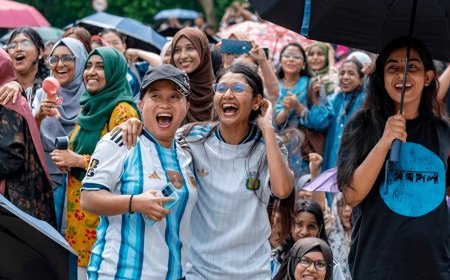
Youth policy cannot simply mean another training activity, another freelancing scheme, a few youth forum talks, or loan access workshops that fail to simplify capital for young entrepreneurs.

If filmmaking were simply the execution of something that already existed perfectly inside the director’s head, then perhaps the people around the director could be interchangeable. But I do not believe they are. The collective resonance of the actor and crew establishes a soul to the cinema.