







































































The Silent Threat Beneath Hormuz
The Strait of Hormuz is more than a regional flashpoint; it is the definitive laboratory for the 21st century maritime warfare.

Further to my previous analysis, “Why the Iran War Will be Decided at Sea,” published by Counterpoint, the Strait of Hormuz has once again solidified its reputation as the world’s most perilous maritime chokepoint.
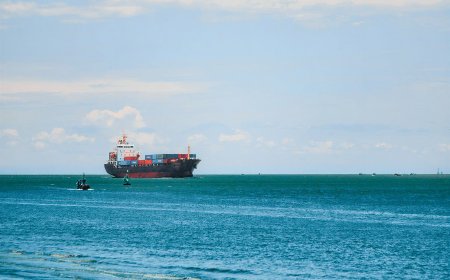
Every crisis in the Persian Gulf inevitably draws the global gaze to this narrow corridor, through which roughly one-fifth of the world’s petroleum and a massive share of liquefied natural gas (LNG) transit daily.
Yet, the acute fragility of this global artery has been completely laid bare by the outbreak of the 2026 Iran War. Even as diplomats scramble to preserve a fragile, shaky ceasefire initiated in April, the waters of the Gulf remain a highly volatile combat zone.
Just days ago, US Central Command (CENTCOM) launched fresh, targeted kinetic strikes against Iranian asset control stations near Bandar Abbas and Qeshm Port after reportedly intercepting hostile swarm drones and detecting active mine-laying operations.
This striking comparison of high-stakes diplomacy and immediate military escalation underscores a harsh reality: the true danger today does not stem from a cinematic clash of giant warships exchanging long-range missiles in open waters. The real threat lies just outside Bandar Abbas and beneath the surface -- silent, cheap, difficult to detect, and strategically disruptive.
A Geography of Stealth
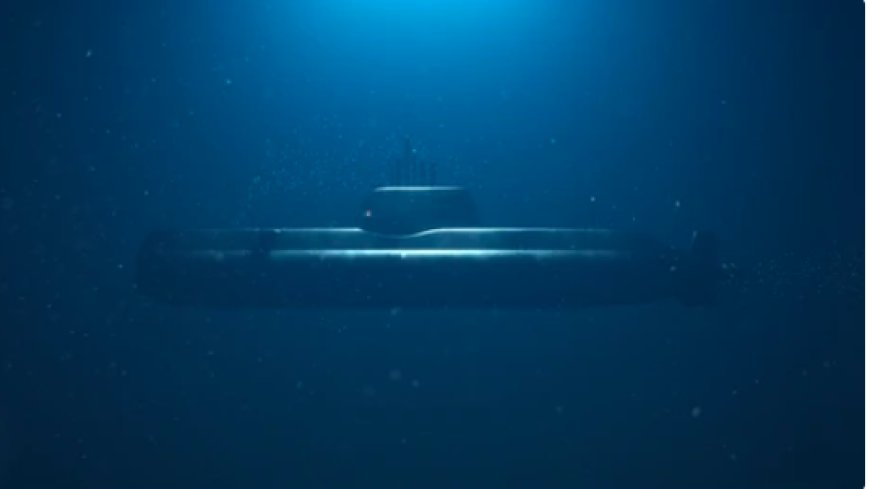
Iran’s deployment of its indigenously produced Ghadir-class midget submarines signals a profound shift in modern littoral warfare. These are not glamorous blue-water vessels designed to patrol the open oceans for months.
They are compact, shallow-water predators perfectly adapted to the rugged, cluttered geography of the Persian Gulf.
Measuring just 29 meters in length, these mini-subs emphasize stealth over endurance. Their mission is clear: deny access, sow psychological terror, disrupt commercial shipping, and impose unbearable economic costs on technologically superior adversaries.
This matters because Hormuz is not the open Atlantic. It is narrow, shallow, and highly predictable. Commercial vessels must navigate strict, designated corridors where water depths frequently range from 30 to 60 meters.
In such a restrictive oceanic environment, a midget submarine becomes the ultimate strategic equalizer.
Seabed Concealment: They can rest entirely motionless on the rocky seabed.
Acoustic Camouflage: By blending into the natural background environment, they effectively evade even the West's most advanced acoustic and sonar detection systems.
The Weapons of the Weak
For decades, Western navies invested heavily in multi-billion-dollar aircraft carriers, guided-missile destroyers, and precision-guided munitions. Armed with overwhelming firepower, the US and Israel demonstrated their immense symmetric capability during the opening phase of the 2026 war -- codenamed Operation Epic Fury -- decapitating political leadership and decimating surface arrays.
However, grammatically unable or strategically unwilling to compete symmetrically on the surface, Tehran countered by mastering the “weapons of the weak”: fast-attack craft, anti-ship cruise missiles, swarm drones, and pocket submarines. The logic is brutally rational. Iran does not need to defeat the US Navy in a conventional fleet engagement; it only needs to make the Strait too hazardous to traverse.
Iran's littoral startgey encompasses the following:
-- High-Value Targets
• Multi-billion-dollar guided-missile destroyers
• Nuclear-powered aircraft carriers
-- Low-Cost Attrition
• $20M Ghadir-class midget submarines
• Swarm fast-attack craft & loitering munitions
-- Blue-Water Power Projection
• Designed for open-ocean command of the seas
• Deep-water sonar and long-range radar arrays
-- Shallow-Water Sea Denial
• Tailored for the 30-to-60-meter depths of the Gulf
• Focuses on making transit prohibitively expensive
-- High Signature Profile
• Massive acoustic, thermal, and visual footprints
• Predictable transit through narrow corridors
-- Seabed Concealment and Stealth
• Low acoustic signatures; ability to rest on the seafloor
• Covert deployment of smart bottom and moored mines
-- Symmetric Doctrine
• Reliance on overwhelming, high-tech firepower
• Highly vulnerable to cheap, distributed threats
-- Asymmetric Leverage
• Avoids direct fleet-on-fleet engagements
• Uses geographic bottlenecks to cause global economic panic
A core element of this strategy is underwater mine warfare. Armed with two 533 mm torpedo tubes, the Ghadir-class is highly capable of covertly deploying smart bottom mines and moored naval mines directly into commercial shipping lanes.
The terrifying effectiveness of naval mines is often underestimated because the technology seems primitive. However, they are among the most economically devastating maritime weapons ever engineered. They do not need to sink dozens of vessels to achieve victory; the mere suspicion of an active minefield can instantly freeze commercial transit, spike global maritime insurance premiums, and trigger immediate energy panics.
Geoeconomic Warfare: The Disproportionate Power of Low-Cost Systems
The ongoing confrontation proves that despite decades of theoretical focus on cyber warfare, artificial intelligence, and space militarization, raw geography still dictates global power politics. Whoever controls the chokepoints possesses direct leverage over the international economy.
Desperate for cash under the weight of Washington's “Economic Fury” campaign, Tehran recently established an aggressive “Persian Gulf Strait Authority,” attempting to extort global maritime trade by demanding tolls of up to $2 million per vessel. When ships refuse to comply or turn off their radars, Iran's IRGC navy retaliates with fast-craft harassment and subsurface mining.
The timing of the latest US defensive strikes, as they call it, near Bandar Abbas—targeting mine-laying boats and drone ground control stations—proves that both Washington and Tehran view the subterranean fleet nestled within that naval base as the ultimate leverage point. Following severe losses to its larger surface vessels in historical twentieth-century conflicts, Iran's naval doctrine has permanently evolved to prioritize distributed survivability over conventional confrontation.
Strategic Takeaway: A single $20 million midget submarine carrying a handful of naval mines can generate geopolitical consequences completely disproportionate to its size. It can immobilize global commerce, force superpowers into grueling, months-long minesweeping operations under hostile fire, and induce political paralysis inside energy-dependent capitals thousands of miles away.
A Warning to the Littoral Nations of the Indo-Pacific
The broader lessons of the Hormuz crisis extend far beyond the Middle East, serving as an uncomfortable warning to medium- and small-sized maritime nations worldwide—particularly within the Indo-Pacific.
The future of coastal defense belongs to distributed, low-cost, highly lethal asymmetric architectures. For nations like Bangladesh, navigating an increasingly contested maritime neighborhood, this shift carries vital strategic implications. Maritime security can no longer be evaluated solely by acquiring large, expensive capital platforms that are vulnerable to modern precision strikes.
Instead, future naval preparedness must prioritize:
Enhanced Maritime Domain Awareness (MDA): Continuous tracking of low-signature littoral threats.
Mine Countermeasures (MCM): The capability to rapidly detect and clear restricted economic waters.
Seabed Surveillance: Developing acoustic nets to monitor shallow underwater contours.
Asymmetric Resilience: Deploying distributed, easily concealable assets that can survive initial kinetic onslaughts.
The Littoral Laboratory
The Strait of Hormuz is more than a regional flashpoint; it is the definitive laboratory for 21st century maritime warfare. As the smoke clears over Bandar Abbas and the US and Iran trade cautious, retaliatory blows to test the boundaries of their uneasy truce, global strategists must internalize its primary lesson: the most destabilizing weapon in modern naval conflict may no longer be the aircraft carrier visible on the horizon, but the silent, nearly invisible predator waiting on the seafloor below.