



























































Kamilah Ahmed at Arab Hall, Leighton House
Growing up between cultures, I had this grounding and understanding that textiles carried histories of migration, labour and ceremony.
No single photograph does justice to the visual splendour of Leighton House, the Kensington home and studio of 19th century painter Frederic, Lord Leighton in West London.
Before his death in 1896, Leighton and architect George Aitchison drew upon his extensive collections and travels to display a dazzling blend of Middle Eastern, Mediterranean, Islamic and Victorian craft traditions around his house, based around a colourful centrepiece of antique wall tiles collected from Turkey, Iran and Syria and a small indoor fountain in a two storey space called the Arab Hall.
While the tiles have their own specific cultural and religious histories and significance -- see for instance https://www.rbkc.gov.uk/museums/arab-hall-inscriptions-retold -- they were primarily chosen and arranged to highlight their sheer beauty.
Encountering such an eclectic and beautiful mix of them inside an English Victorian’s house makes for a memorable, sensory experience. It has also made the museum a useful focal point for research and cross-cultural collaborations.
Open to the public as a museum since 1926, the house does display other works, but like every other visitor I found myself repeatedly circling back to the Arab Hall’s ‘Orientalist fever dream’ backdrop.
It was here I had a conversation with the British Bangladeshi artist Kamilah Ahmed about her latest mixed-media installation, which is among a series of specially commissioned displays by award-winning contemporary young artists for the museum’s long centenary celebrations.
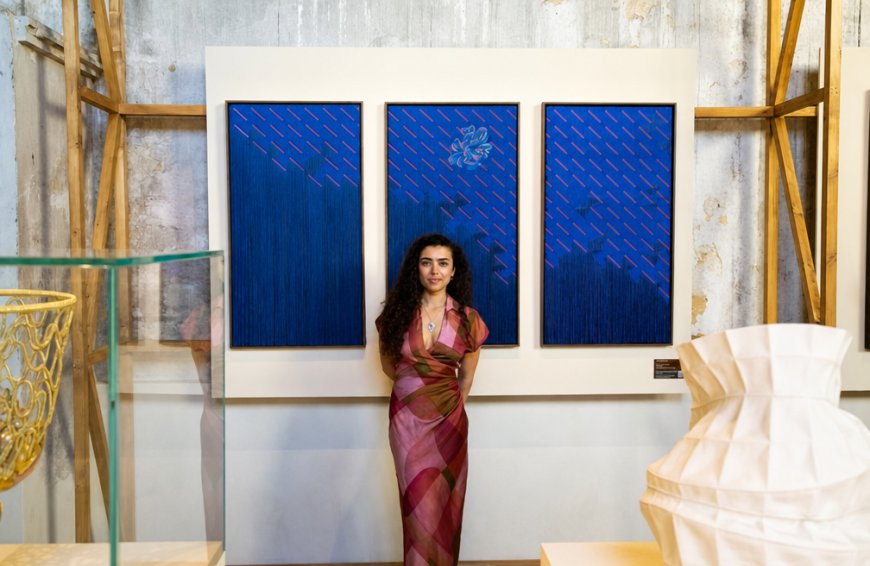
It is a testament to the ambition, size and impact of Facets in Resonance, her 5m by 3m embroidered textile arch that uses 10 kilograms of silk, that it looks and feels completely at home in the Arab Hall, where it is on display until the end of July.
What was special about this commission?
KA: Well, there was this hidden gem. I’m a Londoner, but I didn’t know the Arab Hall existed .My first time walking into the Arab Hall was a revelation and only five days before I submitted my application. I couldn’t believe there was such a wealth of artifacts, tiles, mashrabyia, and vases so near the Design Museum. Yet I didn’t know. So that was part of the allure. I wanted to create something large to pull in other people who might be interested in connecting with artifacts from the region.
Facets in Resonance is my largest and most ambitious work to date. Hopefully something that’s quite unique. The real challenge was pushing the three dimensionality of the piece. Because what I want to do is to create or invite immersive experiences of craft.
I worked with a metal worker and sculptor called Jacky Oliver who is based at Cockpit Arts, which is a social enterprise in Holborn, where I also have my studio. I also worked with a jewellery designer who has a background in architecture who specialises in creative laser cutting (Malaika Carr) I trained with her and we developed the laser cut elements using deadstock leather (surplus offcuts) to create the surface structure for the silk pieces.
It was an amazing feat to create something at this scale in four months. It was very intense.
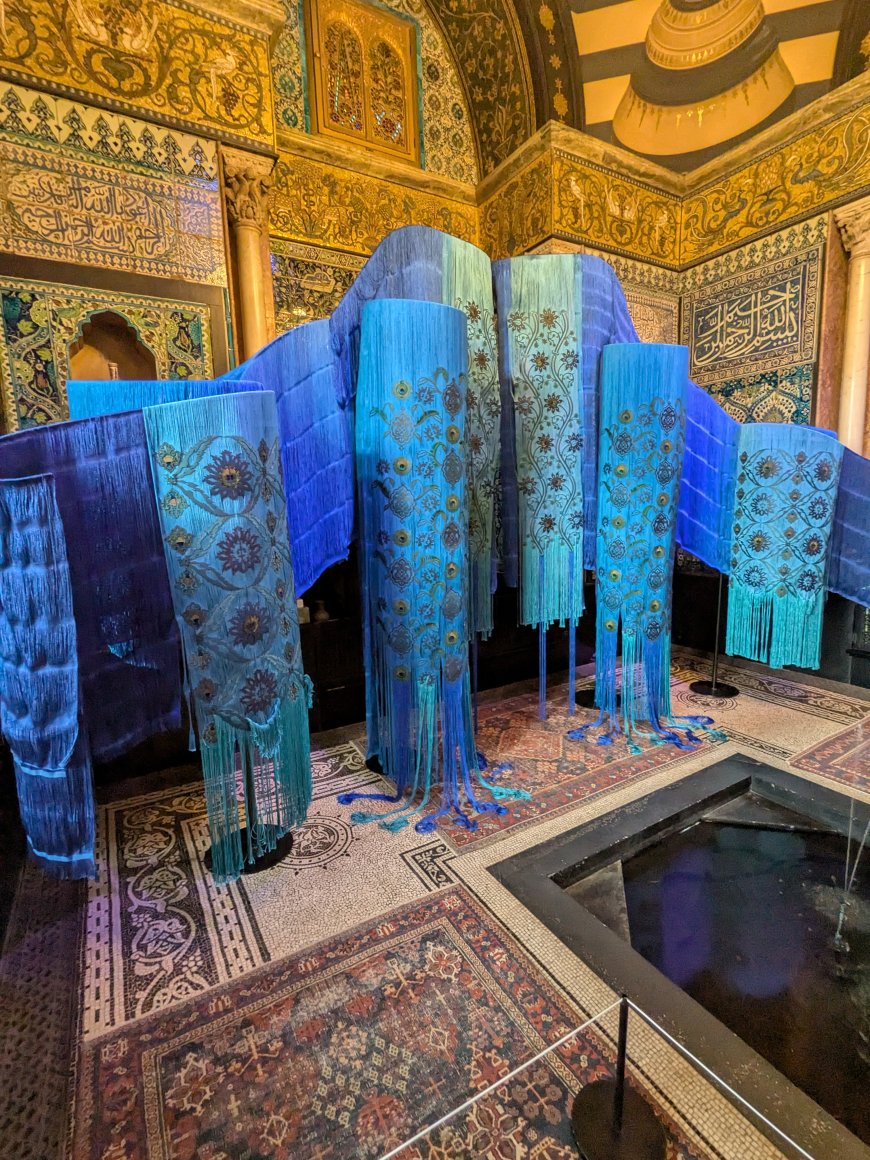
Facets in Resonance by Kamilah Ahmed 19 May 2026 (Image: Niaz Alam)
When did you know you wanted to be an artist?
KA: I don’t think I ever decided. I just was!
My mother is English and Portuguese, my father is from Dhaka, Bangladesh. I grew up in a household that was filled with artifacts and textiles from both sides. Mainly pottery and ceramics from my mother’s side and textile elements from my father.
I won’t say we had jamdani sarees in the house, but I fondly remember going to my aunties’ house where she would bring back salwar kameezes from Dhaka and would say this is the latest style. Growing up between cultures, I had this grounding and understanding that textiles carried histories of migration, labour and ceremony.
I don’t think I had special encouragement. I was quite lucky in that my mother was supportive. My mother used to take us to museums. To Tate Britain galleries. She’d sit us down with a sketch pad as part of our upbringing.
The advice I would give young girls (or boys or anyone) that are wanting to do something creative where their family may not be that understanding or open to the idea of going into something that seems a bit precarious, or less traditional, is to follow your gut and to keep seeking and making what you most desire.
Seek out local resources, they are often free. When I was 13/14, there were these amazing art classes and events at my local library (in Willesden Green).
I reached out to Eugene Ancona a Ghanaian artist who led one of the courses to help me put my portfolio together and review it before I put forward my application for art college. I got a scholarship to the Royal College of Art. I would encourage people to look out for scholarships. The RCA has widened its scholarship scheme since I studied there.
In my practice now, I get messages from young people saying can I work with you for a week. Don’t be shy to send a DM to older artists to ask for advice. You’d be surprised how generous people can be. There are also organisations that do talks to teenagers and young children. I do talks at local schools about pathways into art degrees and careers.
You set up your own studio after working with leading fashion houses (like Dior). Having done a wide range of work in your career so far, what do you plan to do next?
KA: After graduating (with a Masters degree in Textiles in 2015) I worked in couture fashion for close to a decade. It’s worth mentioning that during my degree I did get funding from a livery company to do some research on the making of a jamdani sari.
I went to an ethical weaving facility in Pabna, Bangladesh and researched and documented the start to finish process of making a sari. That really deepened my understanding and appreciation for the artform. Sadly that particular facility closed during Covid.
My couture jobs gave me an amazing technical grounding because I was the in-house maker and designer for embroidery. What I did was work directly with artisans in New Delhi and Jaipur and I learned a lot of techniques. I’ve been fortunate to appreciate and learn about jamdani and Aari embroidery.
Since 2021, I have had my own studio. What I want to do with my practice is move away from designing things which end up in people’s archives and have no public interface and move into creating pieces that enable everyone to have access to craft and to ask questions about how items are made and what processes are used.
That’s more important to me now than working with couture houses.
Going forward, I would like to work on more large-scale commissions.
I would also quite like to do research with other museums looking at their archives of Bengal muslin and decolonizing the way they are presented. I would love to hopefully raise awareness of where these textiles originated and how they have been acquired.
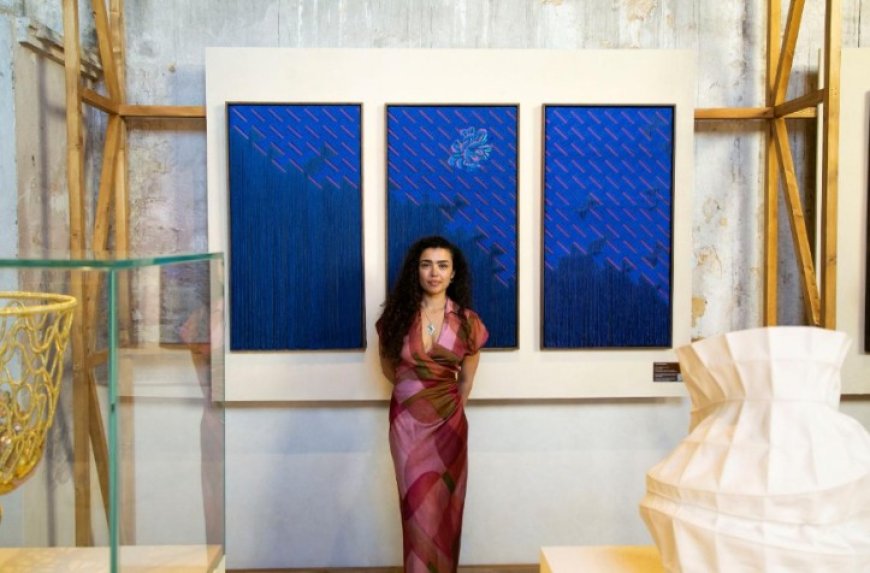
Image of Kamilah Ahmed provided by Flint-culture.com
For more information on Kamilah Ahmed’s art and portfolio and couture career, see https://www.kamilahahmed.studio/projects
For more information on Leighton House, 12 Holland Park Rd, London W14 8LZ see https://www.rbkc.gov.uk/museums/
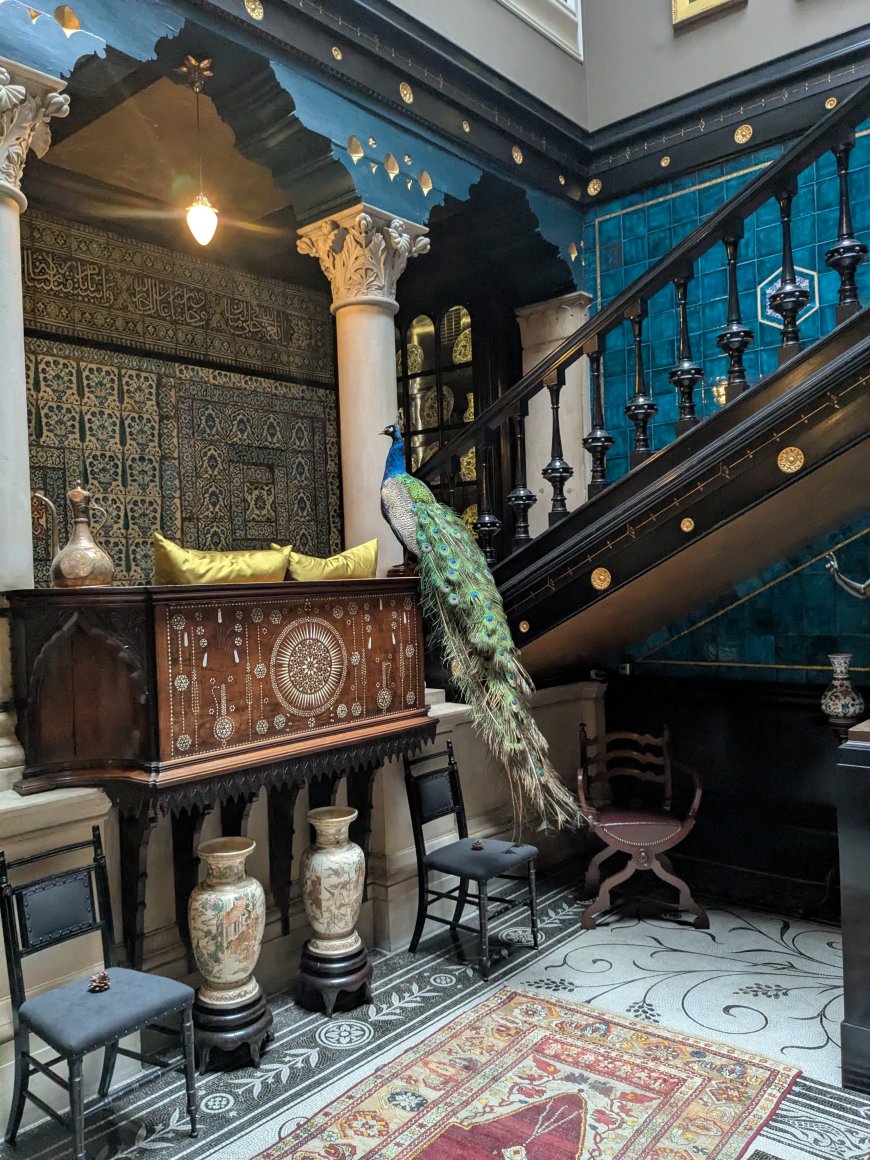
Arab Hall stairway image, Leighton House; Niaz Alam
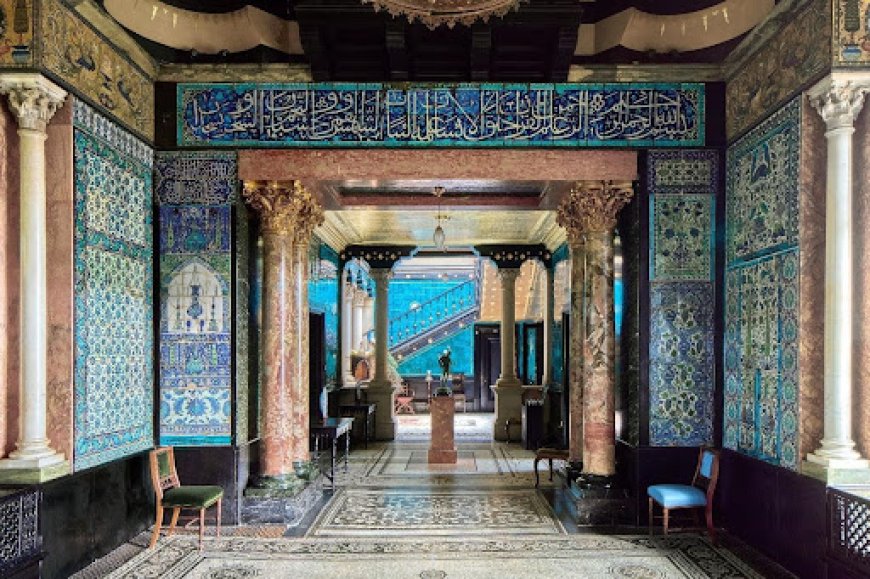
The Arab Hall at Leighton House press pack image
©RBKC. Image Siobhan Doran
Niaz Alam is the Dhaka Tribune London Bureau Chief.