













































![A Ledger of the Soul: Navigating the Allah-Bhagavant Nexus in a 19th-Century Puruṣākāra Jñāna Caupara [Gyan Chauper]](https://counterpointbd.com/uploads/images/202608/image_430x256_6a93baa3b09a7.jpg)





















Food Security is a Question of Sovereignty
Hunger rarely appears alone; it is accompanied by indebtedness, illness, labour precarity, and social exclusion.

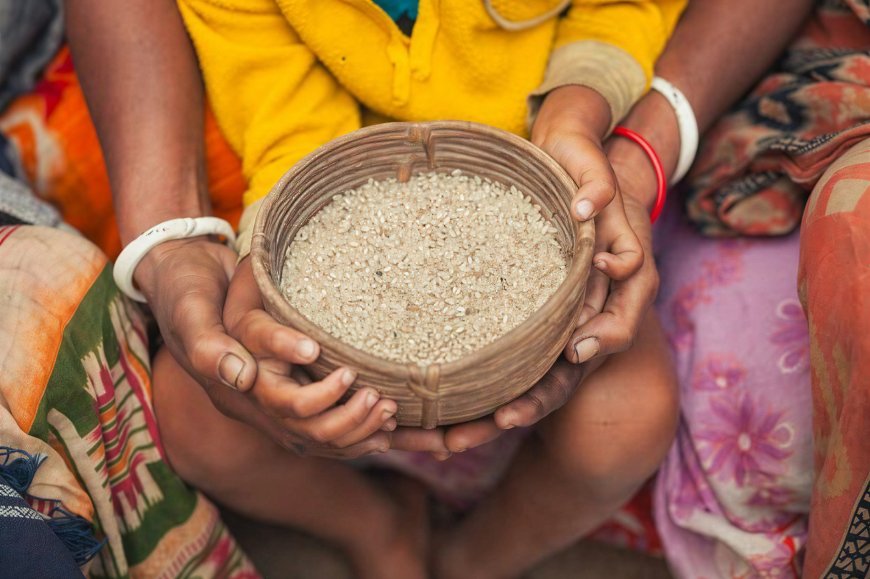
The United Nations-supported Global Report on Food Crises 2026 identifies Bangladesh as one of 10 countries that collectively account for nearly two-thirds of the global population experiencing acute food insecurity (FSIN & Global Network Against Food Crises, 2026).
The other countries in this category include Afghanistan, Pakistan, Myanmar, Sudan, South Sudan, the Democratic Republic of Congo, Nigeria, Syria, and Yemen.
Although Bangladesh recorded a decline of approximately 7.6 million people facing severe food insecurity compared to 2024, nearly 16 million people continue to live under crisis-level food insecurity conditions.
This reality challenges the dominant developmental narrative that often equates food security with aggregate food production or macroeconomic indicators such as GDP growth and foreign exchange reserves.
As Amartya Sen (1981) argued in his seminal work on famine, hunger is not always caused by the absence of food itself, but rather by what he termed entitlement failure, the inability of individuals and households to access food through production, exchange, or purchasing power.
Bangladesh exemplifies this condition: Food exists in the market, yet significant segments of the population remain unable to access it due to declining real income, inflationary pressures, and structural inequalities.
The country’s policy framework remains heavily calorie-centric, with rice production serving as the principal indicator of food security. While Bangladesh has made significant progress in rice self-sufficiency, this emphasis obscures a broader crisis of nutritional insecurity. Rice availability does not guarantee nutritional well-being.
Protein deficiency, micronutrient shortages, child stunting, maternal malnutrition, and unequal access to diverse food sources persist despite improvements in cereal production. In this sense, Bangladesh has pursued rice security while neglecting nutrition justice.
A sustainable food policy therefore requires a transition from a calorie-based framework to a nutrition-sensitive and sovereignty-oriented approach.
This includes strengthening domestic production of pulses, oilseeds, fish, milk, eggs, and other protein sources; ensuring fair prices for farmers; expanding climate-resilient agricultural systems; improving urban food assistance mechanisms; and institutionalizing school feeding programmes.
However, food policy cannot be treated as an isolated agricultural issue. It must be understood within the broader intersections of trade policy, foreign policy, and geopolitical strategy.
The recently signed United States-Bangladesh Agreement on Reciprocal Trade (ART), concluded in February 2026, illustrates this interconnection. Through this agreement, Bangladesh has provided significant market access for US agricultural goods, including dairy products, poultry, soy products, and other food imports, while also accepting constraints related to sanitary and phytosanitary (SPS) standards and regulatory flexibility (USTR, 2026).
Although framed as trade modernization and market access facilitation, such concessions raise serious concerns regarding long-term food sovereignty.
Food sovereignty differs fundamentally from food security. While food security asks whether sufficient food is available, food sovereignty asks who controls food systems, agricultural policy, and the conditions of production and distribution (Patel, 2009).
The expansion of foreign subsidized agricultural imports may generate short-term price relief for consumers, but it simultaneously creates long-term structural risks for domestic producers.
Small-scale poultry farms, dairy producers, and local agricultural supply chains face unequal competition against heavily subsidized imports from advanced economies. Over time, such arrangements may weaken domestic productive capacity and deepen import dependency.
Comparative examples are instructive. India continues to protect its agricultural sector from excessive liberalization, while China explicitly treats grain security as an issue of national security.
Both states recognize that agriculture is not merely an economic sector but a strategic foundation of political stability and sovereignty. Bangladesh, by contrast, continues to treat food security primarily as a welfare issue rather than a strategic one.
The risks extend beyond agriculture. Article 3 of the ART imposes commitments related to digital services taxation, unrestricted cross-border data flows, and restrictions on future digital trade arrangements that may affect “essential US interests.”
While these provisions appear to concern digital trade, they also directly affect food systems. Contemporary agricultural supply chains, customs intelligence, logistics management, and import governance are increasingly data-dependent. Loss of control over food-related data architecture implies a corresponding erosion of food sovereignty itself.
Similarly, the agreement’s provisions concerning pharmaceutical regulation and intellectual property protection create significant implications for public health security.
Bangladesh’s generic pharmaceutical sector has historically functioned as one of the country’s strongest examples of public health sovereignty, benefiting from Least Developed Country (LDC) flexibilities regarding intellectual property enforcement.
Stronger patent enforcement, expanded prior marketing authorization requirements, and tighter compliance with US FDA standards may increase the cost of essential medicines such as insulin, chemotherapy drugs, and hepatitis treatments.
In such a context, poverty is no longer merely income deprivation; it becomes biologically enforced inequality, where access to survival itself becomes stratified by economic class.
Food insecurity and health insecurity are therefore deeply interconnected. Hunger rarely appears alone; it is accompanied by indebtedness, illness, labour precarity, and social exclusion. The Global Report on Food Crises attributes Bangladesh’s temporary improvement to the absence of major natural disasters, lower food inflation, and increased remittance inflows (FSIN, 2026).
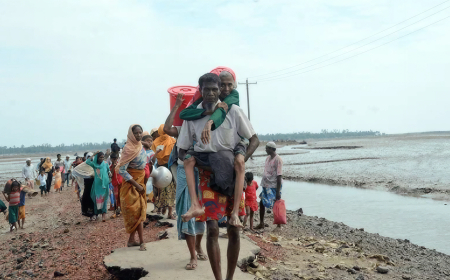
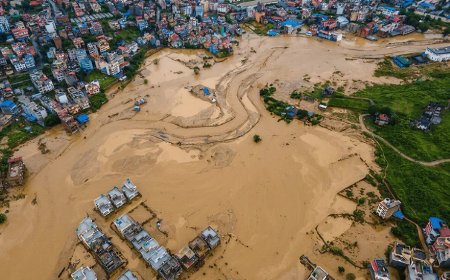
Yet this explanation itself reveals structural fragility. If food security depends on the absence of floods, continued remittance inflows, and uninterrupted donor support, then such stability cannot be described as resilience. It is better understood as fragile dependency.
This distinction is politically significant. A formally sovereign state may remain functionally dependent when policy space in agriculture, food governance, pharmaceuticals, and digital infrastructure becomes increasingly constrained by external agreements and donor-driven frameworks.
Susan Strange’s (1988) concept of structural power is relevant here: Dependency is not always imposed through direct coercion but often through the institutional organization of markets, finance, and regulatory systems.
Hunger, therefore, must be understood not simply as a humanitarian concern but as a question of sovereignty. The foundational social contract between state and citizen is survival.
From Hobbesian political theory to the modern welfare state, the first responsibility of the state is security, and food security constitutes one of its most fundamental dimensions. When a state fails to ensure affordable food, nutritional security, and access to essential medicines, while simultaneously entering agreements that reduce future policy autonomy, developmental rhetoric becomes politically hollow.
The proposition that “a hungry nation is never fully sovereign” is not rhetorical exaggeration but a structural political reality. A state that cannot feed its population eventually loses bargaining power in the international system and becomes increasingly vulnerable to external conditions imposed through trade, finance, and diplomacy.
For Bangladesh, addressing food insecurity requires moving beyond social protection programs alone. It demands a comprehensive rethinking of economic policy, agricultural restructuring, trade strategy, and geopolitical positioning.
Hunger is not merely a question of the stomach; it is a political condition reflected in the institutional capacity and strategic autonomy of the state itself.
Dr. Lubna Ferdowsi is an academic and researcher based in England.