























![A Ledger of the Soul: Navigating the Allah-Bhagavant Nexus in a 19th-Century Puruṣākāra Jñāna Caupara [Gyan Chauper]](https://counterpointbd.com/uploads/images/202608/image_430x256_6a93baa3b09a7.jpg)




















'Partitions of India are the root of many great conflicts today'
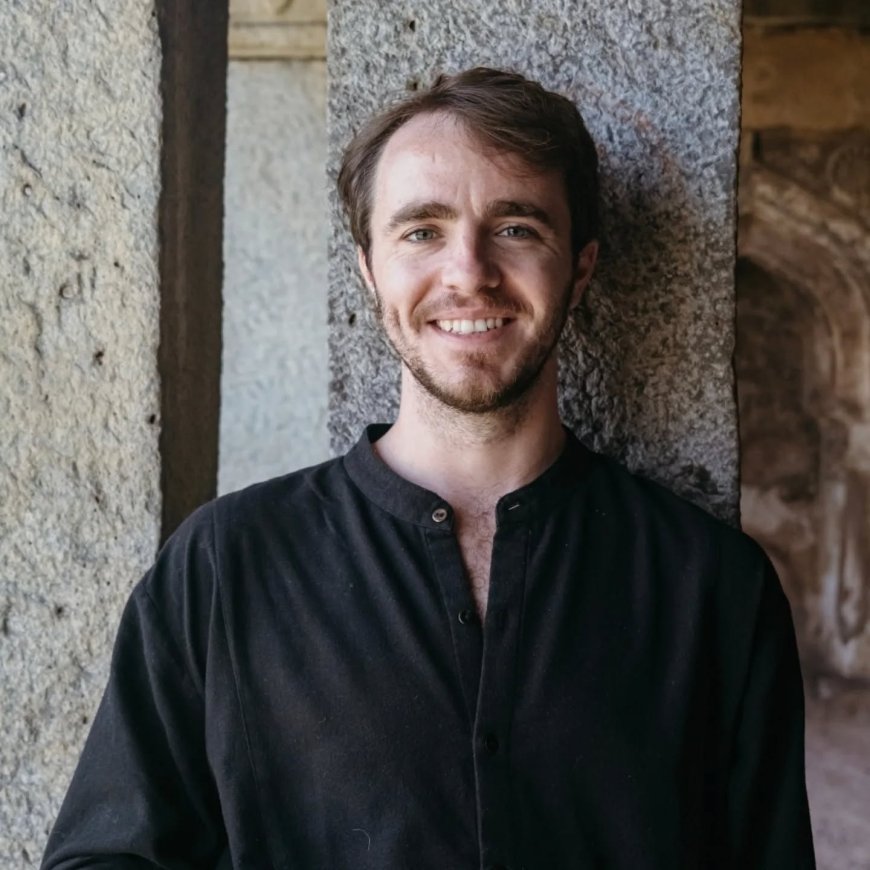
In an exclusive interview with Counterpoint, Sam Dalrymple talks about his book Shattered Lands: Five Partitions and the Making of Modern Asia. He reflects on forgotten geographies and the near-misses of the past, and how hastily drawn borders still unsettle lives, loyalties and conflicts across South Asia and beyond.
Let’s start with a nutshell version of the book. What is it about, and how is it different from other histories of the Partition of the subcontinent, of which there is no shortage?
The basic idea of Shattered Lands is that it expands our view of Partition from a single event to a gradual process of partitioning.
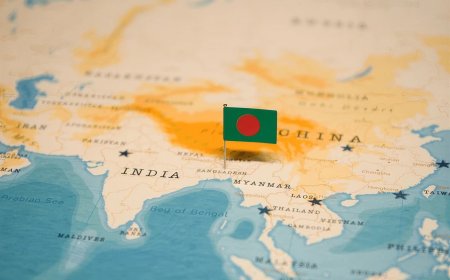
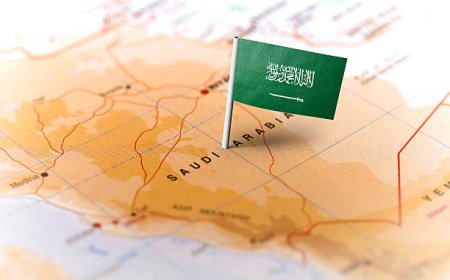
If you go back to the 1920s, when the famous declaration of the first Purna Swaraj was made -- the Congress declaration for full independence from Britain -- the British Indian Empire at that time stretched from what is now Yemen to what is now Burma.
There are five major partitions that, over the course of five decades, gradually sliced up and ruptured what was once India.
This process led not just to three nation-states -- India, Pakistan, and Bangladesh -- but also to Yemen, Oman, the UAE, Qatar, Bahrain, Kuwait, Nepal, Bhutan, and Myanmar. It is a much larger story than we tend to realize.
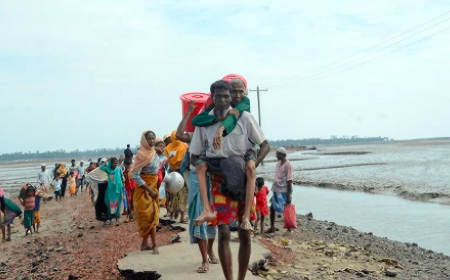
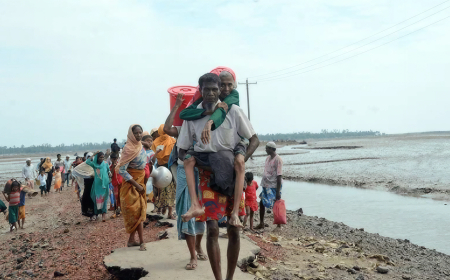
These multiple partitions of India lie at the root of many of the great conflicts of our day -- everything from the Rohingya genocide to the conflict in Kashmir and Northeast India, the Chittagong Hill Tracts, Baluchistan, and even the civil wars in Yemen and Burma, as well as Saddam Hussein’s invasion of Kuwait.
All of them, in different ways, have their origins in these five partitions.
What first set you on the path toward writing this book, and when did you know, it was going to become a full-length project rather than a passing curiosity?
What first set me on this path was actually Project Dastaan, which I co-founded at a university. The project aimed to reconnect Partition survivors across the borders of India, Pakistan, and Bangladesh using virtual reality.
Despite 1947 being the largest forced migration in human history, most people have never had the right to return, nor been able to see their childhood homes, communities, friends, or even family members since that year.
We were trying to reconnect 75 Partition survivors with their ancestral homes and communities by the 75th anniversary of Partition, and that was where all of this began.
Then, during COVID, the idea of making a documentary was shelved because suddenly we could no longer travel across borders or interview 95-year-olds in person.
Gradually, the project shifted from a more specific documentary into a full-length book. I think from the moment I started, I knew it was going to become a major project.
Your book reframes partitions as processes rather than singular events. Can you describe one moment in your research that made you see a familiar event in a new light?
Researching the 1946 Cabinet Mission Plan was transformative for me. I realized how close the subcontinent came to adopting a UK-style system.
Instead of an independent Pakistan and an independent India, there could have been a structure resembling England, Wales, Scotland, and Northern Ireland.
You might have had North India, South India, West Pakistan, East Pakistan, and the Deccan.
This was an idea that Jinnah actually signed up to and supported at the Congress. It ultimately fell apart due to disagreements between Gandhi and Nehru over specific elements of the plan.
Learning how close the subcontinent came to avoiding Partition altogether -- how close people came to resolving their differences -- changed my perception of Partition forever.
Many readers will instinctively compare your voice to your father’s. How do you receive that comparison, and in what ways do you actively resist or embrace his shadow?
Growing up in India and living here for 22 of my 28 years is largely the result of my parents’ choices. Being dragged around Rajasthani forts, meeting Bauls in Bengal, and visiting Theyyam dancers in Kerala obviously shaped both me and my voice.
At the same time, the biggest influences on this book have been my co-founders at Project Dastaan, Saadia Gardezi and Sparsh Ahuja, who completely reshaped my perception of what this book could be.
Ultimately, this is much more of a modern history book, rooted in people’s contemporary memories, rather than a medieval or early modern history.
That said, my father’s work has, of course, been a massive influence.
And of course, your mother is an artist. I would imagine her creativity has also influenced the way you see the world and the work you do.
With this question, you are really hitting the nail on the head. In some ways, my mum has been the bigger influence. She read the early manuscripts in a way my dad did not and has probably read more drafts than anyone else. She has very much acted as my editor.
Her creativity is absolutely essential to this book, just as it has been to my father’s work. She is the unsung Achilles of the family, a wonderful artist, and her way of looking at the world has profoundly shaped me.
During the course of your research, you must have met so many people with so many stories. Who surprised you most, and which story has stayed with you?
I met a huge number of people from different regions, and each of them shaped how I understand this book. Several interviews changed me, but one of the earliest was particularly important in shaping how I think about interviewing people about Partition.
There was a man called Iqbal Uddin, who migrated from what is now East Punjab to what is now Pakistan in 1947.
When asked about Partition, he described a long series of horrors enacted by Mountbatten, Nehru, Gandhi, and Jinnah, as well as the fallout between the Congress and the Muslim League.
He spoke of the genocide of Muslims in East Punjab and suggested that one could never trust Hindus or Sikhs.
The moment we shifted our questions toward his personal experiences, everything changed.
He began to describe the one person he most wanted to meet again from his pre-Partition life -- his childhood best friend, a Sikh named Narendar Singh.
He spoke about how they played together, celebrated festivals together, shared food every day, and walked to and from school side by side.
It completely altered my understanding of how interviews about Partition work, and how the questions you ask can shape the answers you receive.
Your research took you to dozens of places, from Aden to Rangoon. Where did you feel the weight of the story most strongly, and where did history feel most alive?
Rangoon, now Yangon, is extraordinary to visit, especially for the first time. I first went 12 years ago and returned again this January.
Walking through downtown Yangon and seeing the chinthe painted in mustard, the Bank of Bengal, the old East India Navigation Company headquarters, and the emblems of different provinces of British India was astonishing.
This region was part of India for over 150 years, and yet it has been largely forgotten by the rest of the subcontinent.
There is also a deep sense of tragedy. Myanmar represents, in some ways, the final stage many of the successor states of the Indian Empire face as they attempt to define who belongs and who does not.
The country has experienced complete ethnic civil war and a breakdown between multiple communities. In trying to define who truly counts as Burmese, we can see the consequences today in one of the longest-running and bloodiest civil wars in the world.
As for where history feels most alive -- it is everywhere. There was no place I visited that did not carry these stories just beneath the surface.
When people argue over national narratives -- what to celebrate and what to forget -- what do you think has been lost over time?
I think the connections that tie us together should be far more central than the things that divide us. What is extraordinary is that when people from India, Pakistan, Bangladesh, and across the region meet abroad, they often become close friends.
You do not see the same everyday camaraderie among people from other major 20th-century conflicts, such as Israelis and Palestinians or Russians and Ukrainians.
Yet within the subcontinent, governments continue to vilify one another, and that is a great tragedy. So much has been lost -- shared traditions, shared culture, shared food.
One of the most striking aspects of this book tour is that at every talk, someone comes up afterward and says, “My family lived here for centuries, and then we were pushed out.” Whether they lived in Rangoon, Lahore, Dhaka, Delhi, or Aden, the story is the same.
This is one of the most globalized regions in the world and has been central to global history for millennia.
To imagine that these histories exist solely within the boundaries of modern nation-states is deeply misleading.
Finally, if you could place a single object from your research in every school classroom -- an artifact, a testimony, a map -- what would it be, and what conversation would you hope it sparks?
I would place a map of the Indian Empire in 1921 in every classroom, stretching from Yemen to Rangoon, showing how fabricated many modern national ideas of the past really are.
The fact that so few people are familiar with what the Indian Empire looked like in the 1920s is symbolic of how much history has been erased or brushed over.
It would also serve as a reminder of how recent many of the regions’ conflicts are. As recently as May, Donald Trump said that India and Pakistan have been fighting over Kashmir for thousands of years.
Yet there are people alive today who were born before that conflict even began. The same applies to the Rohingya in Myanmar and their dehumanization.
So much of the debate focuses on whether they have always belonged to Myanmar or Bengal, without acknowledging that borders were constantly shifting until 1937, and that the border drawn that year arbitrarily cut through communities.
In that sense, many of today’s arguments about belonging are fundamentally missing the point.
Azeema Anhar is an instructor at ULAB.