































































The Machete and the Matchstick
When the state manages impunity, the mob manages the rest.
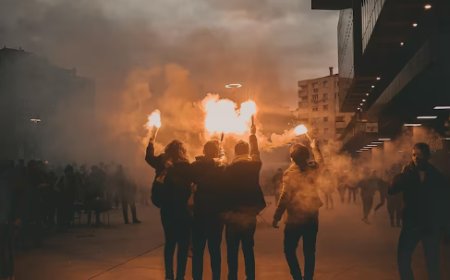
The smoke was still rising at nine the next morning. Two semi-pucca structures inside the shrine compound had been reduced to ash. Debris lay scattered. Children stood silently. 15 to 20 police officers sat on chairs in front of the ruins, watching the embers cool.
A day earlier, around 2:30 in the afternoon, more than a hundred people marched toward the shrine in Philipnagar village, chanting slogans. They carried machetes. Shamim Reza Jahangir -- 55 years old, a man who had studied in Dhaka and worked as a teacher before returning to his village to set up a shrine -- was dragged from the second floor and hacked indiscriminately.
His brother Fazlur Rahman, a retired schoolteacher, watched it happen. "His whole body was soaked in blood," he told journalists, his voice breaking. "Even if he had done something wrong, there could have been a trial. But no human being deserves to be killed like this."
Police were present. They watched. As the Superintendent of Police would later explain, "the number of police personnel was too small compared with the angry crowd, making it impossible to control the situation.". The mob beat him to death in front of them.
The Accusation
What triggered this? A thirty-second video clip. It was old -- recorded years ago -- showing Shamim Reza allegedly making derogatory remarks about the Holy Quran. It resurfaced on social media Friday morning. By Saturday afternoon, a procession had formed. By evening, a man was dead and a shrine was ash.
This is the grammar of our present violence. An old video. A forwarded message. A rumor. And then a body. The accusation of "blasphemy" no longer describes a crime. It performs one. In the linguistic alchemy of our time, the word itself is the weapon. It excommunicates the accused from the protection of law before any court can convene, before any evidence can be examined, before the accused can even speak.
The mob becomes judge, jury, and executioner, and the state -- as we saw in Kushtia -- becomes spectator.
Shamim Reza had been arrested before. In 2021, a case was filed against him for hurting religious sentiments. He served a prison term and was released. He resumed his activities at the shrine. The state had already processed him. The law had already spoken. But the mob decided the law's verdict was insufficient.
The Pattern
Kushtia is not an aberration. It is the latest station on a long, bloody line.
In September 2025, a mob exhumed the body of Nurul Haque -- a man revered as Nural Pagla -- and burned it on a highway in Rajbari. I wrote about it then, asking what it means when the state fails the dead.
In December 2025, Dipu Chandra Das was beaten to death and burned by a mob following an allegation of blasphemy. Police reportedly failed to intervene in time.
In March 2026, a mob attacked the Buchai Pagla shrine in Dhamrai, vandalizing it. The same month, Baul singers in Sylhet were attacked, their instruments smashed, the crowd chanting.
On the same Saturday that Shamim Reza was killed in Kushtia, Hindu homes and shops were vandalized in Rangpur. The violence now arrives in clusters, as if the mobs coordinate their calendars.
The numbers are no longer abstractions. Between June 2025 and January 2026, at least 116 members of minority communities were killed across all eight divisions of Bangladesh. Mob lynchings accounted for over 10% of those deaths.
Rights groups have documented 522 communal incidents and 61 murders in the past year. Since August 2024, when the previous government fell, at least 25 incidents of vandalism and arson at shrines have been recorded. Some estimates place the number of attacked shrines much higher -- at least forty across the country.
First they came for the banyan tree in Madaripur, which I wrote about in May 2025 -- a two-hundred-year-old canopy where Hindus and Muslims tied threads together, cut down with chainsaws. Then they came for the dead man's grave. Then they came for the garment worker in Bhaluka, tied to a tree and set ablaze. Then they came for the Bauls. Now they have come for the mystic in Kushtia.
The State as Spectator
And what does the state do? It watches. It issues statements. It deploys additional police after the body has cooled. And then -- this is the detail that should stop us cold -- it files no case.
A day after Shamim Reza was hacked to death in front of police, no case had been filed. The victim's family, police said, had not yet taken steps to file a case. The Superintendent of Police explained that identifying the attackers remained "challenging due to the large crowd."
This is not incompetence. This is architecture. The state has perfected the art of post-violence performance. Police arrive. They collect CCTV footage. They promise investigations. But the case file remains empty. The mob returns to their homes. The shrine smolders. And the message is broadcast to every village in Bangladesh: The law will not protect you. The law will not even notice you.
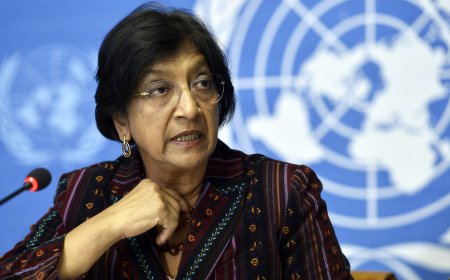
Irene Khan, the United Nations Special Rapporteur on freedom of expression, has said that mob violence in Bangladesh "did not occur in isolation but reflected a broader failure of the interim government to address impunity". Human Rights Watch has documented an "alarming surge in mob violence by political parties and other non-state groups, such as religious hardliners".
A UN report noted that over 650 people were killed during the protests of July-August 2024, a number that later rose to 1,500. The machinery of death has been calibrated. It now runs with terrible efficiency.
When the state surrenders its monopoly on legitimate violence, it does not create peace. It creates a marketplace of violence, where the highest bidder is the mob with the loudest chant and the sharpest blade. The republic retreats. What fills the vacuum is not justice but the permission slip -- unsigned, unwitnessed, but universally understood -- to kill.
The Archive We Are Burning
What is being erased here is not just a man or a shrine. It is a five-hundred-year-old way of being Bengali.
Richard Eaton, the historian of Islam in the Bengal Delta, showed us that Islam arrived here not through the sword but through the slow, patient work of Sufi mystics, peasant communities, and the rivers themselves.
Eaton described Islam in Bengal as "a civilization-building ideology associated both with settling and populating the land and with constructing a transcendent reality consonant with that process". The faith grew alongside the rice fields, the shifting riverbanks, the monsoon rhythms. It absorbed local practices. It made room for music, for ecstatic devotion, for the peculiar, beautiful, untidy pluralism of the delta.
The shrine in Kushtia belonged to this lineage. So did the banyan tree in Madaripur. So do the Baul gatherings, the mazar festivals, the women who tie threads for fertility and the men who seek cures from saints. These are not deviations from some pure, text-bound Islam. They are the very texture of Islam as it has been lived in this delta for half a millennium.
What the mob enforces is a different Islam -- brittle, doctrinaire, terrified of music, enraged by trees, offended by the very existence of difference. It is an Islam that arrived recently, carried not by Sufi saints but by satellite channels and social media algorithms. It speaks the language of purity. It demands the erasure of everything that does not resemble itself.
This is not a theological dispute. It is an ontological purge. The mob is not punishing blasphemy. It is eliminating evidence that another way of being Muslim -- another way of being Bengali -- is possible.
The Cloud-Capped Star
Ritwik Ghatak, in his masterpiece Meghe Dhaka Tara (The Cloud-Capped Star), gave us Nita -- a young woman who, like so many after Partition, became a refugee in her own land. The film is a lament for a world that was broken by borders, by the violent imposition of lines that severed people from their homes, their memories, their sense of belonging. Ghatak believed that "even without being displaced from home, a person could still become a refugee, because the very concept of the nation changed".
This is what is happening to us now. We are becoming refugees in the nation we inherited. The concept of Bangladesh is changing -- not through constitutional amendment or public deliberation, but through the machete and the matchstick. The mob is redrawing the borders of belonging.
Those who do not conform to the new, narrow definition of the nation are being erased -- sometimes through exhumation, sometimes through fire, sometimes through the quiet, bureaucratic violence of the unfiled case.
Nita's cry -- "Dada, ami banchte chai" (Brother, I want to live) -- echoes across the decades. It is the cry of the shrine devotee. It is the cry of the Baul singer. It is the cry of Fazlur Rahman, standing in a bamboo grove near the ashes of his brother's shrine, trying to arrange a funeral while the police sit on chairs and watch.
Shamim Reza Jahangir is dead. His shrine is ash. The video that killed him still circulates. The case file remains empty. And the smoke -- the smoke is still rising.
The question we must now ask is not what happened in Kushtia. The question is what happens to a nation that allows this to happen, again and again and again, without ever filing a case, without ever naming a perpetrator, without ever saying: enough.
If a man can be hacked to death in front of police, his shrine burned, and no case filed, then what exactly does the word "Bangladesh" now protect?
Zakir Kibria is a Bangladeshi writer, policy analyst and entrepreneur based in Kathmandu, Nepal.