


























































Give a Dream Half an Hour
The love is here. The love has always been here. What the love has lacked is doors, and the Legacy Match is one door, opened in front of an audience full of people who have the power to open more.

When the children walk out for this year's Ascent Legacy Match, their jerseys will carry no names and no numbers. Where a surname would normally sit, each child will wear a dream instead. Striker. Doctor. Engineer. Whatever the ambition, it goes on the shirt for the whole arena to read.
You hear plenty of grand plans in this line of work. Once in a while, a small one follows you home. This one had me thinking about jerseys.
The occasion was the launch of the 19th Ascent Corporate Cup, Bangladesh's oldest and most prestigious amateur corporate five-a-side football tournament, which kicked off on July 2 at Scholastica's Uttara campus.
The Cup has been running since 2006, with the Ascent Group as title sponsor since 2008, and it has grown from a corporate kickabout into a fixture that players circle on their calendars months in advance.
39 teams are competing across two tiers this year, a Premier League for the established sides and a Championship League for the emerging ones, a split introduced in 2024 because the competition had simply outgrown a single division.
The organizers will remind you, with justified pride, that futsal itself entered Bangladesh through this tournament, and that the game has since put down roots deep enough for the federation to run a league of its own.
At the press meet, sponsor after sponsor rose to talk about the spirit of the game, and they all meant roughly the same thing. People who spend their weeks inside meetings and spreadsheets deserve an evening where they can sprint, shout, and lose themselves in something they love.
There is something quietly delightful about a bank executive who becomes a winger after office hours. Futsal gives working people what football has always given everyone: Fun, friendship, and a reason to look forward to Thursday.
But the beating heart of this tournament sits in a 30-minute match that will decide no trophy at all. The Ascent Legacy Match, played each year before the Championship Final, is the tournament's way of turning its lights toward organizations that use football for inclusion and opportunity.
Previous editions have partnered with the JAAGO Foundation, the Bangladesh Wheelchair Cricket Association, and Power of She.
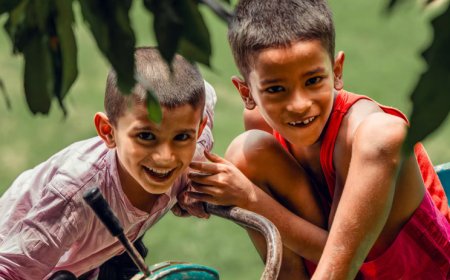
This year the partner is Thrive, and the players will be young footballers from schools in Dhaka's informal settlements, split into two teams for an exhibition in front of a full house of corporate players and executives.
Most of these children have learned their football wherever the city allowed it, in alleys and on whatever flat ground a crowded neighbourhood spares. A proper indoor arena, with its polished floor and banks of lights, will be new ground for them, and for 30 minutes it will be theirs.
The court that stages the finals will stage them too, and when the whistle goes, a medal will hang around every young neck, the same one the corporate players carry home. The message could not be plainer. On a football pitch there are no titles, no class, no boundaries. There is only how well you play, and how much you want the ball.
Football has a long habit of adopting children the world made no plans for.
Pelé grew up in Bauru practising with a sock stuffed with newspaper because a real ball cost money his family did not have. Maradona came out of Villa Fiorito, a settlement on the southern edge of Buenos Aires with mud lanes and tin roofs. George Weah walked out of Clara Town in Monrovia, won the Ballon d'Or, and went on to run his country. Sadio Mané slipped away from his village as a teenager to chase a trial in Dakar, and years later he built that village a hospital.
The game keeps producing this story because the game has never checked where the footballer came from. Talent is the only thing it asks for.
And futsal, of all football's forms, has been the great nursery. Messi, Ronaldinho, Neymar: Ask any of them where the quick feet came from and they will point to small courts, hard floors, and nowhere to hide.
A cramped court rewards the same instincts a cramped neighbourhood teaches: Improvise, look up, find the gap. A child who has learned the game in a narrow lane between tin walls arrives at futsal already fluent. In some ways the small court has been waiting for them all along.
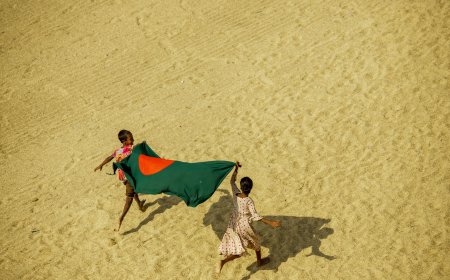
Anyone who doubts this country's hunger for football has never seen Dhaka in a World Cup month. Rooftops disappear under Argentine and Brazilian flags the size of bedsheets and half the city argues with the other half over cha about Messi, an argument that has run for 20 years without a final whistle.
The love is here. The love has always been here. What the love has lacked is doors, and the Legacy Match is one door, opened in front of an audience full of people who have the power to open more.
On the night, the corporate champions will lift their trophies, the photographs will be taken, and the office cabinets will fill. The children will play their 30 minutes, collect their medals, and carry their jerseys home to narrower streets.
30 minutes is nothing in a tournament. In a young life, it can be everything. Somewhere in this city, right now, a child is kicking a taped-up ball against a wall. Come the evening of the Legacy Match, there will be one more reason to keep kicking.
Azeema Anhar is an English Language Instructor at ULAB and member of the editorial team at the weekly Counterpoint.