































































The Assassination of Ziaur Rahman and its Echoes
Ziaur Rahman deserves to be remembered not as a symbol of one side of a political divide, but as a leader who, in a period of genuine national crisis, demonstrated that Bangladesh was capable of stability, economic progress, diplomatic sophistication, and democratic aspiration.
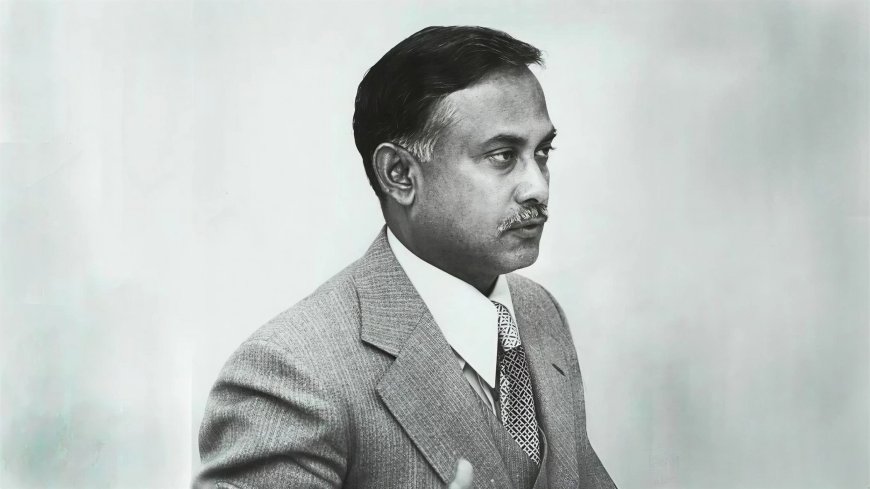
On May 30, Bangladesh marked the 45th anniversary of the assassination of President Ziaur Rahman, one of the most consequential and unresolved events in the nation's political history. The occasion arrives at a moment of unusual promise for the legacy he left behind.
His son, Tarique Rahman, governs today as Prime Minister with a two-thirds parliamentary majority, the product of what international observers widely described as Bangladesh's most credible election in over a decade. The international climate, for the moment, is favorable in a way that neither of the PM's parents were fortunate enough to experience.
India, whose relationship with Bangladesh has historically alternated between bristling antagonism and overt domination, has signaled an interest in a reset with the new government. The United States, too, has seemingly approached the new government with goodwill. For all the turbulence of Bangladesh's 50+ years as an independent state, this combination of a strong domestic mandate, an improving relationship with India, and American positivity, is rare.
It was never available to Zia himself, whose efforts to stabilize the nation were made under conditions of chronic institutional fragility.
To understand what was lost on May 30, 1981, one must understand what surrounded it. Just 13 days before the assassination, Sheikh Hasina returned to Bangladesh after years of exile in India. Within 10 months, on March 24, 1982, General Hussain Muhammad Ershad overthrew President Abdus Sattar in a coup d’etat, returning Bangladesh to martial law and extinguishing the fragile democratic progress that Zia had worked to build.
These two events bookend the assassination of May 30, and remain intertwined with it. The parliamentary elections Zia had restored, the multi-party system he had re-legitimized, the constitutional framework he had painstakingly repaired -- all of it was undone.
The assassination of Zia has, over the decades, received less scholarly and popular scrutiny than the killing of Sheikh Mujibur Rahman in August 1975. The Mujib assassination, adopted as a totem by his daughter in her drive to cling to state power, has been memorialized, litigated, and written about extensively.
The Zia assassination, by contrast, has remained somewhat in the shadows, its principals dead or scattered, its full architecture never conclusively established. The dramatis personae, however, are instructive.
Major General Muhammad Abul Manzoor, the GOC of the 24th Infantry Division headquartered in Chittagong, is widely regarded as the front man of the coup.
Manzoor was, by any measure, a distinguished officer: A brilliant leader during the Liberation War of 1971, a recipient of the Bir Uttam gallantry award, and at the time of his death, one of the youngest major generals in South Asian military history.
Manzoor's wife and children received political asylum in the United States, and his daughter, Dr. Karishma Manzur, is today a candidate in the Democratic primary for the United States Senate seat in New Hampshire.
The direct operational trigger of the assassination was Lt. Colonel Matiur Rahman, who is believed to have personally shot President Zia. Matiur Rahman did not survive to face trial; he was killed in a firefight with government-loyal forces on June 1, 1981. In the aftermath, eighteen officers were brought before a military tribunal. Thirteen were sentenced to death.
The constitutional succession passed to Vice President Abdus Sattar, a jurist of standing who was elected president in December 1981 with genuine popular support, only to be toppled by Ershad barely three months later.
It is especially worth noting that Major General Manzoor, after his escape attempt failed, surrendered without incident to police in Fatikchari. He was alive, in lawful custody, and in a position to testify about everything he knew: Who had planned the operation, who had communicated what to whom, and, critically, whether anyone outside the immediate circle of conspirators had prior knowledge or had encouraged the plot.
He never got the chance. On June 1, 1981, while being transported to the Chittagong Cantonment under army escort, Manzoor was shot dead. The official account attributed his death to an enraged mob.
An autopsy told a different story: A gunshot wound to the back of the head. A case filed in 1995 by Manzoor's older brother named Ershad as the principal accused, and a subsequent chargesheet, eventually filed by the CID, alleged that Ershad had arranged Manzoor's transfer from police custody to the cantonment under the false promise of a court martial, then ordered his execution at the cantonment firing range.
Ershad denied the allegation until his death in 2019, at which point the case against him was formally dropped. The pattern that emerges is familiar to any student of Bangladeshi history: A figure who knew too much was killed before he could speak, the official account was constructed to fit political convenience, and the legal case was never resolved.
One is compelled to draw a parallel to August 2024, when Sheikh Hasina was permitted to board a military aircraft and fly to India rather than face arrest, trial, or any form of institutional reckoning. In both instances, the Bangladeshi state demonstrated the same fundamental weakness: An inability, or unwillingness, to subject those at the apex of power to the due processes of justice when doing so might destabilize existing arrangements.
The Manzoor case also gave birth to one of the more cynical political instruments in recent Bangladeshi history. For years, Hasina's Awami League government held the murder case over Ershad like a sword. Whenever Ershad's Jatiya Party threatened to leave the governing coalition or otherwise became inconvenient, the case would suddenly gain momentum; court dates would be set, prosecutors would become active, and the press would be briefed.
When Ershad fell back into line, the case would stall, investigations would be extended indefinitely, and judges would be transferred. Newspapers documented this cycle with characteristic precision, tracing how the case moved in near-perfect correlation with Ershad's political behavior. This was a telling illustration of how the unresolved crimes of 1981 became political currency to be spent and hoarded decades afterwards.
One of the more persistent ironies surrounding Ziaur Rahman's presidency is that the man perhaps most responsible for asserting Bangladesh's sovereign independence in its dealings with India was accused, at the time and since, by some quarters of being insufficiently nationalist in his posture toward New Delhi.
The charge does not survive scrutiny. Zia inherited a foreign policy architecture from Sheikh Mujib that had been built almost entirely around Bangladesh's dependence on India and the Soviet Union. He dismantled it methodically. He diversified Bangladesh's alliances toward China, the Muslim world, and the West, transforming Bangladesh into a state with genuine diplomatic agency.
He won Bangladesh a non-permanent seat on the United Nations Security Council in 1979, competing successfully against Japan, an achievement that signaled the country's emergence as a credible international actor. Most consequentially, he was the intellectual architect of the South Asian Association for Regional Cooperation (SAARC), conceiving of regional cooperation as a structural mechanism to curb Indian hegemony without inviting the confrontation that overt anti-Indian politics would entail.
SAARC, formally established in 1985, four years after his death, was the institutional expression of that strategic vision. And yet, within the conspiratorial culture of Bangladeshi politics, this record of pragmatic nationalism was, for some, not enough.
The grievances that animated the conspirators of May 1981 were partly personal and partly ideological, rooted in a strain of political feeling that interpreted any engagement with India, however beneficial to Bangladesh, as compromise or collaboration.
This is a recurring danger in Bangladeshi public life: The tendency to conflate principled sovereignty with reflexive anti-India sentiment, and to judge leaders not by the outcomes they achieved but by the rhetorical temperature they maintained. Zia understood that Bangladesh could not afford the luxury of empty ideological posturing in its external affairs.
His record demonstrates that it is entirely possible to defend Bangladeshi interests firmly, to resist subordination, and to build alternative alliances, while maintaining a functional relationship with India. That lesson remains as relevant today as it was in 1981.
45 years after the shots at Chittagong Circuit House, the assassination of Ziaur Rahman remains the archetype of a pattern that Bangladesh has never succeeded in breaking.
A powerful figure is killed or removed; the immediate perpetrators are either killed before they can testify or tried in rushed proceedings that answer procedural requirements without illuminating the full truth; the deeper questions of motive, conspiracy, and institutional culpability are never resolved; and the resulting ambiguity becomes, in time, a political instrument available to whoever holds power.
The assassination of Mujib followed this pattern. The assassination of Zia followed it.
The flight of Hasina in 2024, and the near-certainty that she will never face a genuinely fair and transparent accounting, suggests that the pattern persists. The state of Bangladesh has repeatedly proven capable of producing leaders of remarkable vision and, at crucial moments, incapable of protecting them, prosecuting those responsible for harming them, or extracting from those events the institutional learning that might prevent recurrence.
Ziaur Rahman deserves to be remembered not as a symbol of one side of a political divide, but as a leader who, in a period of genuine national crisis, demonstrated that Bangladesh was capable of stability, economic progress, diplomatic sophistication, and democratic aspiration. He was a soldier who understood that the legitimacy of the state ultimately rested not on military power but on the consent of the governed.
He was a nationalist who understood that nationalism, to be durable, had to be grounded in results rather than rhetoric. His son now leads the country he built. The 45th anniversary of President Ziaur Rahman’s death is a fitting occasion to ask whether the institutions of Bangladesh are finally prepared to honor his legacy with the seriousness of purpose that he, more than any other leader of his generation, embodied.
Ehteshamul Haque is a lawyer who focuses on technology transactions. He teaches corporate law at American University.