'We Wanted Liberation Through Struggle'
A conversation with veteran communist leader Tipu Biswas

This interview was part of fieldwork for my doctoral research which examines how natural disasters interact with non-state collective action and political stability.
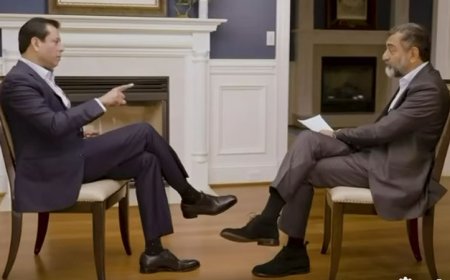
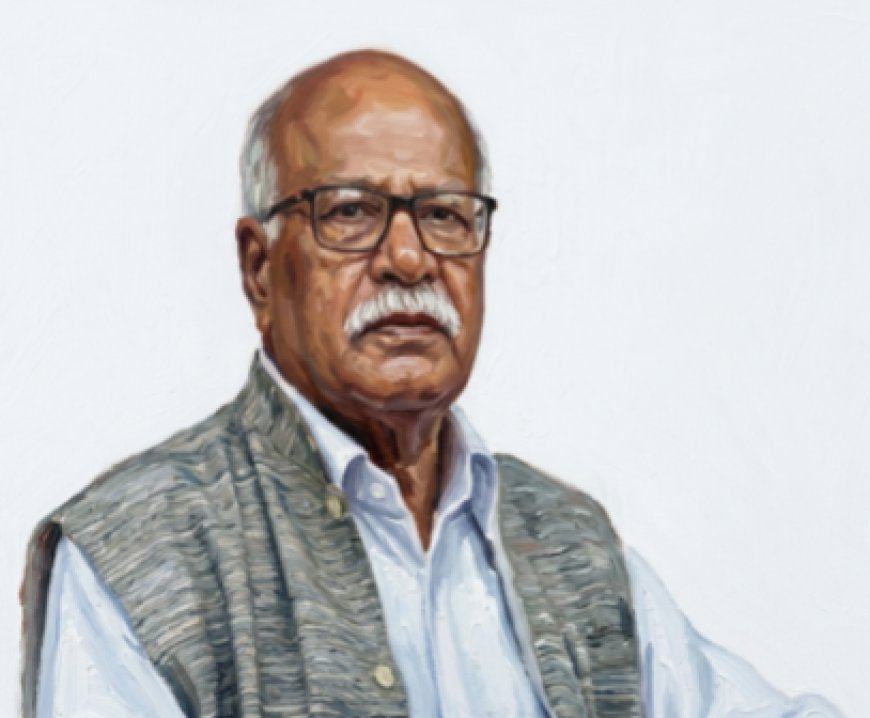
I sat down with Tipu Biswas -- a veteran of the Communist Party of East Bengal, a participant in the 1971 war, and later a long-imprisoned dissident under successive regimes -- at his party office in Purana Paltan, Dhaka, on January 8, 2025.
Tipu Biswas's account is intentionally unorthodox, which rejects the Six Points, refuses the "Liberation War" label, and is unsparing critique of Sheikh Mujibur Rahman, the Awami League, and the role of India. Readers will likely recognise these as positions associated with the Peking-aligned (Maoist) communist tradition in East Bengal—a strand that is now largely absent from the dominant nationalist memory of 1971. I am publishing the conversation here not as an endorsement, but as documentation: A perspective from a marginal yet historically significant political tradition, speaking to a moment of national rupture that the country is still trying to understand.
The interview has been lightly edited for length and clarity. Any clarifications in brackets are my own. Where they appear, translations from Bengali are indicated.
Asiful Basar: I want to begin with the cyclone, because it’s one of the most neglected topics in our Liberation War history. In the major works on 1971, the cyclone is barely mentioned. No one has really studied its significance.
I’d like to hear your view on the political aftermath of the cyclone -- the disaster that followed politically. At that time, newspapers like Ittefaq and Azad, and parties such as the Awami League and NAP-Bhashani, accused the government of doing nothing -- that people were dying and no relief was reaching them. How did you see that situation?
Tipu Biswas: That’s exactly right. Just as the warning wasn’t properly communicated, the government support that was needed after the disaster -- food, clothing, essentials -- none of it came in adequate measure. After the cyclone, Maulana Bhashani said, “No one came.” Yahya Khan didn’t come either.
AB: I think he just flew over the area in a plane, didn’t he?
TB: Yes -- he just flew over. He didn’t come. That’s what Maulana Bhashani meant when he said, “No one came.” And then he declared, “We will not go to the election.” On our party’s side -- at that time I was in the Communist Party of East Bengal. The leaders were Abdul Matin (known as Bhasha Matin), Alauddin Ahmed, Deben Shikdar, and Abul Bashar.
AB: Was it a Marxist party, sir?
TB: It was Peking-aligned [Maoist]. Beyond the cyclone itself, the situation it created made saving people the foremost responsibility. Helping people is normally the central task, and politically we came to realise that we needed independence -- now. After the way West Pakistan ruled and exploited us for 23 years, we believed that an election alone could never deliver liberation. Although Sheikh Mujibur Rahman had proposed the Six Points, our party had no faith in them.
AB: Why, sir?
TB: Because we saw it as an extreme nationalist slogan. There weren’t only Bengali-speaking people here -- there were other ethnic groups too, with their own identities. We believed the liberation of all of them was necessary.
Even after Bangladesh was formed, Manabendra Larma told Sheikh Mujib, “Friend, we fought too. What will happen to our language, literature, culture, and identity?” Sheikh Mujib replied, “Become Bengali.” These were our concerns. We considered the Six Points extreme nationalism, and beyond an economic demand, we didn’t see anything more in them.
AB: But, sir, it’s often said that the Six Points were the Magna Carta of our independence movement.
TB: We didn’t see it that way at all -- and we didn’t see Sheikh Mujib that way either. From our Students’ Union and our party, we even said at the time, “Banglar Hitler Sheikh Mujib, hushiyar” [“Sheikh Mujib, the Hitler of Bengal -- beware”]. We said this because we believed he was a fascist, trying to stir Bengali–Bihari communal conflict under an extreme nationalist slogan.
AB: You’re talking about 1970, right?
TB: Yes, before the election. We didn’t merely boycott the election -- we actively boycotted it. Earlier, during the 1969 student movement, our party had carried out a peasant movement together with Maulana Bhashani.
In October 1969, I believe — by which time martial law had been declared under Yahya Khan -- Maulana Bhashani held a massive gathering of hundreds of thousands of landless peasants and farm labourers at Shahpur, in Pabna’s Ishwardi police station area. They came carrying sticks and wearing red caps. It looked like a volunteer force -- almost an army.
That was when we laid the foundation of our conviction: independence would have to be won through struggle. Our leaders told us plainly -- not through elections, not through voting -- we would never achieve liberation that way. We had to fight for our freedom. And later, that is exactly what happened.
After the March 25 crackdown, Sheikh Mujibur Rahman remained at his Dhanmondi 32 residence. It’s not true that he was arrested -- he actually surrendered. Tajuddin Ahmad, the General Secretary of the Awami League, went to him.
Later, Kamal Hossain and Barrister Amir-ul Islam went too, telling him, “The army is about to come and arrest you.” Sheikh Mujib replied, “You all go; I won’t. I’ll stay here.”
A little while later, the army came and took him away. That’s why we don’t consider him the hero of independence. We consider him a villain. What he did, in effect, was put one foot in each boat. With the Six Points he demanded independence -- but if the Bengalis won, he would be Prime Minister; and if the Pakistanis won, he would still be Prime Minister.
The stories about assassination attempts -- we don’t believe them. We think he was kept safe under American or CIA influence, and after Bangladesh’s victory on December 16, he was released.
We -- the leaders and workers of the Communist Party of East Bengal -- did not go to India. We believed an independence pursued under India’s shelter would not be a real independence for the people.
It would not bring liberation for the masses. So, we stayed in Bangladesh and held control over large areas: Pabna, Kushtia, Jessore, Khulna, Noakhali, Chittagong, and others.
Later, around July-August or perhaps September–October, the Mujib Bahini came into the scene. Politically, they were brainwashed with the message by Mr. Uban: “You won’t have to confront the Pakistan Army directly inside Bangladesh.
Your task is to eliminate the communists who have taken control of various areas, and to free those regions.” That was Mujib Bahini’s mission. There were also conflicts between the Mujib Bahini and the Mukti Bahini. They didn’t accept General Osmani’s leadership, nor did they follow Tajuddin Ahmad.
AB: How many of them were there, sir?
TB: I can’t give you the exact number, but it was a sizeable force. The main problem was that we had to fight a triangular battle. In many places our workers, leaders, and fighters were betrayed -- handed over to the Pakistan Army by groups pretending to be Awami League people.
They would inform the Pakistan Army, “The communists are here,” so the army attacked from the front while the Mujib Bahini attacked from the rear. As we retreated, many of our people were captured or killed by the Pakistan Army. That’s how the triangular fight took shape.
AB: So, in a way, they sabotaged you…
TB: Yes, they sabotaged us. In truth, they didn’t fight for independence in any real sense.
AB: Where were you during 1971? Were you still in Pabna?
TB: I was in Pabna. I was also in Kushtia. I went toward Jessore. I moved through two or three areas in this way. Later, after Bangladesh was formed, I went to Atrai in Rajshahi. There I had to face the Bangladesh Army itself, and we were surrounded by nearly 20,000 Bangladesh Army troops. There was fighting for two or three days.
AB: This was after the Liberation War?
TB: Yes, after. The Atrai battle. That was around May–June 1972. Around May or June of 1972, yes.
AB: And where did you collect your arms from, sir?
TB: We collected arms by killing Pakistani soldiers. We were also producing what I call hand-bombs in large quantities. We knew a war was coming, and that it could begin first with the Pakistan Army or with the Mujib Bahini. We were preparing for both.
Our leader, Abdul Matin, brought 28 rifles from Dhaka. At that time, I was the district secretary and a central committee leader. He personally gave one to me.
AB: Did you have any contact with the Naxalites of West Bengal?
TB: Not in any formal sense, but some contact existed. We were inspired by them -- the Naxalbari movement inspired us. Later, however, we also suffered because of it. When the Naxalite line shifted from a mass uprising to a region-based power struggle, they took up the line of eliminating class enemies. What happened in Naxalbari, we consider correct.
But later in Srikakulam, when Charu Majumdar adopted the “annihilation of class enemies” line, we believe that was wrong. That path caused us heavy damage.
AB: So, your total strength was around 20,000 members, mainly based in North and South Bengal?
TB: Yes. Later our party split. Under Deben Shikdar’s leadership, one faction went to India. They thought that was the right move. Around May 1971, three of us -- Abdul Matin (Bhasha Matin), our party leader; Alauddin Ahmed, a central committee leader; and I, also a central committee leader -- went to Kushtia.
There, our district secretary was Abdur Razzaq. We told him, “Go to Agartala and bring Deben Shikdar back.”
We hadn’t gone to India. We didn’t believe in an independence achieved under India’s shadow. He [Matin] said, “We have to hold a party congress, and for that we need to go to Agartala.” But our leadership refused.
We said, “Why go to India? We have liberated areas -- hold the congress in Kushtia, in Rajib [Pabna], in Jessore, in Rajshahi -- anywhere you want, we agree.” But he insisted, “No, it must be in India.”
AB: What position did he hold in the party?
TB: Before his arrest, he was the General Secretary. He had been arrested in 1969 because of the “Independent People’s Democratic East Bengal” party manifesto.
During the war, when the prisons were broken open, he was freed. We don’t usually call it the “Liberation War” -- we call it the War of Independence. What happened in 1971 was independence — a separation from West Pakistan -- not a true liberation.
The same ruling classes retained power; the rising Bengali bourgeoisie continued to exploit the people. The Awami League became a party representing this rising capitalist class.
AB: So, your group had direct combat with the Pakistani Army?
TB: Yes, in many battles. The first one I fought was in Pabna -- in the BSCIC area, where 200 Pakistani soldiers were stationed. Twenty-nine of them were killed by us. The Pakistani army then dispersed into the villages, and our local people fought back and killed several more.
AB: In Pabna?
TB: Yes.
AB: Didn’t the Pakistani army track you down?
TB: By that time, they had already retreated.
AB: Which month was this?
TB: Early March 1971.
AB: Did the government ever give you the title of “Freedom Fighter”?
TB: No, and we didn’t want it either.
AB: So, you did not receive any recognition, at all?
TB: None. In fact, Sheikh Mujib labelled us as Razakars and seized our properties.
AB: How do you see Maulana Bhashani? Did you share any ideological beliefs with him?
TB: Yes, from the beginning. I’d say if there was any deviation, it was on our part. Maulana Bhashani was always with us. Personally, and as a party, we still believe Maulana Bhashani was the Sun Yat-sen of Bengal. Just as Sun Yat-sen had three principles -- alliance with communists; solidarity with workers and peasants; and resistance to foreign enemies -- Maulana Bhashani upheld the same three.
That’s why I call him the Sun Yat-sen of Bengal. When I was released from jail on 11 February 1973, I was first taken to Ramna Police Station. There, an officer told me, “Tipu Bhai, you must protest.” I asked, “How can I protest?” He said, “Inform people outside.” I replied, “How can I get word outside? You do it.” He said, “They’ve decided to kill you. You’ll neither be arrested nor found dead — your body will simply disappear.”
AB: You mean they planned to make you disappear?
TB: Yes.
AB: Was this before or after Siraj Sikder’s killing?
TB: Before. Siraj Sikder was killed in 1975; I’m talking about 1973. Around that time, when I shouted inside the police station, people outside must have heard -- perhaps a few gathered, wondering what was happening. That’s probably how word spread. I think the police officer himself leaked the news. Soon after, Anwar Hossain Manju, the owner and editor of The Daily Ittefaq, came. He said, “Tipu Bhai, I’ve long wanted to meet you -- now I finally have.” He then asked, “What’s going to happen now?” I said, “I don’t know -- whatever comes.” Once he arrived, the whole situation changed.
The plan to kill me was dropped. The very next night I was presented on Bangladesh Television (BTV) -- at that time the only electronic media. That same night, news of my arrest appeared in about eleven daily newspapers, both English and Bengali. In truth, I was arrested while two Indian Naxalites were with me. They had come to discuss matters with me, and during that meeting I was arrested.
AB: Did you have arms?
TB: No, we didn’t. But they showed on TV that Tipu Biswas had arms -- they even produced photographs. It was all fabricated; they staged my arrest. Later I was sentenced to 14 years; the two Indians and seven others were sentenced to seven years each.
AB: So, you were in jail from then on?
TB: Yes, I was imprisoned from 11 February 1973 until around June–July 1978. After Ziaur Rahman came to power, he sent people to me several times with proposals -- but I never spoke to them. The proposal was: “Leave politics, come out, take up responsibility.”
AB: So that means you had no real difference with Maulana Bhashani -- your ideals were the same?
TB: It’s not that there was no ideological tension at all. He was more religiously oriented. Even so, within the three conditions he set, he called for unity -- uniting workers and peasants and even aligning with the communists.
He wanted the communists to seize power, whereas we did not want him merely to assist them. So, there was some friction. But he told us directly, “You can capture power yourselves.” That’s how he inspired us.
AB: Four parties boycotted the election -- why didn’t all of you come together on a common platform?
TB: Even among us there wasn’t much strategic unity. The main division began when the East Pakistan Communist Party split into two -- one being the Peking-aligned faction. Later that too broke into several parts, and we couldn’t reunite.
That was our mistake. If we had all united back then -- those of us who were communists, excluding the group under Moni Singh’s leadership who went to India (we considered them deviated, revisionist, and collaborating with the Awami League) -- we could have played a much stronger role. But we lacked that realisation, and we lacked communication. Because of the army’s attacks, repression, and distance, we couldn’t maintain contact.
Communication wasn’t easy then -- there were no mobile phones; correspondence was by letter. So even among different regional branches of the same party, proper communication couldn’t be maintained.
After Bangladesh was formed, when we realized it was necessary to unite with the East Pakistan Communist Party, we found that even that party had split -- one faction under Huq’s leadership, who held that East Bengal had become a colony and Pakistan a neo-colony, and that both should unite. Huq took one line, Tohaha took another -- so unity never materialised.
AB: But even after 1975, when a new political situation emerged, didn’t you…
TB: Many of our comrades were in prison; there was heavy repression and torture. Later we did achieve more unity — under the leadership of the Communist Party of East Bengal, we, along with the East Pakistan Communist Party and others, established a Revolutionary Communist League.
However, that unity also harmed us badly, even though it included people like Rashed Khan Menon. There’s another issue -- when a revolutionary party allies with those drifting toward rightist tendencies, it ends up losing its own cadre strength. When we realised that uniting with Menon’s group had been a mistake, thirteen of us left that party.
AB: During the war, were you able to maintain any international connections, especially with China?
TB: No, the circumstances didn’t allow that.
AB: Before the election, when the LFO [Legal Framework Order] was issued — which became the basis of the election — Maulana Bhashani initially criticised it but later agreed. How did you see that?
TB: We boycotted the election, and that LFO was essentially designed to preserve a united Pakistan under Yahya Khan’s leadership. After independence, those who became provincial or national assembly members under the LFO had no legitimate right -- they had been elected to preserve a united Pakistan. That’s why we said the 1972 Constitution should be scrapped.
AB: In the 1960s and ’70s, the communist movement in Bangladesh had real popularity — even at the university level — but now it has lost that ground. Why do you think that happened?
TB: Because of strategic mistakes — wrong political approaches. That’s what I believe.
AB: Did you ever consider students from private universities as your potential followers or sympathisers? In recent times they’ve been more active in movements — could they not have been part of your line of thought?
TB: We never really thought that way, nor did we work to reach them. We couldn’t penetrate that sphere.
AB: But groups like Hizbut-Tahrir have managed to reach them — even radicals have gone in.
TB: Yes, we’ve definitely fallen behind in that regard.
AB: Hmm, again I would like to switch back to 1970 election. Sheikh Mujibur Rahman himself said in an interview that he had expected around 130–140 seats but ended up with 160. If he hadn’t won those extra 10–20 seats, the picture might have been quite different. Do you think the cyclone and people’s frustration played any role in that victory?
TB: I believe it did in some extend. But the absence of Maulana Bhashani and the Peking-aligned communists — both of whom were also contenders for power -- from the election had a significant effect on the outcome. Bhashani said, “Now is not the time for elections, it’s time to feed the people,” and that’s why they boycotted. For us there were two reasons: that this was not the time for an election, and that independence could not be achieved through that path. These two reasons led us to boycott. Certainly, the boycott played a key role in shaping the result.
AB: I read in Ikram Sehgal’s book that the Awami League didn’t have much popularity in rural areas -- its strength was mainly urban and among students. Sheikh Mujibur Rahman would say one thing in the villages and another in the cities, often contradicting himself. And his main demand, the argument goes, was to become Pakistan’s prime minister -- either within or outside the Pakistani system. How did you view that?
TB: I think Sheikh Mujib was never an ideological leader at all. He was a fascist. And falsehood is the foundation of fascism.
As Hitler’s propaganda minister Goebbels put it, “If you tell a lie a hundred times, it becomes the truth.” Mujib did exactly that -- he said whatever suited him, wherever he was. And in practice, they never even built unity. There was the Awami League, yes, but no genuine workers’ or
or peasants’ parties.
AB: The Sromik League, Krishak League…
TB: Those came much later. In fact, under Maulana Bhashani’s leadership, the workers’ and peasants’ fronts were mainly led by the communists -- that’s the reality. And this so-called popularity of the Six-Point Programme, this floating notion that Mujib wanted the independence of East Bengal — the whole Six-Point movement, in fact — gathered force because of these factors.
AB: Right. So, this is my last set of questions. The accusations Sheikh Mujib levelled -- that the central government was intentionally neglecting East Pakistan, deliberately withholding support -- largely align with what Maulana Bhashani was saying. After the cyclone, for example, there was no proper relief.
Mujib called it “criminal negligence.” From your side -- those of you who were on other political fronts -- what was your observation? Do you think the government intentionally failed? Or was the cyclone simply too massive to handle, beyond anyone’s control?
TB: No, that’s not the case. If the government had had the will, it could have done a great deal. But it didn’t. It failed to play the role it should have played.
AB: In Ikram Sehgal’s book, he argues that the government did make efforts but that many obstacles were created locally. He says there was significant looting of relief supplies, by local Bengalis and Awami League members alike.
TB: The negligence was clearly on the part of the government. The kind of relief operation that was needed simply did not happen.
AB: But it’s also true that the cyclone was extremely massive -- unlike anything we had seen before.
TB: That’s true -- it was massive.
AB: And we weren’t prepared for it either.
TB: True. But there was also an enormous amount of public cooperation — people themselves were helping each other in large numbers.
AB: We had never seen such civic activism before — so many people coming together for one cause.
TB: Yes.
AB: Finally -- about the later events, the separation itself -- would you like to add anything?
TB: I think I’ve already said what needed to be said. The Awami League wanted independence through elections. We wanted independence through war -- through struggle, through mass uprising, through people’s revolution. They prepared accordingly: They went to India, formed the Mujib Bahini, and used it to kill and massacre communists there. They did whatever they thought necessary.
AB: And after the war, did you remain underground, or did you come into the mainstream in 1972?
TB: No, since then we’ve been openly active in politics -- we accepted the line of mass uprising. Later we even participated in elections, unlike them. But we now think that was our mistake.
They were right. We believe today that real change must come through a mass uprising -- by seizing power through people’s revolution. If elections happen even after an uprising, that election will not produce a people’s government. Only through a mass uprising can we reclaim true liberation.
AB: Thank you sir, for your time and patience.
TB: Thank you too.
Muhammad Asiful Basar is a Doctoral candidate, University of Antwerp, and Senior Lecturer, North south University.