





































![A Ledger of the Soul: Navigating the Allah-Bhagavant Nexus in a 19th-Century Puruṣākāra Jñāna Caupara [Gyan Chauper]](https://counterpointbd.com/uploads/images/202608/image_430x256_6a93baa3b09a7.jpg)



















The Nano-Loan Trap: Inside Bangladesh’s Fintech Fraud Boom
As Bangladesh embraces digital credit, scammers and unregulated apps are turning instant loans into instruments of fear -- exposing a system moving faster than its laws.


On May 16, 2023, the Cyber Crime Wing of the Anti-Terrorism Unit (ATU) raided a house in Sector 11 of Uttara, Dhaka. From the raid, the wing seized several laptops and computers used in fraudulent activities. An alleged member of this fraud gang is Mohiuddin Mahi. A guy who studied at a university in China and was also involved in scamming people in India and Pakistan. The gang would offer loans through the Rapid Cash App.
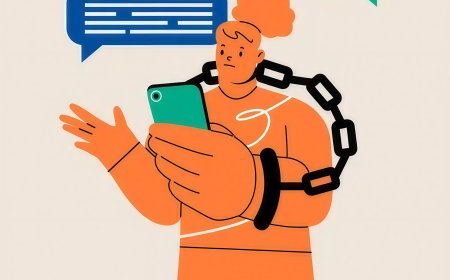
The Android application would offer easy loans ranging from Tk 500 to Tk 30,000. But once a user registers in the app, it would illicitly collect their contact numbers, photos, videos, and other sensitive information. Once the user avails the loan, they would be burdened with a high interest rate. Failing to comply with this would result in harassment and blackmail using the information of the user.
There are cases where even after paying the full amount, the borrower would be forced to take more loans and pay more interest. This gives us a little glimpse into the rapidly growing fintech eco-system across the country without having a proper regulatory mechanism in place.
Wired for Finance, Not for Protection
Bangladesh has one of the fastest-growing mobile finance markets. There is a presence of several such services. Among those, bKash, Nagad, and Rocket have made the services accessible in remote areas as well. The mobile services in Bangladesh have more than 195 million registered accounts, and the annual transaction exceeds 10 trillion BDT (Bangladesh Bank, 2023). The next step forward in this was credit at one’s fingertips.
This provides nano-loans issued instantly to small businesses, delivery workers, students, and others. This got a boost in 2021 by the introduction of the country’s first digital nano-loan, launched by bKash and City Bank. This allows accessing a collateral-free loan directly through the bKash app. By 2025, this partnership will have provided loans of Tk 2,300 crore (US$210 million) to almost 950,000 users.
However, this has also attracted the opportunists. According to police and media reports, there are dozens of unregistered lending apps now. These are offering quick cash, and in return asking for invasive permissions, resulting in access to photos, contacts, and location. In a good number of cases, this is then turning into blackmail material.
The Cyber Crime Investigation has estimated that this type of digital financial fraud cases has jumped up 60% since 2021 and incurred a loss that exceeds Tk 100 crore in the last two years. The matter of huge concern is how the criminals are not always shadowy. Some apps appear legitimate, use local branding and logos of major finance providers. This lures in the customers by gaining their trust.
The Scam Pattern: Trust, Trap, and Shame
In 2024, the Dhaka Metropolitan Police arrested a gang. The gang was impersonating as bKash customer-service staff. Their fraudulent process would start with sending SMS links. This SMS would have offered for loan upgrade, and with a click, would capture users’ One-Time Passwords (OTP). The next would be draining the accounts. These victims were mostly daily-wage earners.
Additionally, the complaints portal of Bangladesh Bank witnessed a sharp rise in mobile-finance grievances. This increases steeply from 1500 in 2020 to nearly 7,000 in 2024. Another report by Transparency International Bangladesh (TIB) in 2024 found that 6% of users and 17% of MFS agents faced fraud or experienced unauthorized withdrawal.
Global Phenomenon
This boom of microloans is quite similar in neighbouring countries like India. It also saw a sharp rise in these apps during COVID. But a particular case in India demonstrates how dark this debt trap can get. Vishwakarma, an employee in an insurance firm in Bhopal, India, suffered in this debt trap. The harassment was so severe that Vishwakarma poisoned his two sons, eight and three years old. Later, he and his wife took their own lives. The cycle started with him taking a digital loan and suffering from harassment. This ended with a message on the day of their suicide, saying the loan app would upload their manufactured naked photo on social media.
When the Law Can’t Keep Pace With the App
William F. Ogburn, back in 1922, coined the term cultural lag. He has exemplified how often the material culture, i.e. innovations and technologies, evolves faster than the non-material culture, i.e. the social systems that govern them.
Bangladesh fintech is a textbook case and exemplifies these phenomena. On the one hand, there is material culture that includes smartphones, 4G coverage, and a huge number of mobile apps. On the other hand, are the non-material culture, which includes the consumer laws, regulatory mechanisms, and financial literacy. In our case, the rapid increase in technology and users in these domains, with no proper regulatory oversight and awareness of the situation, exemplarily portrays the idea of cultural lag theorized by Ogburn more than a century ago.
The situation is quite tricky in this regard. There is the Payment and Settlement Systems Act (2024). This very recent act gives the Bangladesh Bank the authority to oversee licensed digital-finance providers. However, these app-based lending systems, which are mostly beyond the Bangladesh Bank, hide themselves behind third-party partnerships.
Along with the act, their cyber tribunals are also ill-equipped. Another act, i.e. the Digital Security Act, one of the very first and important acts of Bangladesh to regulate the online domain, has a very poor conviction rate. Very few of these cases have a certain amount of digital evidence, as the victims often unknowingly delete apps or messages before they file complaints.
The sharp rise of these “virtual banks” started by preying on the vulnerable and desperate population after COVID. Although none of these “virtual banks” have a government license, they are earning through loan analysis and processing fees, huge interest rates, and other services.
What Could Help Close the Gap?
Bangladesh acts as a large market for such mobile money transactions. In 2024, it processed about 8.6% of the world’s daily mobile transactions. This data was reported by the London-based Groupe Special Mobile Association (GSMA). Bangladesh is also responding to this crisis. Bangladesh Bank has already floated draft guidelines on Digital Financial Consumer Protection. The ICT division of the country is proposing a National Data Protection Act. Along with these initiatives, two other concrete steps can help navigate the situation:
Fintech accountability hubs: There can be Accountability hubs launched nationally. These could be labs launched by regulators, fintech associations, and universities. These hubs would be responsible for vetting all loan apps before launch and certifying the apps. The certifications would enable the apps to comply with interest disclosure, data privacy, and collection practices. Unless an app is certified, major MFS platforms, e.g., bKash or Nagad, won’t integrate those apps. The hubs can also be responsible for publishing a public “whitelist” that includes all verified apps.
Digital literacy and redress centres: In collaboration with NGOs and INGOs, the government can establish these centres to build awareness and training around digital evidence, patterns of phishing, and mechanisms to lodge complaints. These can also build small pop-ups in the MFS themselves. These can be simple, short videos in Bangla that can provide basic awareness and be used in the case of fraud suspicion. These can be a simple social fix. The goal would be to reduce the gap between widespread technological infrastructure and institutional readiness.
These are not high-tech fixes; they’re social ones. The goal is to shrink the lag between technological promise and institutional readiness.
A Nation Racing Its Own Success
The spread and usage of fintech in recent years has been massive. It has made the flow of money easier, payments transparent, and the use inclusive. However, these facilities and infrastructure are being used and taken advantage of by the fraudsters. Ogburn’s idea of cultural lag warns us that innovation can’t be reflective itself. It needs legal oversight and regulatory mechanisms. Otherwise, digital credit can be used for exploitation.
Ishtiaq Mohammod is a Lecturer at East West University, Dhaka.