


















































What is Going On in Europe?
Keir Starmer’s resignation in the UK, the sixth in a row over the last ten years, suggests a genuine crisis not only in the UK but across European politics.

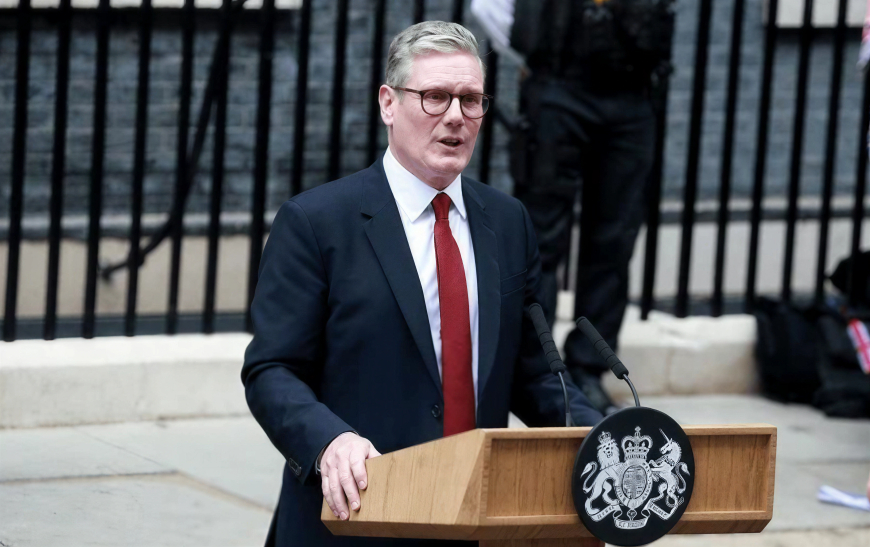
Several interconnected issues have contributed to the fragility of British politics, including collapsing approval ratings, mounting internal party pressure, and a deeply frustrated electorate, ultimately leading to the UK prime minister's resignation. The Brexit movement served as the catalyst that shook British politics, a choice made at the ballot box in search of identity.
In the British political system, a prime minister can be removed if their party considers them a political liability, since they are not directly elected by the people’s vote.
The two-party system in the UK has fractured the political landscape, fuelling the rise of populism and the fragmentation of the electorate, with voters dispersed across smaller parties. Post-Brexit trade costs, inflation, and stagnant economic growth have created a bleak economic situation that is hard to bear and difficult to satisfy people.
Thus, the fall of Starmer, like that of his five predecessors in one of the most powerful European countries, is like a storm that breeds profound political instability at the heart of Europe. It exposes a deeply divisive Brexit, a parliamentary system that allows the easy removal of leaders, a fractured political landscape, and persistent economic pressure with rippling effects across all European countries.
The shockwave of this resignation is reaching far beyond the UK, infecting right-wing populist parties across Europe, and they are wasting no time in seizing the moment.
In Germany, far-right parties used it as a direct, glaring warning to their own political establishment, framing Starmer's exit as a cautionary tale that whoever ignores the people's interests will ultimately fail.
The loudest cheers seem to be coming from Moscow, likely in response to the UK’s hostile, confrontational policy toward Russia. The immediate reactions of Dmitry Peskov and Maria Zakharova suggest they would weaponize this issue as a geo-political triumph.
Peskov claims that such instability at the top of the British government makes it a less predictable partner for Russia. Maria Zakharova mocked the UK leadership, calling them a textbook example of how to achieve nothing with a mandate of such a massive majority, and advised them to fix their own house.
The Russians alluded to other European leaders, in particular the conservative German leader Friedrich Merz, to draw lessons from the humiliating fall of Starmer and to focus on effecting policy change in Germany to avoid similar consequences to the UK.
With the downfall of Starmer, one of Europe's major leaders, the European dominoes are likely to begin wobbling. The call of the populist movement across Europe and the voice from the Kremlin are not only sensing blood in the water but are also actively aligning their messages to capitalize on widespread voter frustration over migration, inflation, and broken trust.
Divisions in the Western camp over the Iran war, the diminishing influence of the USA in forcing a decision on a smaller power, unprecedented aspersions on the Israeli administration in the EU parliament, economic pressure stemming from the Iran war, the USA's unwillingness to bear the cost of NATO defense as before and its push for Europe to raise its defense budget, etc., are going to make the political landscape of Europe fiercely unpredictable.
The joining of many smaller Eastern European countries in NATO for defense, security, and economic prosperity may prompt many to reconsider who can provide.
The security umbrella provided by the USA through NATO succeeded in keeping habitual warfare off European soil. The economic strain already borne by all of Europe would make it extremely difficult to increase the defense budget without further damaging its already distressed economy.
Thinning out the USA's forces in NATO would force Germany to focus on developing its own defense and security and Russia to consolidate its gains from Ukraine or prepare for a fresh offensive.
The old guard in Europe shouldn’t be deaf to the fact that calls for radical change at home are louder than before. The UK is the first to feel the brunt of it, and who is next is not difficult to predict, given the economic situation in Europe and around the world.
Any attempt to overextend military capabilities would only further weaken the economic base and bring a thousand years of habitual warfare back to Europe.
History reminds us that power rises through conflict and falls through irrationality. The crisis in Europe’s identity, sense of nationalism, urge for economic prosperity, love for liberalism, etc., will doom it unless its own politics are fixed, space for morality is expanded, and the international system is respected.
Global standing, power, and prestige would be unworthy if people at home stood against their government for failing to sustain them economically and to ensure peaceful lives, as promised. Not to forget that both Russia and Germany aspire to expand their spheres of influence in Europe.
Germany, as the most powerful economy, may prefer to focus on its own economy rather than bear the burden of the rest of Europe's fractured economies.
The war in Iran and the rise of people’s power in many small states to oust their own governments should not be used only for research but should be taken more seriously by the powerful West, given the overstretched role of the USA to manage global conflicts and commerce.
Brigadier General AF Jaglul Ahmed (Retd) is a regular contributor to national dailies. He can be reached at [email protected].