





































































Where is the Evidence?
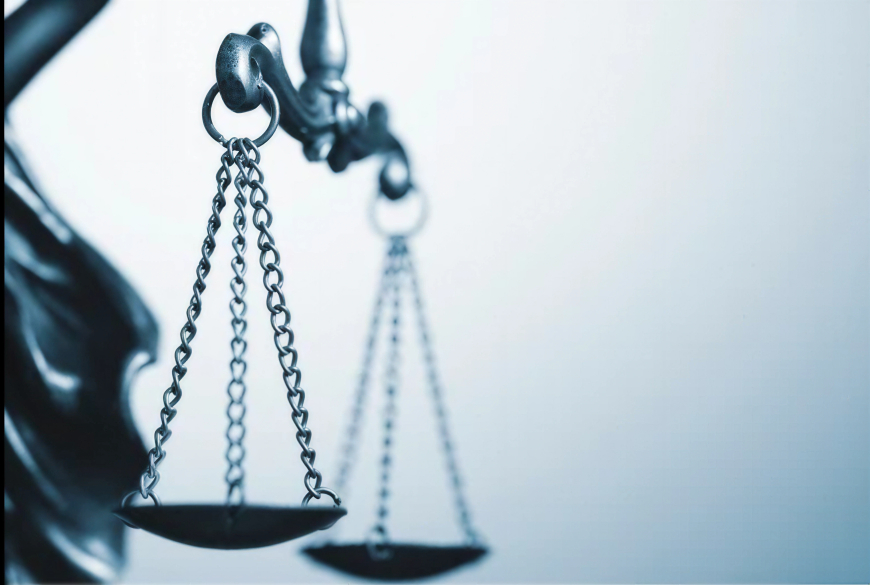
Law exists to separate truth from allegation, evidence from assumption, and justice from vengeance. The moment these lines become blurred, it weakens public confidence in the legal process.

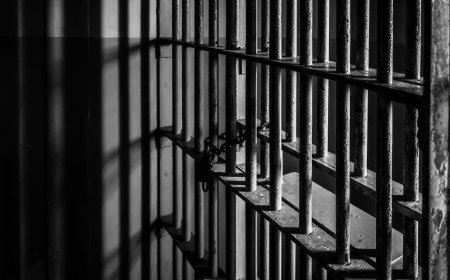
Some prisons are built of concrete and steel rods, while others are built of silence, fear, expediency, and abandoned conscience. The latter are often the more prevalent.
For nearly 10 months, 15 serving army officers have remained in custody, being accused of crimes against humanity.
The allegations against them raise a compelling question that every society governed by the rule of law must ask: Where is the evidence of individual criminal responsibility?
The law requires evidence to prove that the accused officers personally ordered, planned, instigated, aided, or knowingly, and where alleged, maliciously participated in the crimes alleged. These officers did not spend their careers in comfort. They served the country in different capacities over the course of their careers.
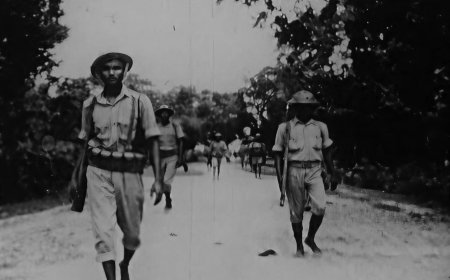
They were sent wherever the nation needed them most, to maintain or restore law and order, confront terrorism or violent extremism, rescue hostages, protect key installations, prevent attacks against the state, and safeguard innocent civilian lives.
They undertook difficult assignments at the risk of their own lives. The 15 officers are serving members of the armed forces. They are subject to the discipline and command structure followed in the armed forces.
If there were genuine concerns that any officer had acted beyond the scope of their lawful duty, the Army possessed a comprehensive statutory authority to investigate, examine operational records, determine individual responsibility, assess command responsibility, and discipline or punish them accordingly.
Prima facie, it appears the officers were not involved in ordering, controlling, or knowingly or deliberately participated in the alleged crimes. Nonetheless, the decision not to invoke the Army Act, but instead permitting prosecution under a different statutory framework, raises questions of institutional responsibility.
Consequently, the 15 serving officers now face the gravest criminal charges without first having their conduct examined through the disciplinary process under their own Army Act. Sidestepping the Army Act triggers questions as to whether the appropriate legal course was followed.
History will certainly ask whether this was merely an error of legal judgment or a failure of institutional courage.
Criminal justice is founded upon personal liability, not on institutional association.
One must realize that a uniform is not evidence; rank is not guilt; presence is not participation; and suspicion is not proof. The concerns become deeper when we see legislative amendments expand jurisdiction to encompass serving military personnel, and amendments are given retrospective effect up to a defined period to capture events predating their enactment.
Such actions, particularly in the context of the criminal justice system, are unprecedented, and summon severe constitutional and jurisprudential scrutiny.
Likewise, the dispensation of criminal justice is rooted in the presumption of innocence, not on the presumption of guilt. The accused officers have the right to defend themselves and have the privileges accorded by fair trial. If the allegations are treated as facts immediately, the defense becomes pointless.
It must be borne in mind that the integrity of the justice system relies entirely on its ability to separate unproven claims from verified facts. Therefore, the judicial process must act as a reliable filter in order to ensure justice. Otherwise, it will end up punishing the innocent based on mere accusations.
In cases where the accused persons were not serving in the relevant positions at the time of the alleged offences, exercised no authority over the alleged perpetrators, neither ordered nor facilitated the alleged crimes, had no knowledge of their commission, and, in some cases, were tasked solely with protecting key point installations, rescuing hostages, and pushing back hostile crowds in discharging their official duties, the legal basis for attributing liability for crimes against humanity requires the most careful and rigorous examination.
Moreover, the emergence of extensive public narratives and social media campaigns surrounding pending proceedings are equally disturbing. Justice must be administered in courtrooms through a fair trial, not in the court of public opinion.
Questions also arise regarding the integrity of the witnesses presented.
Several individuals who were arrested for their involvement in terrorist activities, violent extremism, or other similar offences that are facing trial in separate criminal proceedings, have been presented as victims and prosecution witnesses against these army officers.
Every accused has an undeniable right to test the credibility, impartiality, motive, and reliability of each witness produced against him, but whether that right gets full respect in practice remains a matter of severe concern.
Every accused person, regardless of public sentiment, is entitled to present a defence freely and without obstruction, and to be judged strictly in accordance with established principles of law.
Any perceived departure from these fundamental safeguards would inexorably undermine public confidence in the fairness, integrity, and legitimacy of the judicial process. The consequences extend far beyond the courtroom.
15 officers remain in prison, 15 families live with uncertainty every day. Children ask when their fathers will return home, elderly parents await, and wives carry burdens that no judgment can erase.
Time, once taken from a family, can never be returned even by eventual acquittal. History teaches that injustice rarely triumphs because of the actions of a few. More often, injustice survives because many choose silence over principle, convenience over courage, and conformity over conscience.
Every institution entrusted with dispensing justice carries the responsibility to ensure that no innocent person becomes the casualty of political rhetoric, perceived public pressure or institutional convenience.
Law exists to separate truth from allegation, evidence from assumption, and justice from vengeance. The moment these lines become blurred, it weakens public confidence in the legal process, and leaves society questioning whether law remains a shield for the innocent or an instrument of power.
The deepest tragedy is not merely that the innocent may suffer, but that those entrusted with the power to prevent such suffering choose to silence the voice of their own conscience.
Lest we forget, a legal system is not judged by how quickly it convicts, but by how fairly it protects the innocent while holding the guilty accountable. When that balance is lost, justice becomes the first casualty.
A society that allows justice to yield to expediency risks creating prisoners far beyond those confined in prison. It creates prisoners of silence, fear, and conscience.
Barrister Hamidul Mishbah is a practitioner at the Bangladesh Supreme Court.