




























































Diplomacy Afresh: H.E. Dinesh Trivedi
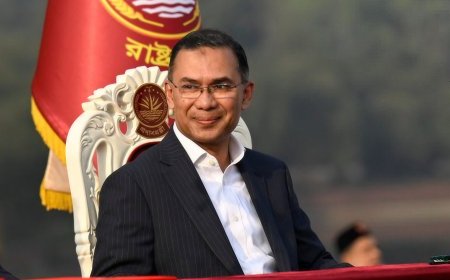
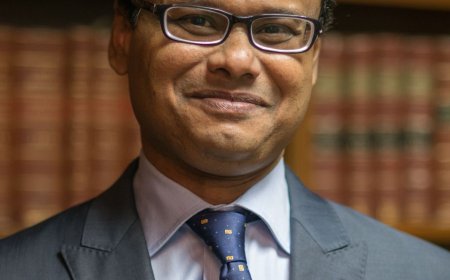
It is prudent for the Indian government to appoint H.E. Dinesh Trivedi, a former politician, as the High Commissioner to Bangladesh at a time when relations between the two countries are experiencing turbulence over the ouster of the last government.

He, as an ex-politician, would be in a better position to see, through his eyes, the new outlook on Bangladesh's politics that may matter for renewed bilateral relations.
Certainly, he has the acumen to judge diplomacy around the world, which is guiding the major powers to avoid a senseless war, save the economy, help humanity, redeem global intelligence from fiasco, and reinstate peace over conflict. The High Commissioner, in his dramatic entry through Benapol, committed to working together for the entire population living on both sides of the border, who share the same air, the same sky, and the same pains.
Despite his political background, for a long time, it would have been better if he had mentioned that the populations on both sides should have shared the same equitable water flowing through the common rivers, the issue that has been souring the relationship for a long time.
Credit to his initial words, expressed through the media and assumed to bear good intent to reset bilateral relations; it would have added further if he had added a few words on the sporadic push across various borders.
The diplomatic mission of the incumbent High Commissioner would certainly take into account the journey of the then Bengal of British India from 1905 to the present as a guiding principle for resetting the relations. The idea of the partition of Bengal into West and East Bengal in 1905 was conceived by the British rulers as a measure of administrative convenience, given its size, and to develop the eastern part relative to the west.
The effort was annulled in 1911 by protests from upper-class Hindus for ulterior motives.
The British rulers, instead of reuniting Bengal, established a new organization on a linguistic basis, creating separate provinces for Bengali-, Hindu-, and Odia-speaking populations, and moved the capital from Bengal to Delhi, diminishing Bengal's political influence.
Paradoxically again, Bengal was divided into West Bengal, a province of India, and East Bengal (Pakistan), a province of Pakistan, in 1947, based on religious identity, against the proposal of Bengal’s last premier, Husseyn Shaheed Suhrawardy, and Sarat Bose to keep it as an independent and sovereign state. East Pakistan, finally liberated from Pakistan, became an independent state in 1971, having a partitioned boundary with India as decided in 1947.
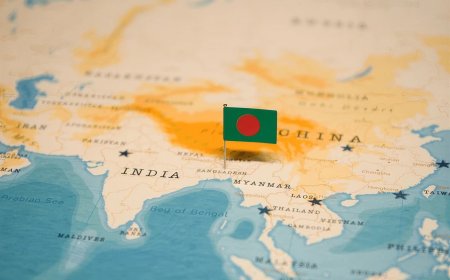
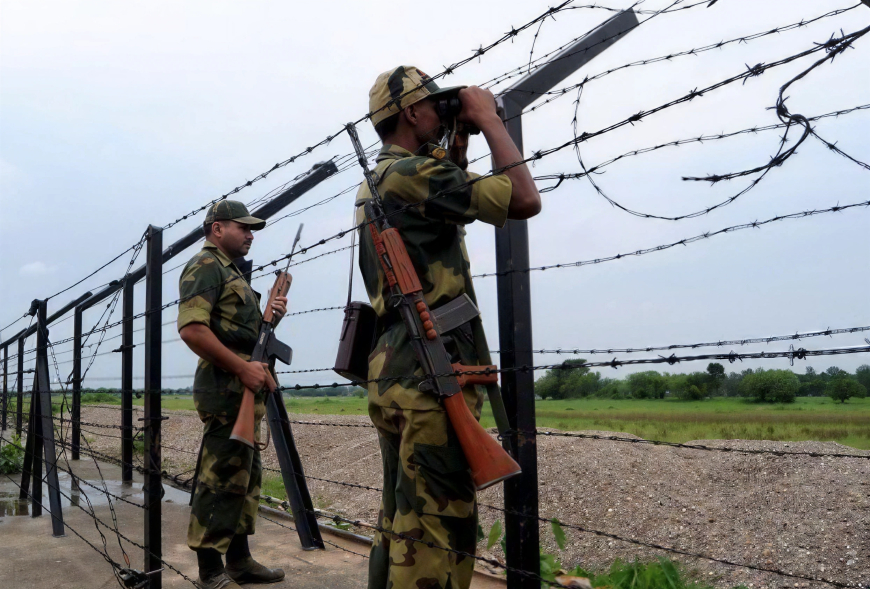
This physical partition was thrust upon the populations of both Bengals, of similar cultural affinity, not by war or conflict, but by an artificial religious divide imposed by the colonial order. Eventually, a wire fence had to be erected as a physical demarcation from the Indian side due to an unknown perceived threat.
There is often an attempt in the Indian intelligentsia and political forces to view the relationship against the backdrop of 1971, with an emphasis on Indian assistance during the 1971 war.
Indian preference for a relationship based solely on this basis and aligned with one specific political camp in Bangladesh has, on the one hand, failed to place the relationship in the correct historical perspective and, on the other, ignored all other political forces and people’s concerns. The dilemma of the reset, or of ignoring the real irritants between the two countries, would definitely put extra pressure on the High Commissioner to succeed in his mission.
His dramatic entry through the Benapol border would have been more effective had he visited any point along the border where there is an unusual push. Unless he feels the impulse on the border in reaction to push-in efforts by people supporting the BGB, he wouldn’t perceive the pent-up grievance against years of maltreatment by the BSF.
The people living on both sides of the border share the same air and the same sky, but not the same pain, which causes enormous difficulties on this side of the border because the upper riparian state holds back water from the common rivers. The aggression of the corporals, the sergeant, and the border outpost commander at lower ranks, and the solidarity of the villagers, don’t necessarily reflect a declared authority issued from higher up or explicit foreign policy directives, but stem from pent-up emotional outbursts.
The High Commissioner may begin reviewing the situation analysis with numerous questions: Why there was no politics, no democracy, no accountability, no transparency in governance, no citizens' rights, no freedom of expression, no justice for those not in power, and no leaders to fall back on to redress grievances for decades from the ousted regime in Bangladesh?
Why the established political opposition front, the civil society, or media, the fifth estate had to surrender their conscience?
Who helped the three organs of a true democracy to enmesh into one against the very principle of democracy?
Who allowed the law enforcement agencies to function not only to apprehend criminals, but also to hold them in custody for unlimited periods and even execute them as and when they wished, without judicial process?
Why the lives of the people living in border areas were treated by the BSF as cheap as smuggled cattle?
Why the political forces that India aligned so long with had to flee the country after the July Uprising and why India should still consider it relevant to look back on their resettlement as part of inclusivity of politics?
India, proud to practice a strong democracy at home, consistently felt comfortable partnering with Bangladesh's political force, which was responsible for burying democracy in its neighborhood.
With a political background in the world's largest democracy, the High Commissioner would surely be able to report back home that the erosion of democracy in Bangladesh is the only cause of the bitterness in the relationship between the two countries.
His rapprochement efforts, right from day one of his journey, would likely resonate with the resentment of Gen Z, who had long observed and digested the decades of subservience in the foreign-policy outlook that sustained the oppressive regime. Therefore, when Gen Z calls on the nation's people to unite for their own capital and dignity, it is not anti-Indian sentiment but an aspiration to live with dignity within their own boundaries and to pay respect to people’s aspirations.
The incumbent High Commissioner's remarks on bilateral relations, with expressions of cohabitation under the same sky and the same air, don’t sound cogent, given the constant attempts to push in.
It rather ignites a broader segment of the country and the lower ranks of the security forces defending sovereignty at the border, perceiving it as an allusion to further aggression. The popular social media content creators who emerged from the July Uprising take extra mileage by resonating with the hearts of this larger community and help further deteriorate relations; merely banning some of them is not the solution.
Sooner, the High Commissioner should be able to see from the green air and blue sky, and hear from the white hearts of the ordinary people of Bangladesh, why they are demanding to live with political dignity and respect from their neighbor, the bearer of the world's largest democracy.
The sooner he finds where the people of this country draw their power from, the better it would be for him to align with the people rather than move only to those who hold positions of political power. The people of Bangladesh no longer indulge in political persecution, no longer guarantee a political party eternal power, and are ready to throw off any party in power at any time the privileged citizenry is curtailed.
The High Commissioner must realize sooner how the people of Bangladesh suffer from irrational water-sharing arrangements, how they react to border irritants, and how their political outlook has changed as a result of the ouster of the last regime with which his country was so aligned for so long.
Brigadier General AF Jaglul Ahmed (Retd) is a regular contributor to national dailies. He can be reached at [email protected].