






































![A Ledger of the Soul: Navigating the Allah-Bhagavant Nexus in a 19th-Century Puruṣākāra Jñāna Caupara [Gyan Chauper]](https://counterpointbd.com/uploads/images/202608/image_430x256_6a93baa3b09a7.jpg)





















The Charter belongs to no party. Whoever channels public impatience into pressure for its implementation will own ground nobody else is contesting.

Yes, economists may envy physicists and political scientists may envy economists. But, here, in a place as fluid and unpredictable as Bangladesh, there are moments when even the most elegant model benefits from being challenged by a journalist's imperfect, half-cooked antithesis.
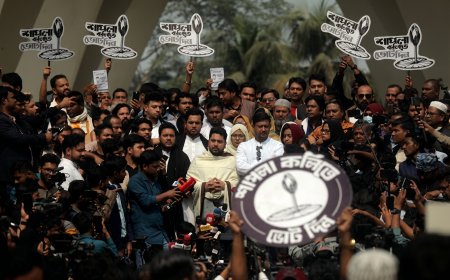
The NCP risks sliding into oblivion and losing its uniqueness by merging into the shadow of larger political interests. It must now undertake serious soul-searching about the long-term costs and benefits of its strategy.
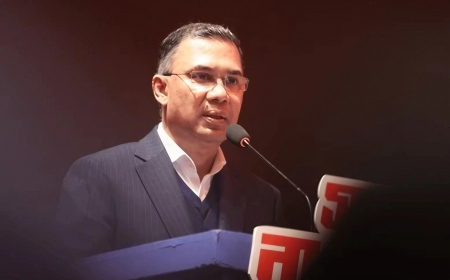
All things considered, Mr. Rahman receives a “meets expectations” grade. The BNP government, as a team, receives a “needs improvement” grade, but not a failing one.
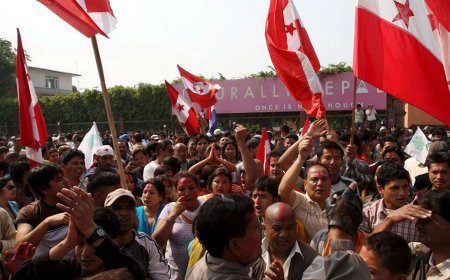
Bangladesh’s political terrain is considerably more rigid. Dynastic narratives continue to exert powerful influence over voter perceptions. The Awami League remains closely associated with the legacy of Sheikh Mujib, while the BNP continues to revolve around the Zia family. In such an environment, new political movements must not only compete with established organizations but also confront deeply embedded historical loyalties.

In the end, that is what happened to NCP. It let itself be persuaded that the bravest thing a youth party can do in its founding election is to make itself small.
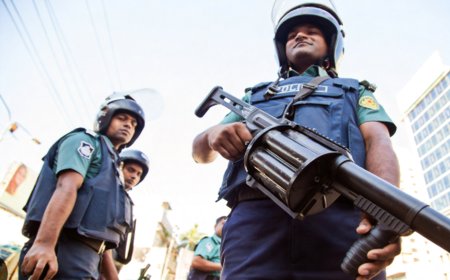
If unlawful killings by police are prosecuted while unlawful killings of police are ignored, the law becomes partisan. If mob killings are investigated while state killings are diluted, the law becomes cynical.
The immediate challenge before Prime Minister Tarique Rahman is to slow down the gyration of the turning wheel and to set us on a straight path. To assess such possibilities we need to clearly understand the political lessons from the recent elections and to explore the pitfalls which lie ahead.

Episode 9 of Counterpoint Generations reflects on the immediate post-election landscape, examining voter participation, the formation of the new cabinet, and the institutional challenges facing the incoming government as parliament prepares to begin its term.

The 2026 electorate delivered a clear message: A revolution can topple a regime, but it cannot govern by erasing the cultural DNA of its people. Voters chose a path of stability, signaling that while they were ready for a new chapter, they were not ready to rip out the first pages of the book.
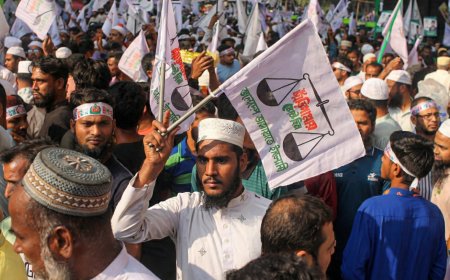
On the question of 1971 and apology, Jamaat’s tone was arrogant. Had they shown even minimal reconciliation, people might have celebrated August 5’s victory with them on the election day, specially given their alliance with the student movement.

Despite a paucity of resources, a showing of 66,000 was very creditable. Even without all their resources, without AL and minority votes, the BNP candidate would likely not have prevailed. This was an encouraging start that provides a strong base for the future.
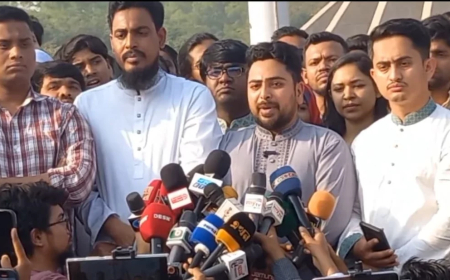
The NCP is still young. Its leaders are young. When it was launched, the response was electric; crowds gathered wherever it went. That energy is now waning. The atrophy has begun -- but it is not irreversible.
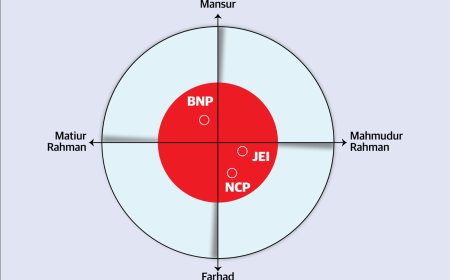
The axes of Bangladeshi politics have shifted dramatically. Where do the political parties line up in the new dynamic?

If NCP grows too strong, it risks becoming a genuine rival. My sense is that Jamaat has neither the intention to reform itself nor the willingness to allow such growth. Jamaat will remain the benchmark of right-wing politics in Bangladesh, while exploiting the NCP whenever a secular shield becomes necessary. The greatest casualty of this alliance will be July itself.

Bangladesh’s post-Hasina politics is marked by a fierce contest between old elites and rising aspirants vying to fill newly opened power spaces. This debate is simply one front in this broader elite struggle reshaping the country’s political future.