











































![A Ledger of the Soul: Navigating the Allah-Bhagavant Nexus in a 19th-Century Puruṣākāra Jñāna Caupara [Gyan Chauper]](https://counterpointbd.com/uploads/images/202608/image_430x256_6a93baa3b09a7.jpg)



















What Is Preventing Bangladesh from Becoming Cashless?
Fragmented payment systems, inconsistent fees, and weak interoperability are slowing Bangladesh’s transition to a truly cashless economy

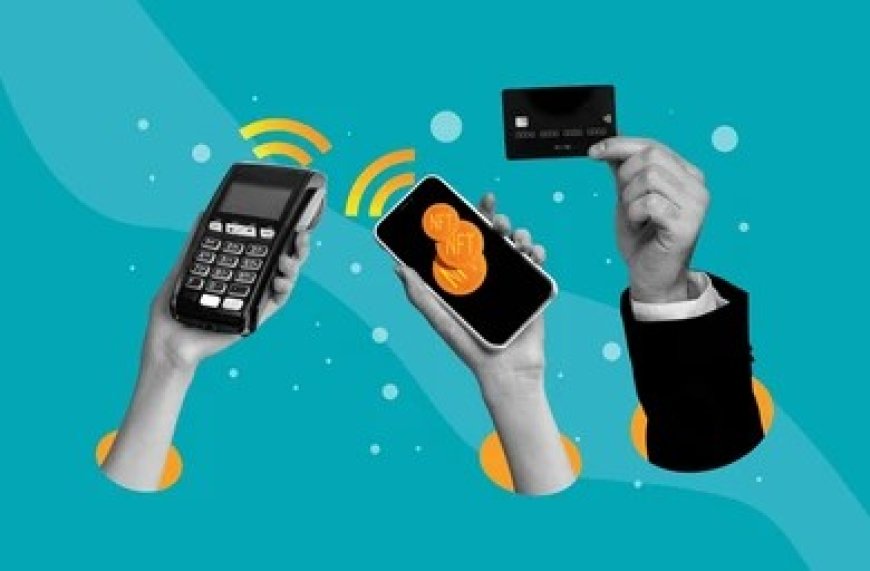
This is a reminder that Bangladesh spends nearly Tk 20,000 crore every year just to print and circulate cash. That is not just a budget line; it is the hidden operational cost of keeping physical money alive in a country that aspires to go digital.
So the real question is simple: If we are already paying this much to sustain cash, why is building a truly cashless system still so difficult?
At the core of Bangladesh’s payment eco-system, there are broadly two dominant players: Traditional banks and Mobile Financial Services (MFS). In theory, they are connected. In practice, they behave like two separate economies.
The scheduled banks in Bangladesh are relatively advanced in terms of interoperability, with a set of systems already enabling interbank transfers. These include the Bangladesh Electronic Funds Transfer Network (BEFTN), the Real-Time Gross Settlement (RTGS) system, and the National Payment Switch Bangladesh (NPSB).
For personal instant transfers, most users rely on NPSB when sending money to accounts in other banks. However, the key issue is that these transactions often still involve a fee, which limits seamless, cost-free interoperability. MFS platforms, on the other hand, have significantly improved financial accessibility, especially for people who still do not have bank accounts.
However, cash-out charges remain their biggest structural weakness. Every time a user converts digital balance into cash, they effectively pay a fee that feels like a penalty for simply using the system.
Then comes interoperability, or the lack of frictionless movement between systems.
Even when money moves from MFS to a bank through NPSB, users often face percentage-based charges instead of fixed costs. That inconsistency discourages regular digital movement and keeps cash as the cost-free alternative in people’s minds.
This is where the idea of a truly interoperable national payment system becomes critical.
The government’s push toward a Mojaloop-based platform, to be branded as the Inclusive Instant Payment System (IIPS), is a significant step on paper. Mojaloop’s global promise is simple: Instant, low-cost, interoperable payments across banks, wallets, and other providers. If implemented well, it could reduce fragmentation.
However, the real test is not the architecture. It is whether every participant is willing to align incentives around it.
Bangla QR is another promising layer in this eco-system. A single QR standard that works across banks and MFS providers could remove merchant-side confusion and reduce onboarding friction for small businesses. Nevertheless, QR codes alone do not solve the deeper problem of cash preference. If settlement behind the QR still carries fees that feel unpredictable or high, users will eventually drift back to cash.
When we talk about a cashless economy, India’s UPI has become the most cited example. It is a system where a single real-time payment rail connects banks, wallets, and users. This enables instant transfers that are largely free at the point of use. The system works because it removes friction, standardizes access, and treats payments as public digital infrastructure rather than a fragmented service.
Brazil’s PIX also allows instant transfers across the entire financial system, operating 24/7 with no cost, and has scaled rapidly because users do not have to calculate fees before every transaction. Besides, Singapore’s PayNow and Europe’s SEPA Instant Credit Transfer system both show how interoperable payment rails can be built around banks rather than fragmented apps, but their impact differs in design and scale.
Singapore’s PayNow enables instant, real-time bank transfers using simple identifiers like mobile numbers, and for most consumers, it is either free or very low-cost depending on the bank, which has driven widespread everyday use.
In Europe, SEPA Instant allows euro transfers across participating countries within seconds, but while it delivers true real-time settlement, consumer costs are typically low or near-zero in many banks, though not as uniformly free or deeply embedded in everyday retail use as UPI, PIX or PayNow.
These examples matter for Bangladesh because they show a clear pattern. Cashless ecosystems scale fastest when transactions are instant, interoperable, and effectively free at the user level.
There is also the question of digital banks. For years, discussions around digital banking licenses in Bangladesh have circulated in policy and industry circles. Yet implementation remains limited. Without fully operational digital-first banks, the system continues to depend on legacy branch-heavy institutions.
That creates a structural barrier. A cashless economy cannot scale if users still need to physically visit branches for services that should be available on a phone. We also have to recognize that in Bangladesh, many people still do not feel comfortable or willing to go to banks.
This is where e-KYC becomes crucial. In theory, Bangladesh already has the regulatory framework that allows digital onboarding and remote verification. But in practice, opening an account from home is still far from seamless. Many banks have not fully implemented end-to-end digital account opening, and even where the system exists, awareness among users remains low.
As a result, customers are still pushed toward branches for verification, which reintroduces the same old friction into a system that is supposed to be digital-first. Outside major urban centres, this gap becomes even wider, where users either do not know the option exists or find the process inconsistent across institutions.
Until e-KYC moves from policy approval to visible, user-friendly implementation across the entire banking ecosystem, digital onboarding will remain more theoretical than practical. Still, the most important issue is not technology. It is pricing architecture.
Right now, the system often charges per transaction. That might look like a fair usage model, but in reality, it discourages frequent digital movement. Every transfer becomes a micro-decision involving cost calculation. That is not how cashless ecosystems scale.
A better model would shift from per-transaction charges to annual or subscription-based account and service fees, similar to how traditional banking accounts operate. Payment institutions should be allowed to generate predictable revenue streams while keeping individual transactions either free or near-zero cost for users.
If money movement between accounts still feels expensive, then cash will always win as the default medium. Bangladesh Bank also has a critical role here, not just as a regulator but as an infrastructure investor. Interoperable systems, instant settlement rails, and shared national payment infrastructure require upfront public investment. Private players alone will not solve the coordination problem because their incentives are fragmented.
Ultimately, a cashless Bangladesh will not be achieved by policy announcements or QR rollouts alone. It will be achieved when moving money becomes as effortless and cost-neutral as speaking or sending a message. Because as long as every digital transfer feels like a taxed action, cash will remain the most efficient technology available.
Muhammad Ibrahim Mojid is a business reporter at Times of Bangladesh.