











































































Khan Khalid Adnan is a Fellow of the Chartered Institute of Arbitrators (FCIArb), a Barrister in England and Wales, and an Advocate of the Supreme Court of Bangladesh. Recently, he completed his LLM in Litigation and Dispute Resolution from UCL with distinction, and currently, he serves as the Head of the Chamber at Khan Saifur Rahman & Associates, Dhaka, Bangladesh

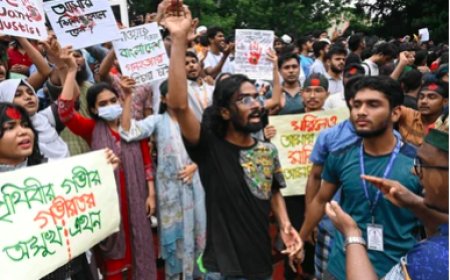
July’s azadi was powerful because it was capacious. It united people who agreed on the regime they opposed but not necessarily on the republic they wished to build.

There is a sensible way out, and it lies inside the Constitution, not outside it. If the new government wants to preserve the Reform Council model, it should table a constitutional amendment under Article 142 defining the Council’s status, powers, voting threshold, relation to Parliament, and oath.

The Epstein files test a basic democratic claim: That no one is above the law. If the outcome is curated transparency, where victims are exposed and the influential are obscured, the test will have been failed. If the outcome is a victim-centred process, the files might finally serve the purpose they were invoked to serve

The constitutional stakes are plain. The Bill of Rights protects speech, press, and the right “peaceably to assemble,” and it does not contain an immigration exception. International law says the same with sharper vocabulary.

Normalizing forced extractions in the name of justice does not advance accountability; it advertises that power can dispense with law

Can an Approver still be an accused in the Hasina case? It is difficult to defend the proposition that a person who has been formally pardoned, can remain in law an accused for the same conduct.