











































































Why a 4% Cap is a Bad Idea
As the prime banking regulator, Bangladesh Bank should reconsider this directive. At the bare minimum, it can remove SME loans from it, just like consumer loans were omitted. Ideally, scrapping the regulation altogether and replacing it with a policy rate cut would be a better way to bring down lending rates.


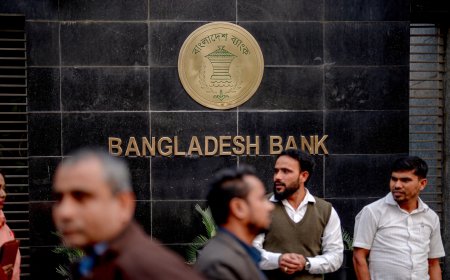
In an effort to manage borrowing costs and ease pressure on businesses, Bangladesh Bank recently introduced a 4% cap on the lending-deposit spread -- the margin between what a bank pays its depositors and what it charges its borrowers.
While the objective of lowering interest rates for businesses is highly understandable, imposing a rigid spread limit may introduce significant structural challenges that run counter to the regulator's positive intentions.
By bypassing market-driven mechanisms, this policy framework risks creating imbalances that could inadvertently slow down economic recovery.
International Regulatory Norms
Bangladesh is the only country in the world running a loan to deposit spread cap. Only a few rare countries like Mauritania and Zambia currently have some sort of regulation on lending rates caps.
However, they are either linked to policy rates or only applicable for consumer credit. Using the same formulas as they have applied for Bangladesh will yield lending rates far above the current average lending rate of 12%.
When a policy is rarely used anywhere else in the world one needs to question the practicality of it. The rules and laws of economics are universal.
Policy experiments similar to Erdoganomics in Turkey has led to devastating consequences. Proponents of a spread cap policy may hint at market failure and the need for intervention.
This would have been justified if banking was highly consolidated with oligopolistic structure.
In reality, Bangladesh has one of the most fragmented banking sectors in the world with more than 50 banks competing with each other.
Undermining the Policy Rate
Typically, monetary authorities manage liquidity and interest rates by adjusting the policy rate.
When a central bank shifts this rate, market transmission mechanisms naturally pass those changes down to deposit and lending rates across the banking sector.
Imposing an artificial limit on spreads effectively disconnects the policy rate from its natural transmission channels. Already we are seeing bond yields drop below the policy rate which is fairly unnatural in an interest rate targeting monetary regime.
Risk of Reducing Essential Credit
One of the primary concerns with a one-size-fits-all spread cap is that it overlooks the unique operating and risk cost structures of different business segments.
Lending to a large corporate entity is vastly different from lending to a micro, small, or medium enterprise (SME).
Basic economic principles suggest that when the potential return on a high-effort, higher-risk loan is artificially constrained by a spread cap, financial institutions naturally become more risk-averse.
Instead of benefiting smaller borrowers, this policy may lead banks to ration credit, unintentionally starving genuine SMEs of formal institutional backing.
This could inadvertently push vulnerable businesses toward unregulated shadow banking networks, where borrowing costs are significantly steeper.
We have seen this before when the nine percent lending rate cap was imposed in 2020.
SME lending by banks were heavily curtailed and entire departments were shut down by some banks.
Creating Disincentives for Well-Managed Banks
A particularly troubling side effect of a rigid spread cap is how it impacts banks that have earned strong market trust and operational efficiency.
The variance in spreads among banks in Bangladesh is rarely driven by overcharging on loans; rather, it stems from differences in deposit costs.
Highly stable banks -- such as multi-national institutions -- can secure cheaper deposits simply because savers actively choose them for their reputation, robust governance, and perceived safety.
Furthermore, efficient banks invest heavily in digital infrastructure to build a strong base of low-cost Current and Savings Accounts (CASA).
Under the new directive, a well-managed bank with a low cost of funds (e.g. 4%) would see its maximum lending rate capped at 8%. With domestic inflation currently running above 9%, an 8% lending rate yields a negative real return.
This means the lender is losing purchasing power in real terms. Instead of motivating weaker banks to improve their corporate governance, a hard spread cap inadvertently penalizes efficient banks for their strong market standing and financial health.
Unintended Headwinds for Credit Growth
Private credit growth in Bangladesh has already experienced notable deceleration, hitting a low of 4.72 percent in March.
As seen from Bangladesh’s own experience in 2020 and experience from other countries such as Kenya, interfering in the pricing of loans can significantly impact the credit growth.
Banks will cut down credit to segments that it deems risky (i.e. the lending rates do not compensate for risks) and costly (operating costs are too high).
With economic growth remaining low, even a prolonged low credit growth rate is dangerous. A decline in the credit growth rate will be catastrophic.
As the prime banking regulator, Bangladesh Bank should reconsider this directive. At the bare minimum, it can remove SME loans from it, just like consumer loans were omitted.
Ideally, scrapping the regulation altogether and replacing it with a policy rate cut would be a better way to bring down lending rates.
Asif Khan, CFA is the Chairman of EDGE AMC Limited and a trustee member of Panam Institute.