
































![A Ledger of the Soul: Navigating the Allah-Bhagavant Nexus in a 19th-Century Puruṣākāra Jñāna Caupara [Gyan Chauper]](https://counterpointbd.com/uploads/images/202608/image_430x256_6a93baa3b09a7.jpg)




















The Subaltern is Being Renamed
When the language of subalternity becomes a resource through which those closest to power construct their own political identities, we are compelled to ask: Are we truly listening to the voices of the marginalized, or are we witnessing the moral prestige of marginality being transformed into yet another form of political capital?

I had initially decided not to write about this.
A few young Bangladeshis spoke at the Oxford Union. Predictably, social media responded with a mixture of celebration, self-congratulation, and ridicule. Some admirers presented the occasion as if Bangladesh had finally claimed its rightful place on the global intellectual stage; others dismissed it altogether.
I found both reactions somewhat uninteresting. The Oxford Union is an old and prestigious debating society. People speak there. They debate, persuade, provoke, and perform. Speaking at the Oxford Union is neither a crime nor an automatic certificate of intellectual distinction. By itself, it is not an event that demands serious political analysis.
What I did not anticipate, however, was that this episode would be reframed through the language of subaltern politics.
The statement that compelled me to reconsider my silence was this: "The problem isn't 'Can the Subaltern Speak?' Innalillah, the subaltern is speaking."
As a feminist scholar working at the intersections of post-colonial thought, gender, and power, I believe this claim deserves careful scrutiny, not because of who made it, but because of what it reveals about the contemporary politics of representation in Bangladesh.
Let me be clear at the outset. This is not an attempt to diminish Dr Nabila Idris's contributions. Her work on enforced disappearances and her role in the Commission of Inquiry have expanded public understanding of some of Bangladesh's most urgent human rights concerns. Precisely because of the seriousness of her scholarship, the deployment of "the subaltern" in this context warrants critical engagement.
Gayatri Chakravorty Spivak's Can the Subaltern Speak? is perhaps one of the most cited and simultaneously one of the most misunderstood interventions in post-colonial theory. Spivak was never asking whether a village boy could learn English or whether someone from a madrasa background could one day speak at Oxford. Her concern was much deeper and infinitely more unsettling.
Who is recognized as a legitimate speaker?
Whose knowledge is accepted as knowledge?
Who has the authority to narrate history?
Who claims the right to represent others?
And whose voices remain unintelligible, even when they speak?
For Spivak, the subaltern is not simply synonymous with "the poor," "the disadvantaged," or those with humble origins. Subalternity refers to a structural condition of exclusion. It describes those removed from the circuits through which recognition, representation, mobility, and power operate.
It names those whose experiences are translated by others, whose realities are narrated by others, and whose speech fails to enter the institutional spaces where decisions are made and legitimacy is produced.
That is why Spivak's argument was never about the biological capacity to speak.
The issue was whether anyone was listening.
This distinction matters. It forces us to confront an uncomfortable question. Can nationally recognized political actors, Members of Parliament, former student leaders, influential activists with large social media followings, individuals with direct access to state institutions, organized party structures, international platforms, and sustained media visibility, meaningfully describe themselves as subaltern?
If those who shape public discourse, influence policy, command audiences, and enjoy institutional access begin to claim subalternity, then the concept loses its analytical precision altogether.
At that point, it ceases to function as a critical category. It becomes political branding.
More precisely, it becomes the conversion of victimhood into symbolic capital. It becomes the strategic borrowing of marginality to enhance legitimacy. What we witness is not the politics of recognition, but the marketization of exclusion, where suffering itself becomes a form of political currency and moral authority.
This is where the Bangladeshi context becomes particularly important.
When analyzing Jamaat-e-Islami, we often reduce it to a mosque-and-madrasa-based organization. That reading is not entirely wrong, but it is profoundly incomplete. For decades, Jamaat has understood something that many of Bangladesh's mainstream political parties have neglected: Power is not sustained through street mobilization alone. It also requires the production of knowledge.
From an early stage, the organization has invested strategically in segments of its younger generation, identifying talented students, supporting higher education, facilitating entry into academic and professional spaces, and cultivating individuals capable of operating within the languages of development, human rights, governance, and international advocacy.
Other political parties have certainly produced loyal activists and committed organizers. But Jamaat's long-term investment in transforming intellectual capital into ideological capital is distinctive. It understands that narratives matter, research matters, universities matter, and that struggles over legitimacy are often won long before elections take place.
Political sociology offers a useful insight here. Jamaat has not merely sought to produce supporters; it has cultivated what scholars describe as "dedicated cadres willing to make the ultimate sacrifice" -- individuals who understand themselves as participants in a larger moral and ideological project.
This is perhaps why the organization has historically been less comfortable with the performative populism that characterizes much of Bangladeshi politics. It understands that power is not produced only through parliament or the occupation of the streets.
Power is also generated in classrooms, research centres, think tanks, international conferences, human rights reports, development frameworks, and in determining which forms of knowledge appear neutral and which narratives acquire legitimacy.
In other words, before capturing the state, one captures the narrative.
Before establishing political hegemony, one establishes epistemic hegemony.
I encountered this reality personally in 2013, while I was a student at the University of Hull during the period of Bangladesh's war crimes trials. My supervisor invited me to participate in organizing a faculty seminar series. I was delighted. During one seminar, a white British professor from a London university presented a paper on Bangladesh's war crimes trials.
To my astonishment, his presentation reproduced, almost verbatim, narratives that had circulated within Jamaat's international advocacy efforts: That the trials were politically motivated, procedurally flawed, and fundamentally illegitimate.
I asked what seemed to me a straightforward question. What first-hand research informed these conclusions? What historical and contextual evidence had shaped this analysis? Which survivor testimonies had been consulted? Which archives had been examined? Which local scholarship had informed the argument?
No clear answers emerged.
Instead, the questions themselves were quietly sidestepped.
At that stage, I had not yet begun studying politics as deeply as I later would. Over time, however, I came to appreciate the extent to which international lobbying, conferences, reports, academic publications, and policy advocacy had been mobilized to delegitimize the trials.
Because power is not exercised only through coercion. It is exercised through credibility. Through expertise.
Through the authority to define what counts as objective knowledge. This is precisely why the language of subalternity matters.
Anthropologist Sayema Khatun recently captured this phenomenon with remarkable precision: "Subaltern is hijacked." I find that formulation profoundly important.
Because what we are witnessing today is not the empowerment of the subaltern.
It is the appropriation of subalternity by those who already possess voice, visibility, and access.
Spivak warned us about the dangers of intellectuals speaking for the subaltern while claiming to represent them. Today, we are confronted with a related phenomenon: Those closest to the microphone increasingly claim to be voiceless; those who dominate national conversations present themselves as unheard; those with access to institutional power recast themselves as outsiders to power.
And in doing so, actual subalterns disappear once again.
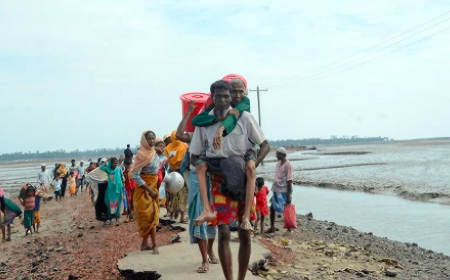
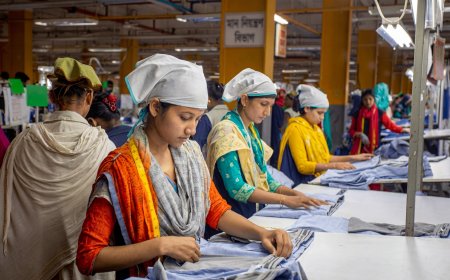
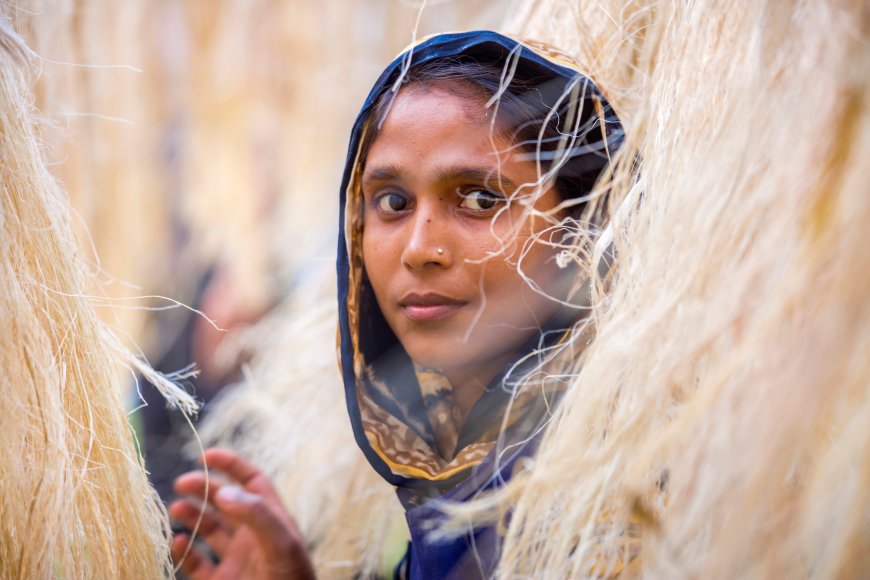
The indigenous woman in Khagrachhari whose land has been seized. The climate-displaced family on Bangladesh's coast. The tea plantation worker whose labour sustains an industry while her voice remains absent from policy debates. The garment worker who produces wealth yet remains politically disposable. The Rohingya girl whose future continues to be negotiated by others.
These are the people for whom Spivak's question remains urgent. Not those who already occupy national and international stages.
The danger today is not simply that elites speak for the subaltern. Spivak warned us about that decades ago. The greater danger is that elites increasingly claim to be the subaltern. In doing so, they borrow the moral authority of marginality while simultaneously eclipsing those whose voices remain structurally unheard.
I have no objection to anyone speaking at the Oxford Union. My objection is to turning theory into slogan, to transforming marginality into political currency, and to the epistemic dishonesty through which privilege reinvents itself as persecution.
The language of human rights, development, democracy, gender justice, and social justice should not be read as simple moral vocabularies. They are also terrains of political struggle. Who qualifies as oppressed? Who has the authority to represent suffering? Which pain becomes visible? Which suffering acquires legitimacy? These questions are never settled neutrally. They are contested through power.
When the language of subalternity becomes a resource through which those closest to power construct their own political identities, we are compelled to ask: Are we truly listening to the voices of the marginalized, or are we witnessing the moral prestige of marginality being transformed into yet another form of political capital?
Perhaps the most unsettling reformulation of Spivak's question in contemporary Bangladesh is this: The subaltern has not suddenly begun to speak. The subaltern is being renamed. And once again, being spoken over.
Dr. Lubna Ferdowsi is an academic and researcher based in England.