







































































Hormuz is Unfixable Now
The latest ceasefire between the United States and Iran has failed to restore confidence in the Strait of Hormuz, exposing the world's continued dependence on a chokepoint that remains vulnerable to disruption.

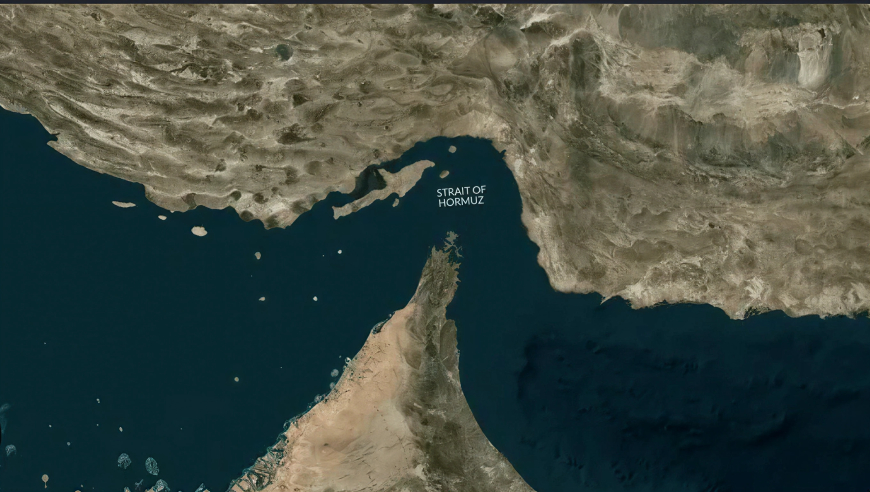
For decades, the Strait of Hormuz has been treated as an immovable fact of the global economy: A 21-mile-wide channel through which roughly a fifth of the world's oil supply passes, and which everyone -- shippers, insurers, central banks, and diplomats alike -- simply assumed would remain open because closing it seemed too costly for Iran itself.
That assumption has now collapsed, and with it, a comfortable fiction the world can no longer afford to indulge. The latest ceasefire between the United States and Iran, sealed through a 14-point memorandum of understanding, was supposed to restore normalcy to the strait.
Washington offered Tehran extraordinary concessions to get there: Some $300 billion in reconstruction financing and the unlocking of over $100 bn in frozen assets. It was, by any measure, a generous olive branch.
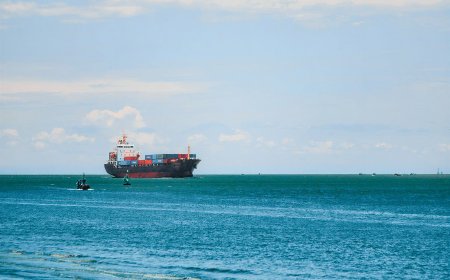
And yet within weeks, Iranian forces were firing on civilian vessels again, first the Ever Lovely, then the Kiku, dragging both sides back into a cycle of strikes and counterstrikes before another fragile truce was cobbled together ahead of talks in Doha.
The reason this keeps happening is not mysterious. It is structural. The MoU that anchors this ceasefire runs just 14 points: A fraction of the 159 pages that made up the original Iran nuclear deal.
Ambiguity of that magnitude was never going to produce a durable peace; it was only ever going to produce a pause. Iran discovered something valuable during this war: That closing Hormuz, or at least threatening to, is remarkably easy and remarkably effective.
Cheap Shahed drones aimed at largely defenseless tankers are enough to bring global shipping insurers to their knees. Having tasted that leverage, there is little reason to expect Tehran to relinquish it simply because a piece of paper asks it to.
What makes this moment different from previous Hormuz scares is the emergence of an explicit toll regime. Iran is no longer merely threatening closure; it is charging what it euphemistically calls "service fees" -- protection money by any honest definition -- while directing traffic that hugs Oman's coastline as a warning to any state or shipper who has not paid up.
This is not brinkmanship in the traditional sense. It is the institutionalization of extortion over one of the world's most critical chokepoints, and it is proving remarkably durable precisely because there is no credible alternative route.
That absence of alternatives is the part the world has been slow to reckon with. Saudi Arabia's east-west pipeline to Yanbu, built decades ago as a Hormuz hedge, adds perhaps three million barrels a day of net new capacity: A fraction of the roughly 20 million barrels that normally transit the strait.
The UAE's Fujairah pipeline moves less than two million barrels a day, and its expansion will not be finished until 2027 at the earliest. Even combined, and even ignoring the fact that both pipelines are sitting-duck targets stretched across hostile terrain, these bypasses cannot come close to replacing Hormuz.
The Bab-el-Mandeb strait, the other conceivable detour, is flanked by Houthi territory, and the 2023-2024 precedent, a 90% collapse in container transits at the height of Houthi attacks, makes clear that this is no safe harbor either.
There is a second front quietly complicating matters: Lebanon. Iran has insisted that nothing short of full Israeli withdrawal satisfies its reading of the ceasefire, even as Beirut pursues its own separate deal with Israel over Hezbollah's disarmament in the south.
That Lebanese-Israeli framework, signed in Washington, represents a real setback for Tehran's regional ambitions, but it too lacks a firm timeline and has already triggered accusations of "treason" from Hezbollah, whose track record of assassinating conciliatory leaders is not ancient history.
Two fronts, two ambiguous deals, and no shortage of actors with incentives to blow either one up. None of this means diplomacy should be abandoned.
But governments, shipping companies, and energy markets need to stop budgeting for a quick return to normalcy in Hormuz. The strait's vulnerability is no longer a hypothetical scenario war-gamed by analysts; it is now a demonstrated, monetized reality that Iran has every incentive to preserve.
Serious policy would mean accelerating pipeline capacity even knowing it cannot fully substitute for Hormuz, building far more robust strategic reserves, and treating the current ceasefire not as a solution but as a temporary lull between predictable flare-ups.
The uncomfortable truth is that Hormuz was never "fixed" by this agreement: It was merely paused, and imperfectly at that.
Until the ambiguities baked into a 14-point memorandum give way to something with the specificity and enforceability of an actual treaty, the world should expect this story to repeat, with new ships, new strikes, and the same unresolved question hanging over the Gulf:
Who really controls the world's most important oil chokepoint?
Shafqat Aziz is a barrister (Lincoln’s Inn) and an accredited Civil-Commercial Mediator (ADR-ODR International).