














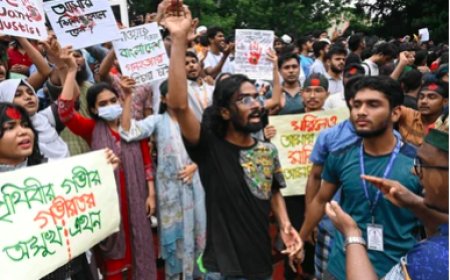








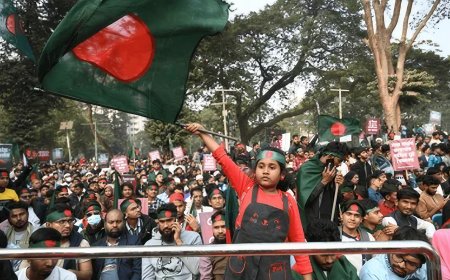








































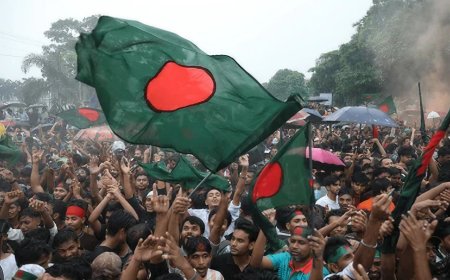
The first anniversary of a revolution can be about celebrating what was achieved. The second year should be about measuring what has changed.

Dismiss early grievances, personalize criticism, stigmatize opponents, mistake force for authority, answer old questions, control information instead of rebuilding trust and confuse institutional power with public legitimacy. These are not uniquely Bangladeshi mistakes. They are universal governmental temptations.

Without serious commitment to implement reform in financial sector, revenue collection and governance, the initiative of issuing foreign currency bond seems like cart-before-the-horse case.
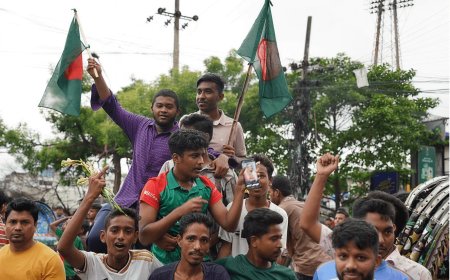
Deep political involvement is necessary to set policies, which bureaucracies can then execute, not vice versa, the whole nation, regardless of political leanings, prefers its leader to be bold yet pragmatic

Today, we understand far more about how children learn, how creativity develops, and how deeply our survival depends on our relationship with nature. Yet our education systems often seem designed for a world that no longer exists.
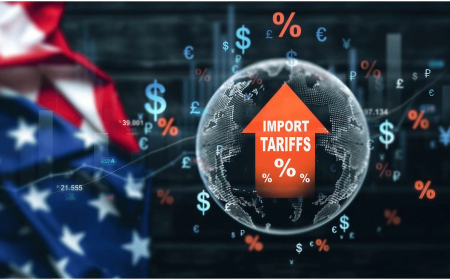
When viewed through the lens of the so-called Walmart Effect, the outcome is not necessarily one-directional and may even create certain opportunities for a low-cost producer like Bangladesh.
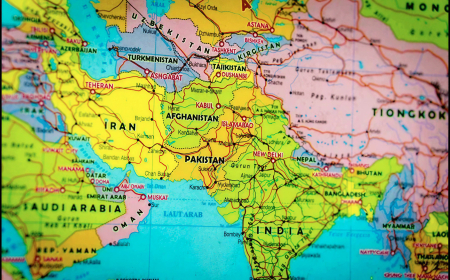
History has placed South Asia and the Indian Ocean Region at the centre of 21st-century global transformation. The region's future lies not in choosing between competing powers but in pursuing inclusive modernization, strengthening regional partnerships and leveraging the unique strengths of individual nations

A country becomes innovative not when its officials announce innovation, but when its inventors no longer need to beg them for the right to build.
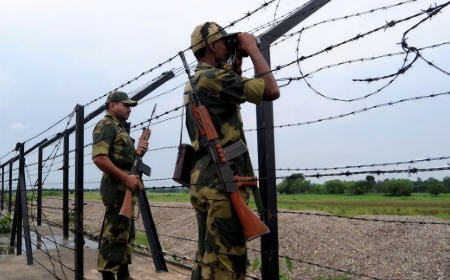
It is prudent for the Indian government to appoint H.E. Dinesh Trivedi, a former politician, as the High Commissioner to Bangladesh at a time when relations between the two countries are experiencing turbulence over the ouster of the last government.

The government and private sector have an opportunity to work together to translate the positive policy signals contained in the budget into tangible investment outcomes. If we do so successfully, Bangladesh will not only attract foreign capital but also encourage successful members of the Bangladeshi diaspora to invest their expertise, resources, and networks in the country's future.
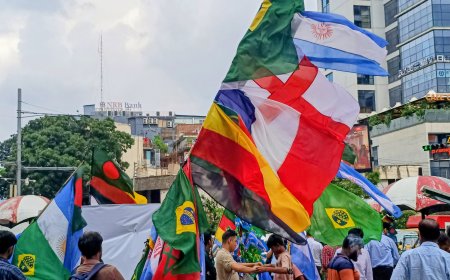
The distance between Bangladesh and the World Cup cannot be measured in kilometres. It is measured in institutions, accountability, planning, and political will. Perhaps one day, when the World Cup comes around again, one flag on that bamboo pole will sell just a little more than the rest.
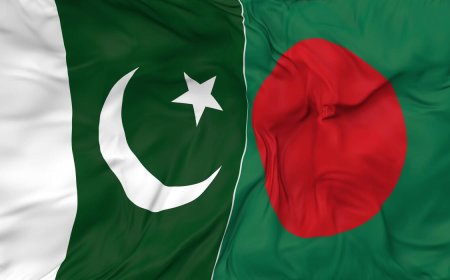
By placing Pakistan in MENAAP, the World Bank is giving institutional weight to this development path, one centred on migration, remittances, energy dependence, external finance and rentier capital. Pakistan’s reclassification is not Bangladesh’s crisis, but it is Bangladesh’s warning.

Fragmented payment systems, inconsistent fees, and weak interoperability are slowing Bangladesh’s transition to a truly cashless economy
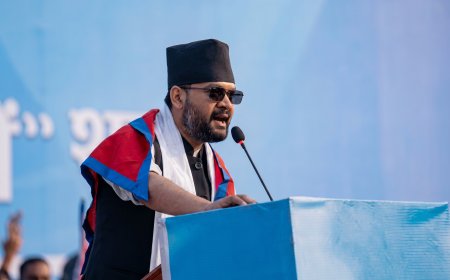
As Nepal’s story unfolds with such urgency, its triumphs and stumbles equally on display, what does Bangladesh’s narrative look like?
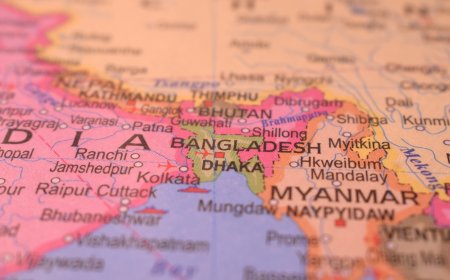
The binary is brutally simple. Nations that negotiate as supplicants get extracted. Nations that negotiate as sovereigns get developed.
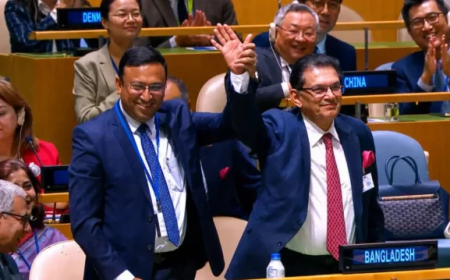
At a time when Bangladesh has often found itself on the defensive internationally, this victory offers a welcome opportunity for national confidence and unity.