




































![A Ledger of the Soul: Navigating the Allah-Bhagavant Nexus in a 19th-Century Puruṣākāra Jñāna Caupara [Gyan Chauper]](https://counterpointbd.com/uploads/images/202608/image_430x256_6a93baa3b09a7.jpg)




















From the Strait of Hormuz to Dhaka: Oil, Remittances and Geopolitical Aftershocks
International law and global stability are not distant abstractions for Bangladesh but essential pillars of economic resilience and national planning.


As tensions between the United States, Israel, and Iran intensify, concerns are growing not only in the Middle East but across energy-dependent economies like Bangladesh.
At the same time, the escalation has once again placed the foundations of the international legal order under intense scrutiny. Whenever major powers engage into overt or indirect confrontation, global headlines focus on military capability and strategic calculations.
However, for economically interdependent and diplomatically cautious countries such as Bangladesh, the implications go far beyond the battlefield. They influence energy security, labour migration, diplomatic positioning, and the normative stability of international law. Any serious analysis must begin the framework of the United Nations Charter regulating the use of force.
In this context, Article 2(4) prohibits states from using force against the territorial integrity or political independence of another state. This provision is widely considered a foundational principle of modern international law, whereas, the principal exception appears in Article 51, which preserves the inherent right of self-defence where an armed attack occurs. The controversy surrounding contemporary conflicts frequently turns on how this exception is interpreted.
When a country labels its actions as “pre-emptive” or “defensive,” important legal questions arise: Was there an imminent armed attack? Was the response required to avert it? Was it proportionate to the danger faced? These standards are not mere formalities; they are legal thresholds developed through decades of jurisprudence and state practice. The answers determine whether a state’s actions fall within lawful self-defence or weaken the foundational ban on unilateral military action.
These debates transcends beyond international legal forums. In the United States, questions have periodically arisen in the United States Congress regarding the scope of presidential authority to initiate military action without clear congressional authorization. These discussions highlight that the legality and legitimacy of the use of force remain contested even within major powers.
While the UN Charter framework determines when force may lawfully be used, international humanitarian law, including the Geneva Conventions, regulates the conduct of hostilities once an armed conflict exists.
A foundational principle is distinction, which obliges parties to distinguish between combatants and civilians, and between military objectives and civilian objects. Civilian infrastructure, including schools, hospitals, and residential areas, is generally afforded protection. Recent reports suggesting that strikes have affected civilian sites, including schools, have intensified legal and moral scrutiny.
According to international humanitarian law, even when a state invokes self-defence, it must ensure that its operations are directed at legitimate military objectives and that incidental civilian harm not outweigh the concrete military advantage anticipated. The principle of proportionality and precaution in attack remain firm and enforceable standards.
Whether specific incidents conform with these legal obligations depends on credible evidence, independent investigation, and legal assessment. International law cannot be reduced to slogans or emotional analogies, it depends on documented facts and reasoned analysis. However, the protection of civilians is not a peripheral concern, it is a core measure of legitimacy of military action in today’s international legal system.
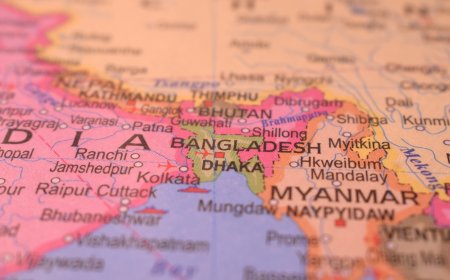
For Bangladesh, these debates carry tangible consequences.
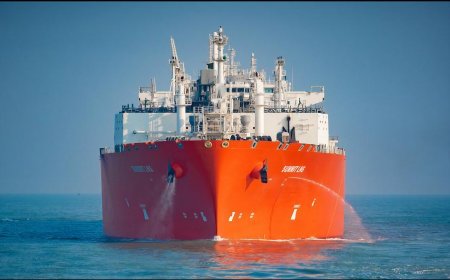
The first and perhaps most immediate implication lies in energy security. Given Iran’s proximity to the Strait of Hormuz, a vital artery through which a substantial percentage of global oil supplies transit, means that any escalation risks disrupting global supply chains and energy market.
Bangladesh remains heavily reliant on imported energy, even brief market instability can translate into rising fuel prices, inflationary strain, and pressure on foreign exchange reserves. In a globalized economy, instability and regional conflict in one region swiftly reverberates across others.
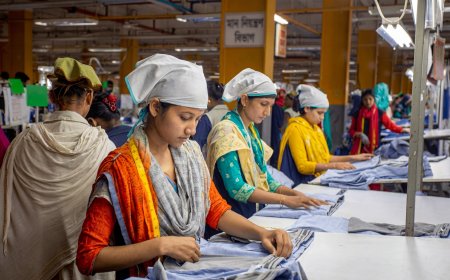
Second, labour migration and remittances are particularly vulnerable. Since, hundreds of thousands of Bangladeshi nationals work in the Middle East, remittances is a vital factor in sustaining household income and supporting the national balance of payments. Regional conflicts may prompt tighter visa regimes, economic slowdown in host countries, or heightened security measures. Although Bangladesh is not a party to the conflict, its migrant population can be indirectly exposed to such geopolitical shocks.
Third, diplomatic navigation becomes more challenging during global polarization. Bangladesh has historically maintained constructive ties with Western countries while sustaining strong relations with Muslim-majority nations. When major powers clash, smaller nations often face implicit or explicit pressure to signal alignment and navigating such pressures demands prudence, consistency, and conformity to established principles of international law.
There is also a broader institutional aspect, as smaller and developing countries depend heavily on legal frameworks that restrict the unilateral use of force. The prohibition on aggression and the controlled right to self-defence are not abstract principles, because they serve as protections for sovereign equality. If self-defence is interpreted more broadly without international consensus, it could severely undermine the rules-based order that protects less powerful countries.
International law evolves through a combination of state practice, judicial reasoning, and diplomatic dialogue as governments routinely justify their actions, by referring doctrines like anticipatory self-defence or collective security. These arguments deserve careful evaluation rather than automatic disapproval or condemnation. Hence, task of scholars and analysts is not to heighten tensions but to examine arguments within established legal frameworks.
The appropriate response for Bangladesh lies neither in panic nor in passivity, but in strategic awareness. Policy priorities should include energy diversification, strengthening diplomatic channels, safeguarding migrant labour rights, and consistently advocating for civilian protection under international humanitarian law. These are practical measures in an uncertain global environment.
In today’s interconnected world, distant conflicts quickly reshapes domestic economies such as oil prices change, shipping costs increase, currencies fluctuate, development priorities shift, and investor confidence becomes sensitive to geopolitical risk. The ripple effects reveal a simple truth: International law and global stability are not distant abstractions for Bangladesh but essential pillars of economic resilience and national planning.
When powerful countries clash, images of military confrontation dominate headlines. However, beneath that dramatic surface lies a quieter but critical question: Will the legal norms regulating the use of force and the protection of civilians retain their credibility? For smaller countries, the durability of those norms matters profoundly.
International law may be contested, interpreted, and debated but it remains the primary framework through which sovereignty, economic stability, and civilian safety are defended. In times of geopolitical turmoil, structural and disciplined adherence to legal principles is not a constraint, but a stabilizing force.
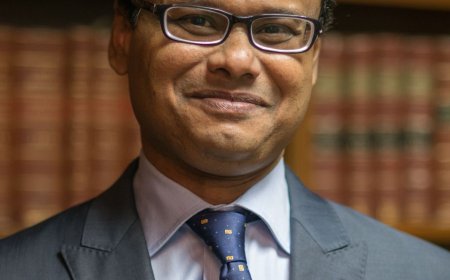
Mahir Tajwar Khan Herok is a Barrister, Legal Consultant, Researcher & Policy Analyst.