









































![A Ledger of the Soul: Navigating the Allah-Bhagavant Nexus in a 19th-Century Puruṣākāra Jñāna Caupara [Gyan Chauper]](https://counterpointbd.com/uploads/images/202608/image_430x256_6a93baa3b09a7.jpg)



















From Raids to Reform: Why Bangla QR is the Real Solution to Market Opacity
The transition from cash to digital is not merely a technological shift; it is an institutional reform. It requires aligning incentives, building trust, and modernizing infrastructure. But the alternative -- continuing cycles of raids, fines, allegations of harassment, and persistent opacity -- offers little hope for sustainable market discipline.


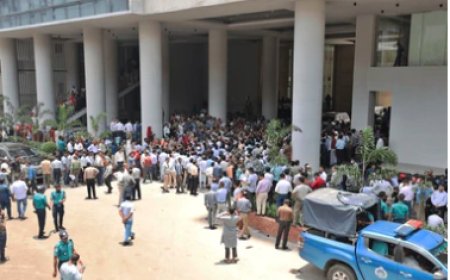
The recent market raids by the relevant enforcement agencies on wholesale markets have reignited a familiar debate in Bangladesh’s trade ecosystem. Officials report that fines were imposed due to non-production of vouchers and purchase memos. Retailers counter that they are often compelled to buy goods at higher prices without formal invoices; consequently, they pass on higher costs to consumers. Wholesalers, on the other hand, allege harassment and oppression through punitive enforcement. What emerges from this standoff is not merely a compliance issue, but a structural flaw in the way transactions are conducted in our wholesale and retail markets.
The core problem is not the absence of paper vouchers. Nor is it the occasional raid. The deeper issue is the dominance of cash-based, opaque transactions that leave little or no verifiable audit trail. As long as trade remains predominantly cash-driven and informal, enforcement through physical inspections and fines will only scratch the surface. Documents can be created, altered, or destroyed. But a transparent digital payment trail is far harder to manipulate.
Bangladesh’s wholesale markets -- especially for essential commodities such as rice, edible oil, sugar, onion, and pulses -- operate largely in cash. A retailer may purchase goods from a wholesaler by paying cash on the spot. No formal invoice may be issued, or if issued, the value may not reflect the true transaction price. When enforcement agencies demand vouchers, retailers may struggle to produce them, not necessarily because they intend to evade compliance, but because the underlying transaction system is informal. In such an environment, expecting perfect documentation is unrealistic.
This informality creates multiple distortions. First, it weakens price transparency. If the wholesale price is not formally recorded, it becomes difficult to ascertain whether retail price hikes are justified. Second, it erodes tax compliance, as under-invoicing or non-invoicing reduces reported turnover. Third, it fosters mistrust between traders and regulators. Raids become adversarial rather than corrective.
Consumers need to be protected from unfair practices and price manipulation. Enforcement actions are, in principle, aligned with consumer welfare. However, when transaction system itself is structurally opaque, enforcement becomes reactive and episodic. It treats symptoms rather than causes. Fining a trader for not producing a voucher does not guarantee that future transactions will be properly recorded if the incentive structure remains unchanged.
Retailers’ argument -- that they are forced to buy at high prices without memos and therefore must sell high -- reveals the circularity of the problem. In a cash-dominated ecosystem, price discovery is informal. Traders rely on verbal agreements, market gossip, and daily fluctuations. Without digital records, it is difficult to trace where and how margins accumulate along the supply chain.
Wholesalers’ complaints of “oppression” through fines also reflect a deeper discomfort: The transition from an informal to a formal economy is inherently disruptive. For decades, wholesale trade in Bangladesh has operated within a trust-based but undocumented framework. Enforcement actions feel intrusive because they attempt to impose formal rules on an informal structure without simultaneously modernizing the payment infrastructure.
If Bangladesh genuinely aspires to a cashless or less-cash economy, then market transactions -- especially in wholesale hubs -- must be digitized. A cashless ecosystem would automatically generate transaction records. Each payment would leave a digital footprint: Payer, payee, amount, time, and date. This data would make it significantly easier for regulators to detect unusual price spikes, hoarding patterns, or abnormal margins.
The country has already taken important steps toward digital payments. Mobile financial services (MFS) such as bKash, Nagad, and Rocket have expanded rapidly. Bank-based digital channels, internet banking, and card payments are growing. More importantly, the introduction of Bangla QR -- an interoperable QR payment standard -- offers a unified solution that allows customers to pay merchants using different banks or MFS apps through a single QR code.
Bangla QR holds transformative potential for wholesale and retail markets. If every wholesaler and retailer were required -- or strongly incentivized -- to accept payments through Bangla QR, each transaction would be digitally recorded. Retailers purchasing goods could transfer funds electronically, instantly generating a verifiable transaction history. This record would serve as a de facto voucher, eliminating disputes about whether a memo was issued.
Unlike paper invoices, digital transactions are difficult to backdate or fabricate. While no system is entirely immune to manipulation, a centralized or interoperable payment trail significantly reduces the scope for under-reporting. Regulators could, with appropriate legal safeguards, access aggregated transaction data to analyze price trends without intrusive physical raids.
Moreover, digital payments would reduce the risks associated with carrying large volumes of cash. Wholesale markets often handle substantial daily turnover. Cash transactions expose traders to theft, miscounting, and liquidity constraints. A digital ecosystem improves efficiency, reduces handling costs, and enhances financial inclusion by linking traders to formal banking channels.
Critics may argue that digitalization alone cannot eliminate price manipulation or collusion. That is true. Technology is not a panacea. However, it changes the enforcement paradigm from suspicion-based raids to data-driven oversight. Instead of physically inspecting shops for vouchers, regulators could monitor patterns. If a particular commodity’s wholesale price rises sharply within a short period, data analytics could flag anomalies. Investigations would then be targeted and evidence-based.
To make Bangla QR effective in wholesale markets, certain prerequisites must be addressed.
First, transaction costs must be minimal. If merchants perceive digital payments as more expensive than cash due to merchant discount rates or service fees, adoption will lag. Policymakers should consider subsidizing or capping fees during a transition period.
Second, reliable internet connectivity and electricity are essential. Many wholesale markets operate in congested areas with infrastructure limitations. A robust digital payment system requires stable connectivity. Investments in digital infrastructure are therefore complementary to regulatory reforms.
Third, trust must be built. Traders often fear that digital records will automatically expose them to excessive taxation or retrospective penalties. The transition must be accompanied by clear policy communication: the objective is transparency and consumer protection, not punitive extraction. Gradual formalization, possibly through tax incentives or simplified compliance regimes for small traders, would ease resistance.
Fourth, digital literacy and training are critical. Many small retailers and wholesalers are not fully comfortable with app-based transactions. Awareness campaigns, on-site support, and collaboration with trade associations can accelerate adoption. A broader macroeconomic benefit of digital wholesale transactions is improved monetary transparency. When transactions are cash-based, a significant portion of economic activity remains outside formal data systems. This undermines accurate measurement of turnover, supply chain dynamics, and inflationary pressures. A digital footprint enhances data quality, enabling better policy responses by monetary and fiscal authorities.
In the long run, a transparent transaction ecosystem strengthens consumer confidence. When retailers can show digital proof of purchase price, disputes about “arbitrary price hikes” diminish. Consumers, too, can pay digitally, creating a full chain of traceable transactions from importer to wholesaler to retailer to end buyer. Such end-to-end visibility narrows the space for unjustified mark-ups.
The debate, therefore, should move beyond whether raids are justified or whether fines are oppressive. Enforcement in an opaque system will always be contentious. The real question is how to redesign the system so that compliance becomes automatic rather than coercive. Digital payments -- particularly through a standardized, interoperable platform like Bangla QR -- offer a structural solution.
Bangladesh has repeatedly demonstrated its capacity for digital innovation, from mobile financial services to government-to-person payments. Extending this digital momentum to wholesale commodity markets is both logical and necessary. A cashless wholesale ecosystem would not eliminate all malpractices, but it would significantly raise the cost of opacity.
If implemented thoughtfully -- with low fees, strong infrastructure, legal safeguards, and trader engagement -- Bangla QR could transform market governance. Enforcement agencies would rely less on surprise raids and more on analytics. Traders would operate with greater predictability and reduced cash risk. Consumers would benefit from improved price transparency.
The transition from cash to digital is not merely a technological shift; it is an institutional reform. It requires aligning incentives, building trust, and modernizing infrastructure. But the alternative -- continuing cycles of raids, fines, allegations of harassment, and persistent opacity -- offers little hope for sustainable market discipline.
A voucher-based compliance regime in a cash-dominated market is inherently fragile. A digital transaction trail, by contrast, embeds compliance within the payment system itself. If Bangladesh is serious about protecting consumers, stabilizing prices, and advancing toward a cashless society, then digitizing wholesale and retail transactions through Bangla QR is not optional -- it is imperative.
Tashzid Reza works in a trade finance company operating as a liaison office in Bangladesh.