




































































A Relationship Deeper Than Headlines Suggest
Unlike many bilateral relationships in South Asia that are defined by rivalry, the India-Bangladesh relationship began with cooperation and solidarity. That legacy continues to shape perceptions and policy even today.


In recent months commentary on India Bangladesh relations has often focused on tensions such as political disagreements, trade disputes or diplomatic spats. Yet such narratives miss the larger reality.
The relationship between New Delhi and Dhaka is far deeper, more resilient and more strategic than day to day headlines suggest.
Beneath the noise of politics lies a dense web of history, geography, economic interdependence and security cooperation that continues to bind the two neighbours together.
A recent quiet development illustrates this point well.
Reports indicate that Bangladesh’s military intelligence chief recently visited New Delhi and held meetings with senior Indian intelligence and military officials. The visit signalled efforts to maintain stability and communication despite political turbulence.
Such interactions rarely make front page headlines, yet they often represent the real engine of diplomacy. Steady engagement ensures continuity in bilateral relations even when political rhetoric fluctuates.
A Relationship Forged in History
India-Bangladesh relations are unique because they are rooted in the birth of Bangladesh itself. In 1971, India played a decisive role in Bangladesh’s liberation from Pakistan by providing military support, training and sanctuary to the Mukti Bahini resistance movement.
Soon after independence, the two nations signed the 1972 Treaty of Friendship, Cooperation and Peace, establishing the foundation for a strategic partnership based on mutual support and regional stability.
Unlike many bilateral relationships in South Asia that are defined by rivalry, the India-Bangladesh relationship began with cooperation and solidarity. That legacy continues to shape perceptions and policy even today.
Geography Makes Cooperation Inevitable
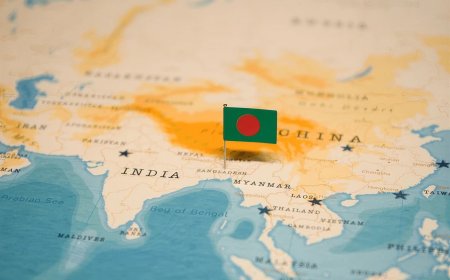
Few countries are as geographically intertwined as India and Bangladesh. The two share a border of roughly 4,000 kilometres, one of the longest land borders in the world.
This geography makes cooperation not merely desirable but essential. India’s northeastern states are connected to the rest of the country through the narrow Siliguri Corridor, making connectivity through Bangladesh strategically valuable.
Transit corridors, rail links, inland waterways and road connectivity projects are steadily transforming the eastern subcontinent into a more integrated economic and logistical space.
For Bangladesh, India represents both a major market and a gateway to South Asia. For India, Bangladesh is a crucial partner in integrating the Northeast with the broader regional economy.
Economic Interdependence
Economics forms one of the strongest pillars of the relationship. India is one of Bangladesh’s largest trading partners and a key development partner.
Since Bangladesh’s independence India has provided significant financial assistance including lines of credit and development support for infrastructure, connectivity and social projects.
More importantly the economic relationship is increasingly multidimensional. Energy cooperation, cross border electricity trade and infrastructure investment have deepened integration between the two economies.
Economic cooperation also increasingly includes energy security and crisis support. A recent example illustrates the depth of this partnership. As Bangladesh faced fuel supply concerns, India moved quickly to supply 5,000 tonnes of diesel through the India-Bangladesh Friendship Pipeline, ensuring stable fuel availability.
Such practical cooperation during moments of need demonstrates how the bilateral relationship extends beyond diplomacy into tangible support that directly affects the daily lives of citizens in both countries.
Security Cooperation Often Goes Unnoticed
Perhaps the least understood dimension of the relationship is security cooperation.
Over the past decade India and Bangladesh have developed strong intelligence coordination on counter terrorism and border security. Bangladesh has taken decisive action against insurgent groups that once used its territory to operate against India’s northeastern states.
In turn, India has worked with Dhaka to strengthen border management, intelligence sharing and defence engagement.
The recent visit by Bangladesh’s intelligence chief to New Delhi underscores this reality. Even when political rhetoric fluctuates, security cooperation continues because it serves the core interests of both countries.
Such engagement ensures that misunderstandings do not escalate and that strategic communication channels remain open.
Political Cycles Do Not Define the Relationship
Political transitions inevitably produce moments of uncertainty in any bilateral relationship. Bangladesh itself has experienced significant domestic political shifts in recent years which have occasionally affected its diplomatic posture toward India.
However focusing solely on political fluctuations risks overlooking the institutional depth of the partnership.
Diplomatic channels, military cooperation, economic projects and people to people exchanges create continuity that transcends political cycles.
Even when disagreements arise over trade, border incidents or rhetoric, both countries have repeatedly demonstrated a willingness to engage and stabilize the relationship.
Strategic Importance in a Changing Region
The India-Bangladesh relationship has also gained new significance in the broader geopolitical context of the Indo Pacific.
External powers are increasingly seeking influence in South Asia, making regional partnerships more strategically important.
For India, maintaining strong ties with Bangladesh is essential for regional stability and connectivity with Southeast Asia.
For Bangladesh, balancing relations with major powers while preserving strategic autonomy requires constructive engagement with India.
This shared strategic interest acts as a powerful stabilising force.
Beyond Diplomacy: A Shared Cultural Space
India and Bangladesh are also bound by deep cultural and linguistic ties. The Bengali language, shared history and cross border communities create a sense of familiarity that few international relationships possess.
Cultural exchanges, academic collaboration and people to people contact continue to reinforce these connections.
The Quiet Strength of a Mature Relationship
Diplomacy is often judged by dramatic headlines such as summits, disputes or political rhetoric. But mature relationships are defined less by moments of tension and more by the quiet continuity of cooperation.
India and Bangladesh have built precisely such a relationship.
Despite occasional friction the partnership remains anchored in history, geography, economic interdependence and strategic necessity.
In the end the real story of India-Bangladesh ties is not one of fragility but of resilience. The relationship is deeper, stronger and more durable than many observers realize and the quiet diplomacy unfolding behind the scenes shows that both sides understand its enduring importance.
Rishi Suri is the chief editor at The Daily Milap, one of India's oldest and largest Urdu language newspapers. He can be reached at [email protected].