






























































Can BNP Deliver a Bangladesh-First Foreign Policy?
Bangladesh is a small fish in a big pond. Mr. Rahman must show enough courage to defend the country’s sovereignty while recognizing Bangladesh’s limits and acting rationally as a national statesman: That requires him not to design foreign policy based on whatever the prevalent mood is on social media.
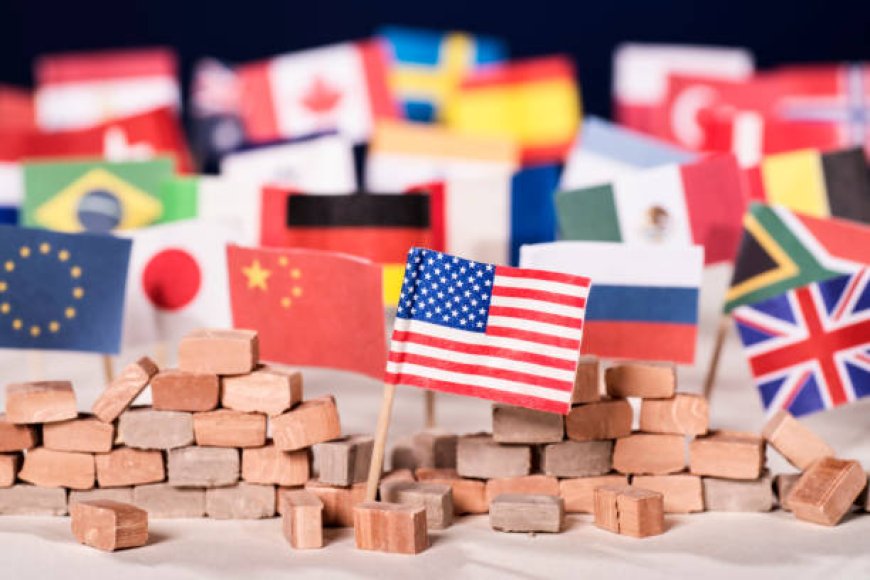
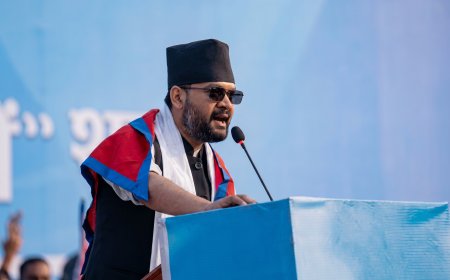
Newly sworn-in Prime Minister Tarique Rahman inherits a foreign policy environment that rewards neither naivety nor nostalgia.
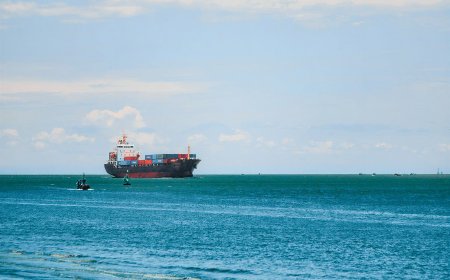
Bangladesh sits at the lower end of the middle-power spectrum and holds three advantages that can become points of vulnerability if not managed well: First, a strategic location bordering the Bay of Bengal, with ports and sea lanes important for global trade, second, a land and maritime corridor linking South and Southeast Asia, and third, a large, young population that gives it demographic and, as such, economic weight.
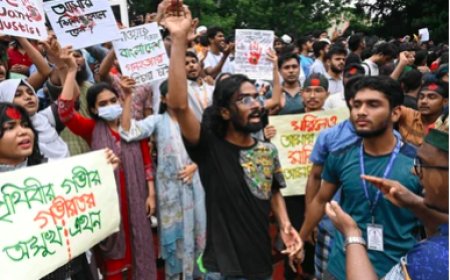
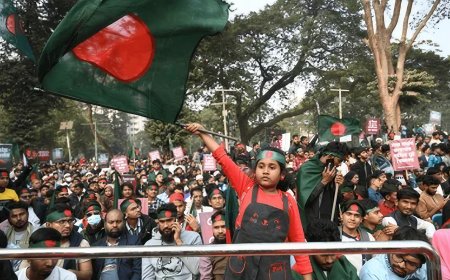
Mr. Rahman says his guiding foreign policy principle is putting Bangladesh first. His position aligns with the anti-hegemonic sentiment, particularly toward India, that has taken hold in since August 2024.
However, an anti-hegemonic policy stance needs to apply to other powers such as the United States and China as well. A Bangladesh-first foreign policy should be defined as needs-based and interest-driven and should judge every partnership by what it delivers in three areas.
First, Bangladesh’s national security needs at home and at its borders. Second, the strength and diversification of the domestic economy and export base. Third, the material well-being and rights of Bangladeshi citizens, meaning labour, student, tourism and health-related mobility, and citizens’ ability to retain agency over the country’s political future.
Ideological alignment, values-based foreign policy considerations, reminiscence about the configurations of yesteryears and assumed loyalty to any single power cannot be the basis of foreign policy in this day and age.
The bottom line is that his government will have to navigate a crowded strategic landscape defined by three overlapping axes: The United States and China, China and India, and the United States and India.
Each power is vying for influence in Bangladesh, and each will treat any ambiguity in how Dhaka approaches foreign policy as an opening to exploit. It may be worth treating these countries as strategic partners, neither permanent friends nor lifelong enemies.
Three Competing Agendas
China: China views Bangladesh as a Belt and Road foothold on the Bay of Bengal. Over the years, Beijing has financed bridges, power plants and ports, and it wants long-term access to trade routes that run past India’s coastline.
Commercial logic has slid into strategic logic: Infrastructure tends to create dependence. That dependence tends to create political deference, and that deference can translate into logistical and even military access in a crisis.
India: India treats Bangladesh as its most important eastern neighbour. Bangladesh is a transit corridor to India’s Northeast through road, rail and river links. It is a buffer against cross-border militancy and the spillover from Myanmar’s Rohingya crisis, with more than one million refugees living in camps in southern Bangladesh that constitute the world’s largest refugee settlement.
Bangladesh is also a test case for keeping Beijing’s security and port projects out of what New Delhi regards as its backyard. Bilateral ties are historically tied to the 1971 Liberation War and are domestically more sensitive than Bangladesh’s relationships with the other two powers.
US: Washington sees Bangladesh through the lens of its Indo-Pacific ambitions. The United States wants Dhaka tied into its maritime security architecture, aligned with labour and human-rights standards that underpin export-led growth, and cautious about deep defence or digital entanglements with Beijing.
Donald Trump’s return to the White House has intensified pressure through tariffs and transactional trade demands, and has unsettled domestic exporters.
Under Dr. Muhammad Yunus, ties with India deteriorated as the former authoritarian Prime Minister Sheikh Hasina and scores of Awami League leaders absconded to India, which made matters worse.
Many blame New Delhi for protecting Ms. Hasina unconditionally, shielding her over the years from diplomatic criticism while sidelining concerns over water sharing, border killings, trade imbalances and perceived interference in political and military affairs.
Responding to this public sentiment, Dr. Yunus cultivated deliberate distance from New Delhi, and India too entered a wait-and-see period as it reassessed the trade-offs of viewing Bangladesh solely through the lens of its relationship with the Awami League.
That Ms. Hasina relied too heavily on India at the expense of Bangladeshi interests now seems to be part and parcel of the domestic consensus, even as Dhaka must still maintain reasonable relations with New Delhi: A balancing act that is one of Mr. Rahman’s immediate foreign policy challenges.
The interim government’s diplomatic moves were not without controversy, but its external engagements were critical in ensuring that the mass uprising and the changes that followed were viewed as legitimate internationally.
Since August 2024, relations with the United States have improved compared with the final months of the Awami League era, engagement with China has accelerated on trade and defence, and diplomacy with the European Union has become more active.
Dhaka reopened channels with Islamabad, which the Awami League had intentionally avoided, and attracted interest from Ankara, particularly on defence cooperation.
Dr. Yunus gave New Delhi a much-needed reality check in the way he positioned his government with respect to India. New Delhi now appears to recognize that putting all its eggs in the Awami League basket was not in its own interest and was short-sighted.
A Bangladesh-first foreign policy means acknowledging that history, but also moving beyond it in the day-to-day work of governing. The question of Ms. Hasina’s extradition is a legal process that Dhaka should continue to pursue, including making recurring requests to New Delhi for her return.
The Hand the PM has been Dealt
The broader relationship with India, however, is a strategic necessity that cannot be defined by a single issue. Extradition is unlikely under current Indian policy, and Dhaka cannot allow that reality to halt efforts to normalize ties into a workable relationship.
Keeping the Hasina matter and the bilateral relationship on separate tracks is a logical way to advance Bangladesh’s interests. The choice may be unpopular in the short run. It remains essential. With Mr. Rahman in office, the ice between Dhaka and New Delhi has undeniably begun to thaw.
On the American front, Mr. Rahman faces a messy deck of cards. Just days before the election, the interim government rushed through a reciprocal trade arrangement with the United States that fixes a 19% tariff on most Bangladeshi exports, with zero tariffs only for a limited list of products, mainly garments made with American inputs.
Bangladesh agreed to lower duties on selected American industrial and agricultural goods and to relax some non-tariff barriers.
The text is still a framework and has not yet gone through parliamentary scrutiny. Since then, the United States Supreme Court has struck down the emergency powers law used for earlier tariff decisions, and President Trump has imposed a temporary 10% global tariff for 150 days, leaving the agreement’s promised certainty far shakier than it appeared on signing day.
In 2025, Bangladesh also agreed to buy 25 Boeing aircraft as part of its effort to ease American tariff pressure. In January 2026, Biman’s board approved negotiations for another 14 Boeing aircraft, with a defined mix of long-haul and narrow-body planes, although a final contract has not been signed.
It is still unclear whether these are separate deals, one combined package, or overlapping political promises. A Bangladesh-first foreign policy demands that Dhaka pause, take a step back, and conduct a public review before the trade deal is ratified, so that Mr. Rahman can decide whether this trade arrangement and these aircraft commitments, negotiated in haste by a transitional government, truly serve Bangladesh’s long-term interests.
Mr. Rahman also needs to choose his first foreign visit with an eye on the bigger picture. If his first trip is to India, it may be read at home as going against how many Bangladeshis want him to engage with New Delhi, and it will not please Beijing.
A first trip to China may be read in India as Dhaka not prioritizing de-escalation with New Delhi. A trip to Washington does not seem to be on the table. A neutral, less controversial destination would serve Bangladesh best: any other SAARC country besides India or Pakistan, such as the Maldives or Sri Lanka, is the safest bet.
Additionally, Dr. Yunus tried to move the Rohingya issue back to the centre of global diplomacy by inviting the United Nations Secretary-General to visit Bangladesh and through advocacy efforts at a United Nations high-level conference in September 2025.
The interim government continued the Awami League government’s efforts to push for a concrete, time-bound framework for safe and voluntary repatriation to Myanmar and urged the international community to use its influence on Naypyidaw. Progress was limited and largely cosmetic.
Mr. Rahman will now have to pick up where Dr. Yunus left off and turn rhetorical support for repatriation into non-stop diplomatic work that links Bangladesh’s relationships with China, India and the United States to visible movement on returning refugees home with basic guarantees of safety, rights and citizenship.
At the same time, engagement with the two main centres of authority in Myanmar, namely the military regime in Naypyidaw and the Arakan authorities that control parts of Rakhine, is crucial to managing Bangladesh’s border security concerns and preventing the country from being drawn further into Myanmar’s internal conflicts.
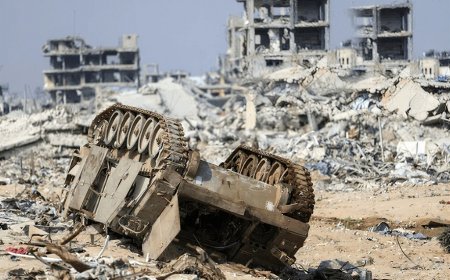
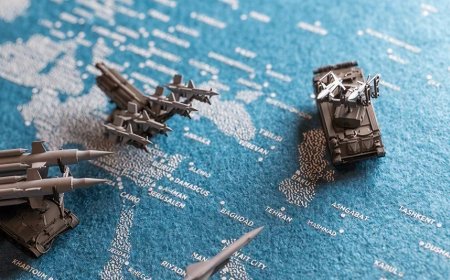
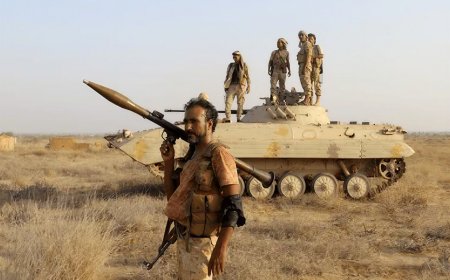
On the war now underway with the United States and Israel on one side and Iran on the other, there is little that Bangladesh can or should attempt to do.
Harsh as it sounds, the government ought to avoid taking sides and stick to carefully crafted, high-level diplomatic language that calls for immediate de-escalation, respect for international law from all sides, and the protection of civilians at all costs.
It should avoid issuing pointed statements that risk dragging Dhaka into an extremely sensitive and volatile conflict, even if some voices at home demand a stronger response to the assassination of Iran’s now-deceased Supreme Leader, Ayatollah Khamenei.
The priority should be to closely monitor the situation of Bangladeshi expatriate workers and their families in Gulf countries involved in or affected by the conflict, to focus on their safety and to plan for their return if the situation escalates. Simultaneously, Dhaka needs to prepare for the energy fallout that Bangladesh is likely to face if the conflict becomes prolonged.
Foreign Minister Appointment
One figure within the new Cabinet will be primarily responsible for advancing a Bangladesh-first foreign policy: The new Foreign Minister, Dr. Khalilur Rahman. As a member of the interim government and a close confidant of Dr. Yunus, Dr. Khalil helped steer Bangladesh through a turbulent period of diplomacy with India, the United States, China and other international partners, and he now sits at the junction of those same files.
His appointment gives Mr. Rahman a technocratic operator who already knows the players and the dossiers, given his long experience as a career diplomat, and who can provide a measure of continuity in foreign policy.
That same record also explains why his appointment has attracted scrutiny. The BNP did not mince words in criticizing Dr. Khalil’s conduct as National Security Adviser to Dr. Yunus, called for his resignation on more than one occasion, and, on several instances, argued, correctly, that Advisers who hoped to run for Parliament or join the next government should step aside, on the grounds that an interim administration should not be a springboard into elected office.
Bringing Dr. Khalil into the Cabinet runs against that standard and raises questions the BNP government will need to address frankly. Mr. Rahman has not yet done so, and the longer the government avoids giving a candid explanation, the more space there will be for rumours that Dr. Khalil’s appointment reflected the preferences of foreign partners, particularly the United States.
Bangladesh is a small fish in a big pond. Mr. Rahman must show enough courage to defend the country’s sovereignty while recognizing Bangladesh’s limits and acting rationally as a national statesman: That requires him not to design foreign policy based on whatever the prevalent mood is on social media.
Bangladeshis wish their Prime Minister well, with the caveat that he and his government will be held to account for any decisions that run against the country’s needs and interests, whether in dealings with India, China, the United States or any other country.
The task before Mr. Rahman now is to use the thumping electoral mandate his party received to pursue a balanced foreign policy that secures investment and market access from all three major powers, protects Bangladesh’s room for manoeuvre and avoids any perception that the country has slipped fully into a single camp.
The world is at an inflection point: The international rules-based order that has governed how nation-states, including allies and adversaries, have interacted since the end of the Second World War is on life support, if not already dead.
Bangladesh must think wisely about the mix of partnerships that will cushion its economy against long-term shocks and preserve its freedom to make decisions about its future.
Mir Aftabuddin Ahmed is a Canada-based Public Policy Columnist with more than 140 published articles across Bangladeshi and Canadian media and policy outlets. He currently serves as a Policy Development Officer with the City of Toronto. He can be reached at [email protected]. The views expressed are his own.