


























































Democracy Feels Alive Again. But What if We Look Closer?
A dual crisis of legitimacy in the opposition and civil society is creating a “twin vacuum” that weakens democratic accountability in Bangladesh

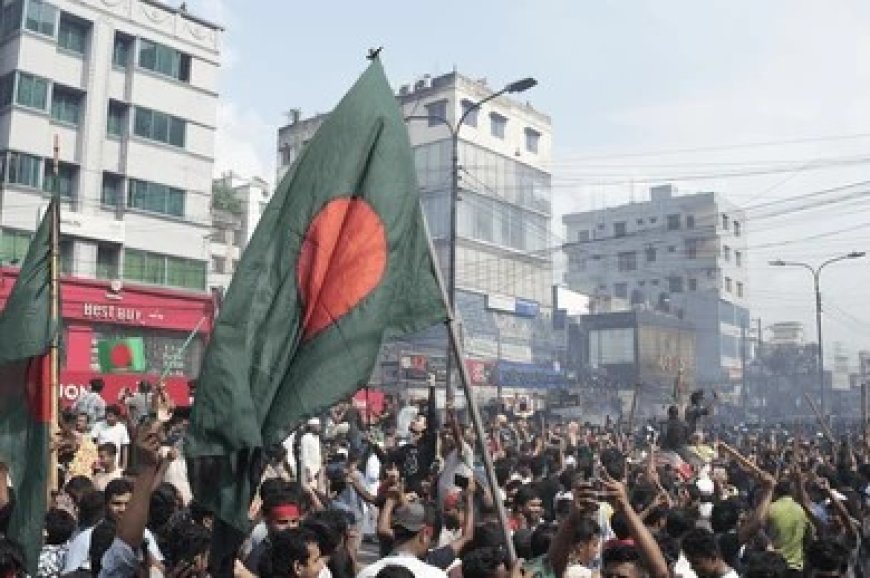
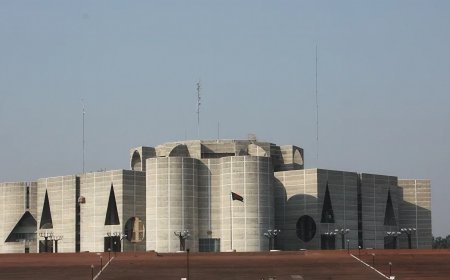
For the first time in over a decade, Bangladesh is witnessing what many would call a “real” parliament -- one born out of a competitive electoral process. Citizens feel, perhaps tentatively, that their votes mattered.
Across generations, from millennials to Gen Z, even within Gen Alpha, there is a visible resurgence of political interest. Clips from parliamentary sessions circulate widely, and debates on the floor are quickly transformed into memes.
The ink marks on fingers -- once symbolic -- are now worn with a renewed sense of ownership. It feels, at least on the surface, like democracy is making a comeback.
But scratch beneath this surface, and a different reality emerges. The conversations unfolding in civic spaces, especially on social media, point toward a deeper, more troubling issue -- one that could quietly derail this transition.
Both the opposition and civil society, the two pillars expected to anchor democratic accountability, appear to be struggling with a crisis of legitimacy and integrity.
Power, by its very nature, tends to drift away from the people. Over time, it becomes insulated, self-serving, and often unaccountable.
That is precisely why, in any political system, the opposition is expected to occupy a structurally advantageous position in terms of legitimacy. It is the opposition that people turn to when power begins to fail them -- when institutions weaken and accountability erodes.
But what happens when the opposition itself suffers from a crisis of legitimacy and integrity?
At that point, citizens are left without a credible alternative. The space for meaningful political choice begins to shrink, and with it, the possibility of holding power to account. Gradually, people cease to act as active political agents and instead slip into the role of passive subjects of the state.
This is where the optimism of a democratic transition begins to confront its first serious test. Because the integrity and legitimacy of the opposition are not merely political concerns -- they are foundational to the functioning of a democratic society itself.
This is, however, the surface of the problem. A deeper question lies beneath: What are the sources of legitimacy?
Broadly speaking, legitimacy has two key sources.
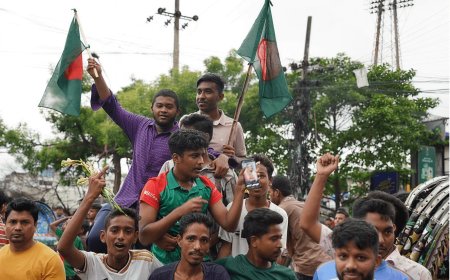
The first is popular sovereignty -- the legitimacy that emerges from the people themselves. This is typically expressed through elections and electoral mandates, but it can also take the form of mass political mobilization, uprisings, or even revolutions.
In formal political systems, this type of legitimacy enables political actors to enter institutional spaces such as parliament and claim authority in the name of the people.
The second, and often less visible but equally critical source, is discursive legitimacy, produced by civil society. Civil society -- comprising media, intellectuals, cultural actors, and non-state institutions -- possesses significant social and symbolic capital.
Although smaller in number, these actors shape public discourse and determine the interpretive frameworks through which political events are understood. In doing so, they assign moral and political meaning to elections, protests, and power itself.
In an ideal scenario, civil society functions as the moral conscience of the state -- uncompromising on questions of justice and willing to challenge power. In many cases, this creates a convergence of agendas between civil society and the opposition.
Even when the opposition lacks popular legitimacy, it can build discursive legitimacy -- and, over time, convert that into broader public support, particularly when the ruling party becomes increasingly detached from the people.
In this sense, legitimacy is not produced in a single arena; it is negotiated between the ballot and the discourse, between numbers and narratives.
But the reality, particularly in Bangladesh, diverges sharply from this ideal.
First, the country carries unresolved historical and political wounds -- and the current opposition party, which holds the second-largest number of seats in parliament, bears part of that burden. Most notably, its contested role in 1971 continues to cast a long shadow.
While elements of its leadership have expressed regret or apology at different points, there remains a visible discomfort around Liberation War -- related national moments. This unresolved past continues to shape how key segments of civil society perceive the party’s legitimacy.
Beyond 1971, other positions -- particularly on questions such as the role of women in society -- have generated further controversy, often appearing at odds with the normative expectations of a liberal democratic framework. Taken together, these factors place the opposition in a position where it begins with a discursive legitimacy deficit.
Civil society, in many cases, remains unwilling to endorse or normalize the party’s political trajectory, and instead often positions itself in opposition to its empowerment.
At the same time, the opposition’s performance within parliament has not sufficiently compensated for this deficit. Its limited ability to mount consistent, constructive, and credible opposition to controversial government decisions has exposed both strategic and technical weaknesses, further constraining its capacity to build legitimacy in the present.
Second, the very source of discursive legitimacy -- civil society -- is itself facing a crisis of legitimacy and integrity.
Over time, segments of civil society have appeared increasingly distant from society and, in some cases, closer to the state. There have been instances where development narratives promoted by those in power were amplified, while widespread human rights concerns received comparatively less attention.
In a context where an inherent tension exists between society and authority, parts of civil society have at times aligned more closely with power than with the public.
More recently, this distance has become visible in moments of silence. On critical reform questions -- such as the implementation of the July Charter and the outcome of the referendum -- there has been limited initiative from established civil society actors.
For some, these issues are viewed through a political lens -- potentially benefiting an opposition they remain reluctant to endorse (as discussed earlier). In other words, although the July uprising created a generational opportunity for structural change, a segment of civil society has remained anchored in its existing ideological positions.
As a result, hesitation emerges -- not only in actively supporting reform, but at times even in consistently challenging controversial decisions by those in power -- despite the fact that holding power to account is precisely the role civil society is expected to play.
The result is a dual crisis.
On the one hand, the opposition lacks discursive legitimacy.
On the other, civil society -- tasked with producing that legitimacy -- struggles with its own deficits of credibility and proximity to the people.
This produces two structural vacuums:
First, the absence of a credible opposition capable of generating discursive legitimacy.
Second, the absence of an integrity-driven civil society capable of producing it.
The situation becomes even more complex as these vacuums begin to reproduce themselves.
Civil society actors who attempt to critique the present -- setting aside past divisions -- often face personal attacks, labeling, and hostility from segments of supporters of the opposition. This not only alienates them, but also further constrains the opposition’s ability to build discursive legitimacy within those very spaces -- often intensifying resentment and hostility against them instead.
Conversely, when civil society actors extend even minimal fairness toward the opposition (whether by acknowledging their positive actions or challenging unjust narratives targeted against them), they often risk exclusion or stigmatization from within civil society itself.
While it is true that some actors operate under the guise of civil society while advancing partisan agendas, the broader outcome remains the same: Fragmentation, distrust, and a shrinking space for principled engagement.
In this environment, the very actors responsible for holding power accountable end up neutralizing one another. What emerges is not just a political deadlock, but a deeper erosion of the accountability structure itself.
This raises a critical question: Can existing actors fill these vacuums?
For that to happen, a minimum normative understanding between the opposition and civil society is essential. The responsibility, however, rests more heavily on the current opposition party. It must actively work to build discursive legitimacy -- not through shortcuts such as creating proxy civil society platforms, but by earning trust through integrity, intellectual rigor, and ethical consistency.
So far, there is little evidence of such an effort. Instead, recurring controversies -- amplified by an existing legitimacy deficit -- continue to deepen the crisis.
Civil society, too, must reflect. It needs to move beyond elite bubbles, abstract idealism, and ego-driven positioning, and reconnect with society in a meaningful way. When power becomes arbitrary, civil society must stand unequivocally with the people -- without calculation.
If existing actors fail to reform, new ones will have to emerge.
These new actors -- both within opposition politics and civil society -- must break away from entrenched binaries and genuinely align with the public interest.
Their path will not be easy. They will face labeling, attacks, and delegitimization from all sides. Yet if their record remains consistent, transparent, and grounded in integrity, such attempts will not endure.
Ultimately, legitimacy cannot be manufactured -- it must be earned. And when both its sources collapse, rebuilding it becomes not just a political necessity, but a societal imperative.
Md. Zarif Rahman is a researcher, columnist and activist.