






























































After the Oil Crisis, We Go Back to Sleep
Bangladesh is not short of clever people or workable ideas. What we are short of is institutional willingness to treat a crisis as something other than an inconvenience to be weathered.

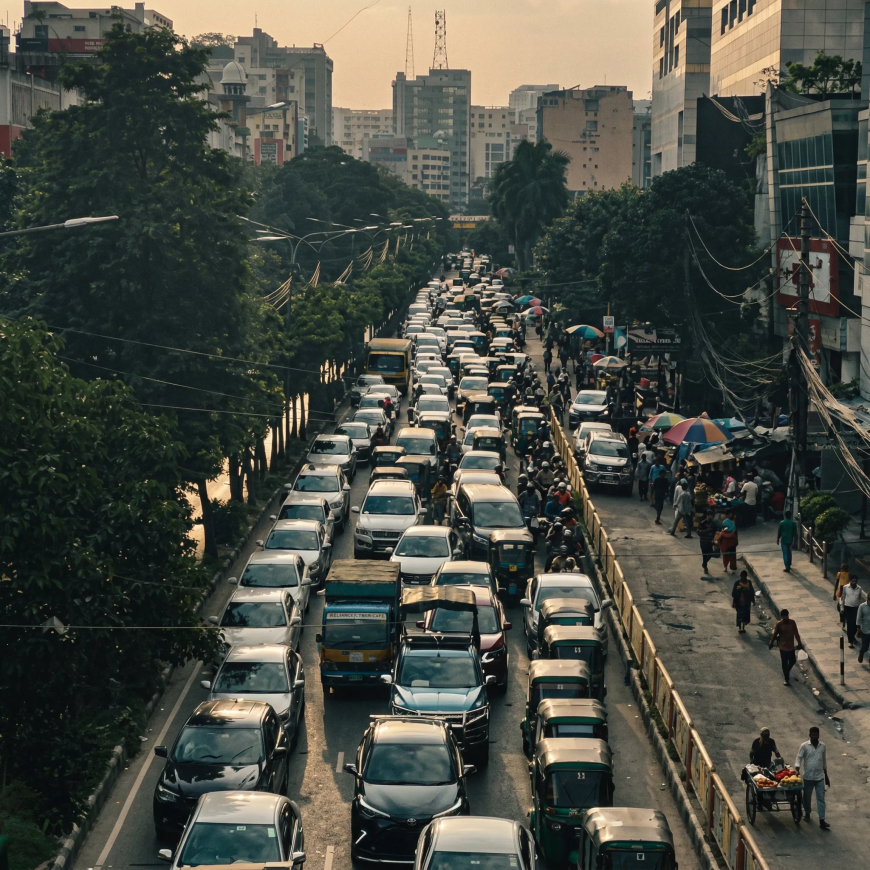
There is a peculiar habit we have developed as a nation. We wait until the crisis breaks before we begin to think. Fuel lines stretch for miles, prices climb, daily life grinds to a halt -- and only then, once the pressure eases and the queues disappear, do we sit down and ask: What just happened, and what should we have done?
The answer, more often than not, was obvious all along. We simply chose not to look.
Bangladesh cannot afford that luxury. We are a country of extraordinary resilience, but resilience is not the same as preparedness. And the cost of being unprepared -- of reacting rather than planning -- is being paid every single day, counted in crores of taka lost to fuel burned in gridlocked traffic, in hours of productivity swallowed by commutes that serve no productive purpose, in foreign exchange reserves strained by fuel imports that smarter policy could have reduced.
This is not a resource problem. It is a policy failure. And more fundamentally, it is a failure of imagination.
What the Rest of the World Already Knows
We need not look far for answers. Countries across the world -- some far wealthier than us, some not -- have already run the experiments and published the results.
Iceland, hardly a country one would associate with radical workplace reform, conducted large-scale trials of a four-day working week. The findings were striking: Productivity held steady or improved, energy consumption declined, employees were healthier, and absenteeism dropped. A shorter week did not mean less work -- it meant smarter work.
Japan, whose work culture is arguably the most demanding in the world, took notice. Microsoft Japan’s own four-day week pilot produced a 40 percent increase in productivity. The secondary effects were just as significant -- less air conditioning running in empty offices, fewer lights left on, a measurable drop in commuting and the fuel it consumes.
Germany and the Netherlands have spent decades normalizing flexible hours and hybrid work arrangements. The result is a more efficiently distributed energy demand across cities, with fewer vehicles choking urban roads during peak hours. These are not radical experiments anymore -- they are established policy.
Even India, with its vast and complex urban workforce, expanded remote work significantly after the pandemic. The lesson from our neighbour was simple: Large populations can function without physically converging on city centres every single morning.
Our Missed Opportunity
When fuel stress hit Bangladesh, we had before us a rare and genuine opening -- a moment when people were already forced to change their habits, when the ground was prepared for a structural shift. Governments around the world have used exactly such moments to introduce lasting reforms.
We did not take it.
Weekly closures were announced, schools and offices shut for a day here and there, and the crisis was managed as though it were a weather event: Unpleasant, temporary, and ultimately out of our hands. There was no accompanying push toward remote work. No serious digitization drive. No rethinking of how and where work happens in Bangladesh.
When the immediate pressure lifted, everything returned to how it was before. Maximum disruption, minimum gain.
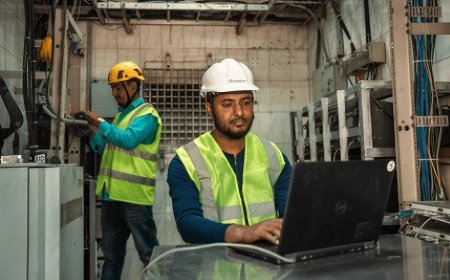
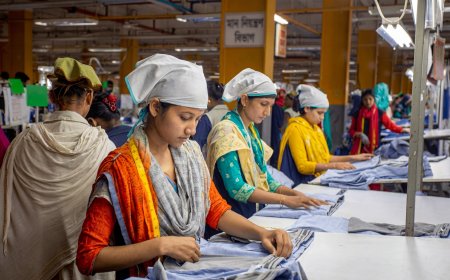
Consider what a coordinated response might have looked like. A four-day working week for non-essential sectors of the economy. A mandatory remote work directive for all roles where physical presence is not strictly required. Staggered office hours to spread traffic across the day rather than compressing it into two impossible hours of gridlock. Hybrid learning models for universities, many of which proved during the pandemic that online delivery is entirely feasible.
The immediate result would be fewer vehicles on the road. Fewer vehicles means less fuel imported. Less fuel imported means less pressure on our foreign exchange reserves and our balance of payments. Over time, the savings compound, and the economy grows more resilient.
The True Price of Standing Still
Bangladesh is not short of clever people or workable ideas. What we are short of is institutional willingness to treat a crisis as something other than an inconvenience to be weathered.
The cost of inaction is not invisible. It shows up in the foreign currency spent on fuel we could have used less of. It shows up in the hours Bangladeshi workers spend motionless in traffic -- hours that belong to families, to rest, to productive effort. It shows up in the pollution that settles over Dhaka each morning, in the congestion that has become so normalized we no longer notice it as the emergency it is.
For a country with our constraints, inefficiency is not merely inconvenient. It is existential.
A Different Kind of Race
Crises carry within them the seeds of transformation. They expose the fragility of old arrangements and create political space for new ones. The tragedy is not that we face crises -- every nation does. The tragedy is that we consistently allow that space to close without using it.
The question before us is not whether Bangladesh can afford to implement smarter working policies, flexible hours, and genuine remote work infrastructure. Countries with far less than us have done exactly that.
The real question is simpler and more uncomfortable: Can we afford not to?
Because in the end, the competition Bangladesh faces is not only with other nations. It is with its own habit of returning, the moment the oil crisis fades, to everything that made us vulnerable in the first place.
Muhaimen Siddiquee is a brand and communications professional with a strong interest in culture, politics, and history.