















My South Asia, My Dream: Bangladesh
Now that the BJP is in power in West Bengal as well, the same politics is being played there. It will have huge negative implications for the future of India-Bangladesh relations, for historical reasons. Let the secular-minded people on both sides of the border tame this goliath before it vitiates the Epar Bangla Opar Bangla story to nobody’s benefit.
Bengali Pride: Let me start with an amusing incident. One morning in the mid-1990s, after getting off the train at the Berlin railway station, I was heading towards the taxi stand. My luggage was noticeably heavy for my capacity to carry. A South Asian looking youth came forward and volunteered to help. He was a godsend for me at that moment.
While walking together for taxi I enquired where he was from. ‘Bangladesh’, he replied. I switched to Bengali. He was delighted. (In South Asia the only other language which has this kind of fierce linguistic attraction it is Tamil.) While I was finding in him a good Samaritan, he probably saw in me a nijer lok (our own guy, who you can trust).
During our conversation, he said: ‘We are eight thousand Bengalis here; any day we can destabilize Berlin’s politics if we so want.’ Though I found his audacity preposterous, his confidence in the power of his mother tongue made the researcher in me sit up. How should one politically read the Bengalis as a category, not only in Bangladesh but South Asia at large?
The liberation of Bangladesh in 1971 is one of those rare moments in history when a community rises in revolt against a mighty military state just for its linguistic honour, although both shared the same religion, Islam. This kind of intense commitment Sri Lanka Tamils too had exhibited, but they failed because the contemporary domestic and international forces were hostile.
Loss of Identity: At a personal level though, the creation of Bangladesh deprived me my of my core identity marker. Before Bangladesh I recall that whenever I would visit West Bengal (from my native Bihar) I would tell everyone that I was going to Bangladesh. But post Bangladesh I would have to mention the exact place, say Kolkata or Murshidabad, to avoid confusion. ‘Going to West Bengal,’ sounded rather weird.
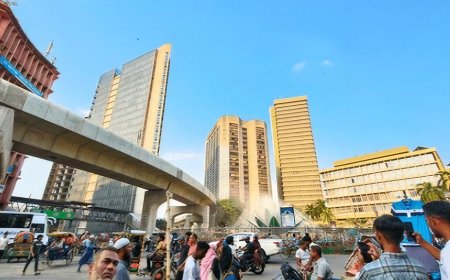
My First Visit: I visited Bangladesh for the first time in 1989. The occasion was the annual convention of the Bangladesh Itihas Parishad (history council), held in Dhaka. The hotel that the organizers had arranged for my stay had the portraits of Bidrohi Kobi Kazi Nazrul Islam and Kobiguru Rabindranath Tagore hanging on the wall behind the reception counter. From childhood, I had read about their legendary respect and affection for each other. For me, therefore, it was a pilgrimage of sorts.
During my four-day stay in Dhaka I encountered only unadulterated warmth from my colleagues in the Dhaka University history department. One professor was particularly kind (I do not remember his name now), who used to explain to me every small detail even before I asked. One such detail had particularly fascinated me.
The Dhaka University Vice Chancellor had hosted a dinner for the delegates on the lawns of his sprawling bungalow. It was an old-style wedding dinner type where food was cooked then and there only. On the menu there was meat curry, among other things.
Out of curiosity I enquired from the professor was it beef. He said, no, it was goat meat. He explained that in such public feasts no beef was to be served considering the sensitivities of Hindu guests against beef. I do not know whether his information was correct, or whether the practice still holds good. Let my readers enlighten me.
Multiple Visits: Ever since, I have visited Bangladesh a number of times, till the COVID and my growing age put an end to the process. During these visits the noisy democracy of Bangladesh (Indian democracy is also noisy but Bangladesh beats India) always impressed me. That’s why when Mohammad Ayoob and Danielle N. Lussier wrote their excellent textbook The Many Faces of Political Islam: Religion and Politics in the Muslim World (2020) and yet did not devote any chapter to Bangladesh I pointed this shortcoming in my review of the book published by the Pacific Affairs (Vancouver). Here it is:
‘While the book has addressed almost all the possible categories of Muslim politics, starting from eastern Africa (Nigeria) and spanning across northern Africa (Algeria, Egypt, Libya and Tunisia), the Middle East (Iran, Iraq, Jordon, Palestine and Syria), South Asia (Pakistan), to South East Asia (Indonesia), one is left intrigued by one conspicuous omission.
The politics of Bangladesh, which has a population of about 200 million, 90% of whom are Sunni Muslims, and who play a significant role in the nation’s hide and seek with secularism, does not figure at all. To my reckoning, Bangladesh by itself should form a category.’
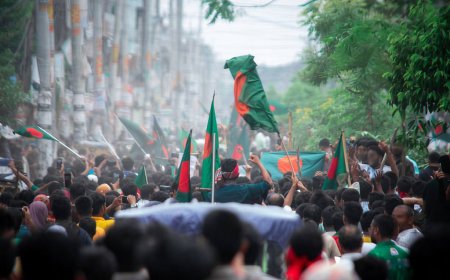
Ekushe As A Secular Statement: Every 21st of February Bangladesh celebrates its Martyrs Day (Ekushe). Bangladeshis across the country commemorate the movement that took place on this day in 1952 against the imposition of Urdu as Pakistan’s national language. T
To the best of my knowledge, Ekushe is the only secular festival of this magnitude in entire South Asia, the one in which both Muslims and Hindus participate with equal fervour. This secular mass participation can overwhelm any visitor from a neighbouring nation; especially these days, when almost the entire region is in the grip of a religious madness.
Some personal experiences: An appreciation of the intrinsic democratic spirit of Bangladesh is perhaps not possible for any foreigner without multiple visits to the country. I sensed it during my first visit itself in the late eighties.
The dictatorship of Hussain Mohammad Ershad was at its zenith then. Still, I noticed how the common man on the street was openly criticizing the government.
Having lived through the repression, pervasive fear, and self-censorship during Indira Gandhi’s Emergency in India (1975-77), such frank and fearless denigration of Ershad excited me. It left a deep imprint on my mind.
I can vividly recall the crowded public meeting that was organized by the Bangladesh Ain Parishad (Law Council). In front of an audience of about 600 people, one speaker after another openly attacked the Ershad regime in harshest Bengali.
Here is my yet another experience. From early eighties there has been a massive controversy in India, whether the nation should do away with all personal laws and replace them by a single code, a Uniform Civil Code (UCC), without touching the tribal laws.
Primarily the Hindutva forces are behind the movement, and their prime target is the Muslim personal law. BJP’s secular logic is just to camouflage its communal agenda.
In Bangladesh also there was a demand for a secular family code, but unlike India it was genuinely progressive, though pioneered by a small group of liberal women led by the Bangladesh Mohila Porishad (BMP) and the Ain O Shalish Kendra.
They had even drafted a complete code in the form of a book: The Fractured Scales: The Search for a Uniform Personal Code (2002) written by Faustina Pereira.
What is important to note is not that the code was rejected outright by both Muslims and Hindus of Bangladesh, which was only to be expected, but the fact that a draft for debate was indeed produced. If a UCC is ever drafted in India, this Bangladeshi document will inevitably have to be consulted.
We Are The Same: During the days of the Shahbag protests (May 2013), on my return from Chittagong I had to stay overnight in Dhaka to take my flight back to Delhi.
I could not afford beyond a budget hotel for my night stay, which was impossible to organize from the Dhaka airport itself. All kiosks there belonged only to five-star hotels. With my South Asian common sense, I approached one of them with the bizarre request to help me find a budget hotel for the night.
After plenty of cajoleries one of them obliged. His remark, however, I still fondly remember: ‘Sir, if my boss ever comes to know that by using my company phone I have found another hotel for a potential customer, I will lose my job by tomorrow morning.’ This is Bangladesh, and this is South Asia.
Why should not one be proud of this basic human element which should always be the USP of our region?
Anarchism As Democracy: Democracy has its manifestation in different forms, sometimes in the defiance of the state. Here was one such experience I had in Bangladesh.
In early 2000s, Humayun Azad, a Dhaka University professor and eminent author, had earned the ire of the Islamists for his liberal writings, particularly his novel, Pak Sar Jamin Sad Bad.
On February 27, 2004 Azad was subjected to a brutal knife attack in Dhaka. Subsequently, on August 12 he died in Munich under mysterious circumstances.
During my visit to the Sociology Department of the Chittagong University in 2005 to have discussions with the academics there in respect of my then project on family laws in South Asia I mentioned about my interest in reading Azad’s book, but alas it was banned.
To this one professor laughed and told me: ‘Nothing gets banned in Bangladesh.’ In the evening he led me to one of the bookstores in Chittagong where I bought the book without any hassle.
Indiscipline also has its beauty, and South Asia has reasons to be proud of that. I am told that according to the American playwright, Edward Albee: ‘An anarchist is the only person who takes democracy seriously.’
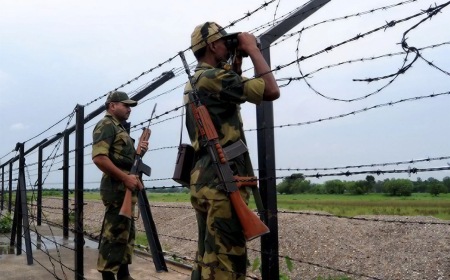
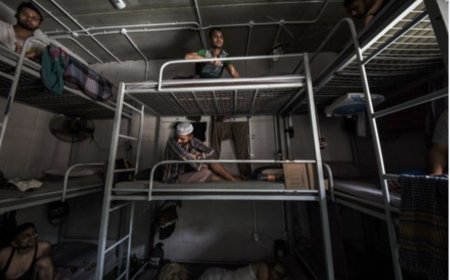
Bangladesh In India: It cannot happen that I discuss Bangladesh sitting in India, yet I do not talk about the question of illegal Bangladeshis in India and their relevance for India’s politics.
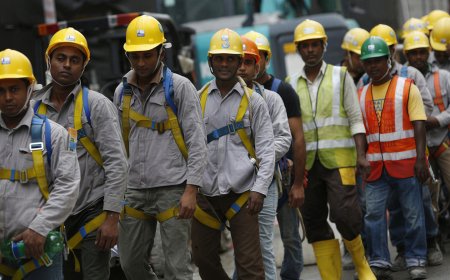
Given the history of Partition and the creation of Bangladesh 24 years later, it is inevitable that many needy East Pakistani/Bangladeshis (both Muslim and Hindu) would illegally move to India for economic reasons.
It is an elementary theory of migration that water seeks its own level, meaning that people with less opportunities migrate to places that offer better opportunities.
Bangladeshi migration to India and the middle-class Indian migration to the United States fall in the same category. That’s why if the former is a factor in Indian politics, latter is for the American. Donald Trump has driven this politics to a feverish pitch.
All Indians who are by alarmed by the Bangladeshi unauthorized settlers (ghuspaithiya in Indian parlance, and ‘termites’ in India’s Home Minister, Amit Shah’s language) should note that by 2024, about 1.9m Indians had relinquished their Indian citizenship to settle in the West, mostly in the United States.
Many important Indians think that India’s GDP has already crossed 5 trillion dollars if the incomes of these setters and temporary workers are also considered.
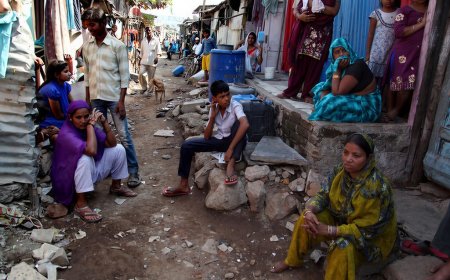
Several years ago, a Bangladeshi professor had visited me seeking help in her research on illegal Bangladeshis in Delhi. She wanted to meet and talk to them. I took the help of my Bengali Muslim maid who hailed from Cooch Behar. Within minutes about fifteen women gathered in my drawing room. It was an open-ended chat.
Three things I learnt, one, that they were there in good numbers, two, their Indian Hindi-speaking neighbours were generally friendly, and three, the Delhi Police, contrary to my belief, was by and large helpful. They vindicated my theory that ordinary people are always nice.
Now that the BJP is in power in West Bengal as well, the same politics is being played there. It will have huge negative implications for the future of India-Bangladesh relations, for historical reasons.
Let the secular-minded people on both sides of the border tame this goliath before it vitiates the Epar Bangla Opar Bangla story to nobody’s benefit.
Partha Ghosh retired as professor at JNU.