



























































The Garment Crisis Has Only One Solution
Every wage board settles the pay and never the problem. Cheap labour cannot fund fair wages. Only brands we own can.

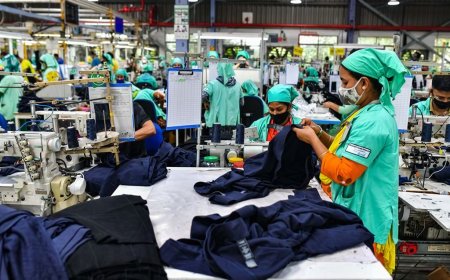
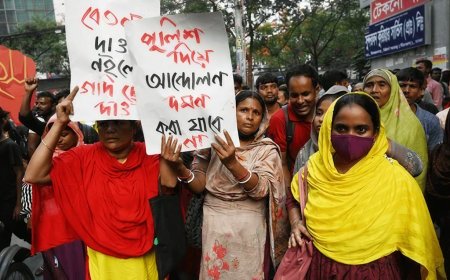
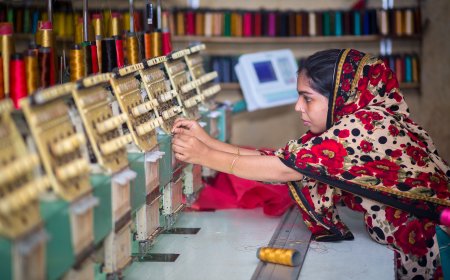
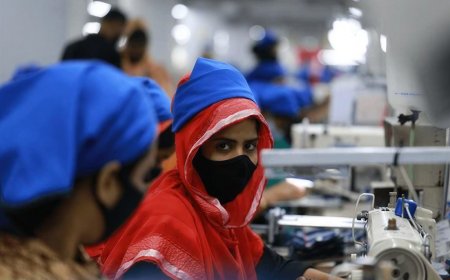
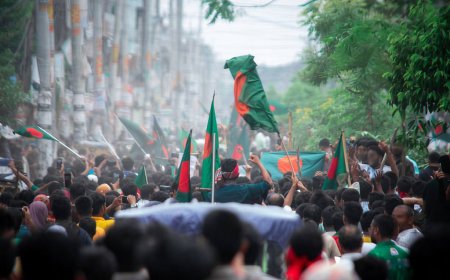
For weeks, Bangladesh's garment belt has been on edge. Workers in Savar, Ashulia and Gazipur have blocked highways, clashed with police and forced hundreds of factories to shut. They are demanding a minimum monthly wage of Tk 30,000 -- more than double the current Tk 12,500.
A wage board has been formed. A revised pay structure has been promised. The protests continue.
We have seen this before. Workers demand more. Owners say they cannot afford it. The government forms a committee. A raise is announced, nobody is satisfied, and we wait for the next round.
This keeps happening because we treat a structural problem as a negotiation.
Both sides have a point. Workers cannot live on today's wages. Owners say, with some justice, that large increases are hard to absorb without fair prices from international buyers. Both are describing the same trap.
A business that competes on cheap labour cannot pay well. Cheap labour is not a feature of our model. It is the model. We win orders by being cheaper than the next country, so every serious wage increase becomes a threat to the reason the order came here in the first place.
So the debate circles the same question: how much should factories pay?
The better question is why we have so little say over what our products sell for.
We make the clothes. Someone else owns the label, sets the price and keeps the margin. The value of a garment lies in the design, the story and the name on the tag. We have left all three to our buyers.
None of this excuses the present. Workers deserve a wage they can live on now.
But there is only one durable way out: build brands.
A factory that sells at someone else's price must pay at someone else's cost.
A business that owns a brand prices on meaning, and meaning is what funds better wages. Cheap labour is a position of weakness. A brand is a position of choice. We are already among the world's most important garment economies.
We understand scale, supply chains, compliance and the demands of international buyers. We have mastered the business of making other people's brands -- Gucci, Armani and countless others -- and invested far too little in our own.
The world knows Bangladesh as a place where clothes are made. It does not yet know it as a place where fashion comes from.
Capital, distribution, design capability and retail infrastructure all matter. Storytelling cannot overcome these gaps. But it can give a brand what manufacturing capacity cannot: an identity, a point of view and a reason to exist.
Which brings us to a more uncomfortable point. The person who should care most about that story is the person who created the business.
Storytelling is not a marketing function. It is an entrepreneurial responsibility.
Why was the business created? What did its founder see that others did not? What problem was worth solving? What belief was strong enough to justify the risk? These are not philosophical questions. They are the foundation of a brand.
Without them, a business remains a manufacturer, a service provider or a seller of commodities. It may grow. It may hold market share. But it will not hold a place in people's imagination. A product meets a need. A brand gives people a reason to care.
Part of our difficulty is where we look. When we imagine an internationally appealing brand, we imagine a Western one. We borrow the aesthetics, the vocabulary, the campaign formats and sometimes the philosophy. We try to make our brands look international by making them look less like us.
What exactly are we trying to escape?
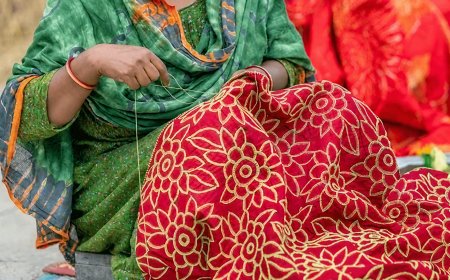
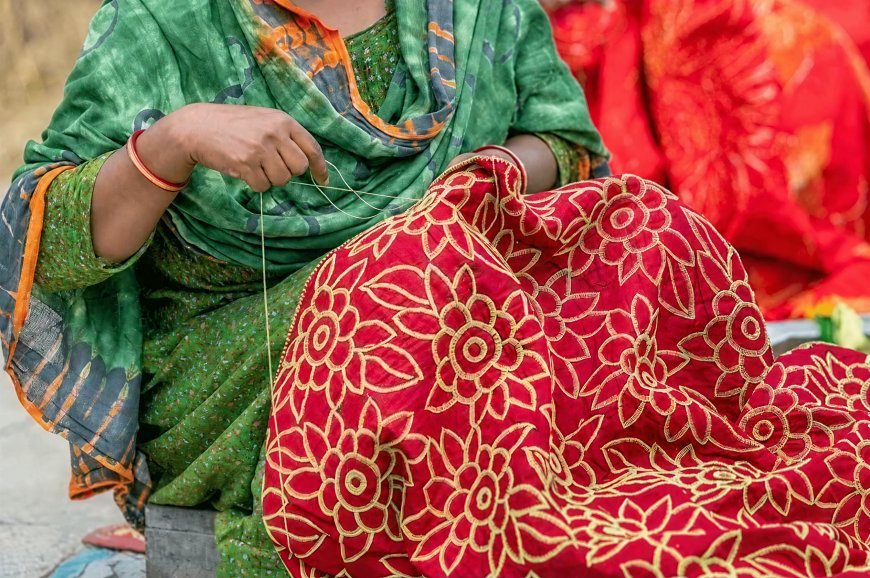
Bangladesh has an extraordinary reservoir of cultural material. Muslin, Jamdani, Nakshi Kantha, folk art, architecture, music, literature, rivers and oral traditions are not artefacts to be displayed on national days. They are living sources of identity. They carry stories about craftsmanship, ingenuity, survival and belonging.
Our roots are not a limitation on our global ambitions. They could be our greatest competitive advantage.
This is not an argument for printing traditional motifs on modern clothes and calling it authenticity. That is just another form of superficial branding. The task is to understand the craft and the human experience behind the tradition, and reinterpret it with imagination. Contemporary, without being culturally anonymous.
The examples are closer to home than we think.
Aarong did not begin with a marketing opportunity. It began with a problem: rural artisans, particularly women, had the skills to make beautiful handicrafts but no reliable access to markets or fair pay. Founded in 1978, it built an enterprise around connecting them with consumers. Today it supports more than 87,000 artisans. The brand did not just sell their work. It gave their work a price worth paying.
bKash is arguably our most successful homegrown technology brand. Its story is not about a mobile financial services platform. It is about financial access in a country where millions were underserved by traditional banking. The technology is the product. Financial inclusion is the story.
Neither should be mistaken for the global reach of Gucci or Armani. That is precisely the point. They show that distinctive Bangladeshi identities can be built around genuine purpose. Turning them into internationally competitive brands is a far bigger challenge.
The problem extends well beyond fashion.
Open the Facebook pages of a dozen companies during Eid, Pohela Boishakh, Victory Day or International Mother Language Day. The same stock imagery. The same generic greetings. The same obligatory goodwill. It is as if someone opened a corporate checklist, identified the occasion, commissioned a visual and ticked the box.
If a brand's logo can be replaced by any other company's without changing the meaning of the message, it was never telling its own story.
And a half-hearted attempt can be worse than silence. When a brand manufactures emotion without anything genuine behind it, the audience senses the gap. The result is not engagement. It is dissonance.
We have delegated storytelling to the people who communicate the business, while the people who imagined and built it remain absent from the conversation. A marketing manager can build a campaign around a brand's purpose. An agency can write a manifesto. A creative director can design a visual universe. None of them can manufacture a conviction that does not exist inside the business.
The founder must know why the business deserves to exist. Otherwise, storytelling becomes an exercise in decorating commercial transactions with borrowed emotions.
This does not mean every brand must become a custodian of heritage or wrap itself in the national flag. Some will find their stories in design, some in technology, some in the ambition to make an ordinary product extraordinary. What matters is that the story belongs to them.
A brand is not what a company says about itself. It is the accumulated meaning of what it creates, what it believes, how it behaves and what it leaves behind.
Bangladesh does not need more people producing brand stories. It needs entrepreneurs who have something worth telling -- businesses self-aware enough to know their origins, confident enough to embrace their identities and ambitious enough to turn them into something the world can recognize.
We have spent decades learning how to manufacture for the world. Perhaps it is time we learned how to introduce ourselves to it.
Muhaimen Siddiquee is a brand and communications professional with a strong interest in culture, politics, and history.