






































































When AI Turns Faces Into Weapons
Artificial intelligence cannot be stopped, and synthetic media tools will become more complex, available, and similar to real-world experiences than ever before.

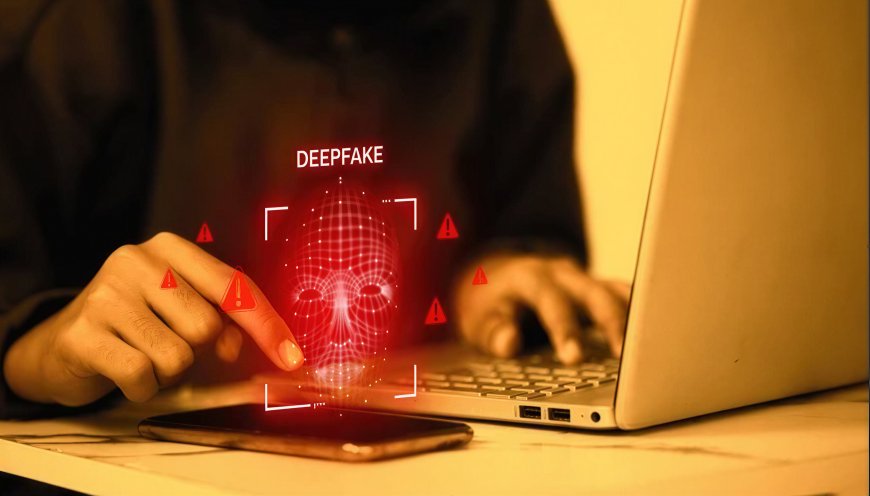
Imagine waking up to see a notification on your smartphone and opening it up only to find that someone had sent you a video through WhatsApp or Messenger. When you click to watch the video, in a matter of seconds, everything about the world appears to be crumbling down around you.
The video contains an explicit pornographic scene, and the person in the scene looks exactly like you. There is no doubt in your mind that you have never even been in the same room where the recording took place, let alone given permission for it to occur.
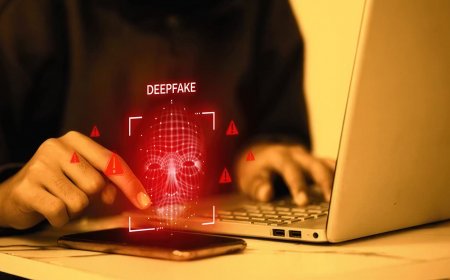
However, all the details -- the way you smile, the way you blink your eyes, the way you move your head slightly are undeniably yours. This simple, harmless picture taken from your publicly accessible social media profile has been seamlessly integrated into someone else’s body using Artificial Intelligence.
The video might be artificial, but the destruction left by the storm in your family life, work environment, and social interactions will be completely real.The rise of generative AI and deepfake technologies has created a massive explosion of nonconsensual sexual abuse (NCSA) as a major problem for society.
The issue of NCSA is very clear: Although AI-generated pornographic content does not exist in the physical world, the pain, fear, harassment, and social isolation that the content creates are very real. Therefore, when evaluating how serious the crime of NCSA is, we need to consider more than just if the image was "real" or "fake."
We need to focus on issues of consent, intention to cause harm, how widely the content has been distributed, and the severe damage caused to the victim.
For too long, victims of deepfake abuse have been told by those in authority, friends, and family: "What do you have to worry about? That is only a fake."
While the content is generated via synthetic binary coding, the real-world implications cannot be dismissed. As soon as an explicit photo or video is released into the digital world, people will rarely verify whether the content is real or fabricated prior to viewing, judging, and/or condemning the content.
In conservative societies such as Bangladesh, where a woman's social standing and her family's honor depend heavily upon public perception, an edited image can completely ruin her life. If a victim experiences public shaming, online harassment, or social isolation due to the release of the content, the emotional distress she suffers is palpable.
Additionally, her panic, feelings of being powerless, and extreme suicidal thoughts cannot be dismissed as being merely "virtual."
Historically, traditional legal definitions of sexual harassment and pornography were based upon proof that a physical act took place in the "real world."
Digital violence created by artificial intelligence requires us to completely re-conceptualize crime. Deepfake abuse isn't simply a technology-based annoyance; it is an attack on an individual's sense of self and bodily integrity.
Facial characteristics are an essential element of an individual's being. Creating sexually explicit material using someone else's face, without the knowledge or consent of the person whose face was used, represents a significant breach of consent.
In addition, the purpose behind creating this type of content is typically malevolent, ranging from extortion and blackmail to ideological character assassination, political intimidation, or misogynistic malice.
After the creation of synthetic media and its release onto various social media platforms, messaging applications, and/or the "dark web," the victim will continue to experience the trauma repeatedly. The justice system must acknowledge that the weapon being utilized in this instance is not merely a collection of computer pixel elements, but the use of identity as a tool for inflicting maximum psychological harm.
Digital Sexual Violence in Bangladesh: The Catastrophic Impact on Women and Young Girls. In Bangladesh, both men and women experience cyberbullying; however, women and young girls carry a disproportionately large portion of the burden of digital sexual violence.
When women and girls become targets of digital sexual violence, they suffer devastating consequences. For example, a single deepfake video can cause a woman to lose her engagement, her marriage, her job, and/or her social life.
Students in secondary and tertiary education systems often find themselves being targeted by classmates who use available artificial intelligence (AI) programs to produce sexually explicit cartoons as "pranks" or as part of a personal vendetta against the target student.
Because of the overwhelming amount of public humiliation that these students experience, coupled with the relentless pressure of social judgment, many young women leave school, while others commit suicide. To make matters worse, there is also a culture of victim-blaming in Bangladesh. Instead of holding offenders accountable for their actions, society automatically questions the victim's behavior:
"Why was your profile public?" "Why did you put pictures of yourself on the internet?" This environment protects offenders and keeps victims trapped in a cycle of shame and silence.
The current escalating crisis shows clearly the weaknesses in the current legal and regulatory framework. For example, laws in Bangladesh, including the Cyber Security Act and Pornography Control Act, did not consider the development of synthetic media.
Perpetrators are exploiting these gaps in the law by claiming that since there was no physical contact involved, they cannot be charged with a traditional sexual crime. It is imperative that policymakers quickly amend the legal system to clearly define and punish "Image-Based Sexual Abuse" (IBSA) and non-consensual synthetic media.
Prosecutors need to focus on the non-consensual use of images, malicious intent, and psychological harm, instead of focusing on whether or not the image/video is authentic. Additionally, regulatory agencies such as the Bangladesh Telecommunications Regulatory Commission (BTRC), along with cyber-crime units, should create rapid-response mechanisms for removing such content from the internet as soon as possible after receiving a report.
Because the effects of IBSA are similar to those caused by physical sexual harassment, criminal punishments must reflect this similarity and provide a real deterrent.
Similarly, both the technology industry and educational systems have an inherent ethical responsibility. Although technology is neither good nor bad, the manner in which it is used depends heavily upon design decisions.
Therefore, technology developers and large corporations need to be held accountable for developing safety protections within their generative models.
Embedding unremovable digital watermarks in AI-generated images, along with automatic deepfake-detection tools in social media algorithms, are important engineering solutions.
Educationally speaking, digital literacy curriculum across all levels of education (schools and universities) must go beyond teaching students how to use computers; it must also teach students about digital ethics, consent, and being responsible online.
Young citizens must realize that creating a photo or video of another person using AI is not simply a harmless prank; it is a serious criminal act that can negatively impact that individual's life.
Artificial intelligence cannot be stopped, and synthetic media tools will become more complex, available, and similar to real-world experiences than ever before. However, the development of artificial intelligence must progress rapidly in order to keep up with the moral compass and laws that protect individuals.
AI-generated non-consensual sexual content is not a harmless form of digital entertainment; rather, it is a weapon used to remove an individual’s dignity, freedom, and peace of mind. Although the pixels are artificial, the tears that fall, the lives destroyed, and the futures taken away are completely real.
It is now necessary to stop believing that synthetic harms are minor harms and start treating digital violence with the seriousness that it deserves.
Md Shihab Uddin is an independent researcher and a student of Folklore and Social Development Studies at the University of Rajshahi. He may be contacted at [email protected].