




























































Rubaiyat Hossain on Women, Cinema and <em>The Difficult Bride</em>
Women are not a homogeneous group. A woman’s socioeconomic circumstances, political background, sexuality, and many other aspects of her identity shape the particular set of struggles she encounters.
Your films often place women inside systems that are larger than them, while still allowing them a private, complicated interior life. Where does that tension begin for you, with a character, a political question, an image, or something else?
It’s very hard for me to say where it starts. I think, in some ways, it’s arbitrary. It depends on where I find myself in life, where I am in my creative work, and where I am in my ongoing inquiry into women’s social and cultural positioning in society.
In my larger body of work, I’ve always been interested in how individual women navigate the spaces around them.
Whichever character I choose to portray, and whatever social class she may come from, her journey is inevitably informed by that particular position.
Women are not a homogeneous group. A woman’s socioeconomic circumstances, political background, sexuality, and many other aspects of her identity shape the particular set of struggles she encounters.
I’m interested in that specificity, but at the same time I’m interested in looking for what might be universal.
You have worked across writing, directing and producing. Which part of filmmaking has become more difficult for you with time, and which part has become more instinctive?
I don’t think anything has necessarily become more difficult with time. If anything, I’ve gained experience, and with that experience I’ve become much more at ease. I have a method now.
I know how I want to work with my crew, how I want to communicate with them, how I want to work with and direct my actors, and even how I want to approach financing a film. So, it’s progressively become easier as I’ve learned the ropes of the game.
What has changed most for me is the pleasure I derive from the process.
Earlier in my career, I think I was much more focused on the goal -- the finished film, what it would become, where it would go. With time, I’ve learned to take much more joy in the actual process of making: The creating, the discoveries that happen along the way, and the relationships that develop through the work.
At the same time, I’ve allowed my directing to become increasingly instinctive. On set, in my creative choices, in the way I respond to actors and to what is happening in front of me, I trust my instinct much more than I used to.
And I think being an older woman has actually put me in a better position to harness my own creative energy. I know myself better now.
I’m less afraid of my instincts, and I think that has given me a greater sense of freedom as a filmmaker.
What was the first impulse behind The Difficult Bride? Was there a particular woman, incident, image or question that stayed with you until it became a film?
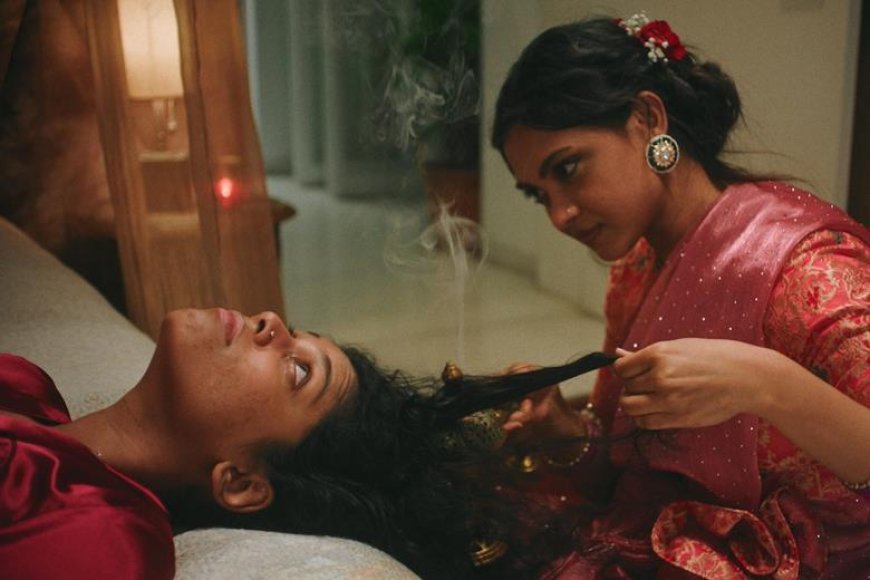
The first impulse was really that image I mentioned -- the image of a snake entering through a sleeping woman’s ear.
But there was also a story I heard when I was about seven years old, at Mayfair Beauty Salon in Dhaka. It was an urban legend about a woman who had died in a beauty salon because there was a snake, or some kind of venomous insect, inside her bridal bun.
She kept complaining that something was wrong, but nobody listened to her. Everyone told her to be patient, until eventually she collapsed, foam came from her mouth, and she died.
As a little girl, that story stayed with me very deeply. From then on, beauty salons became places of fear for me. Even when they were cutting my hair, I was frightened of those huge scissors.
There was something about the salon as a space -- the rituals of beauty, the transformation of the female body, and also the possibility of something going terribly wrong -- that remained in my imagination.
I think that story stayed with me for many years. In fact, I wrote a short story based on it long before I had even decided to become a filmmaker.
So, when The Difficult Bride eventually emerged, it wasn’t as though I suddenly came up with an idea for a film. It felt more like I was returning to something that had been living inside me since childhood, and trying to understand it through cinema.
When you were developing the bride at the centre of The Difficult Bride, how did you resist turning her into either a symbol of oppression or a straightforward figure of resistance? What contradictions did you want to preserve in her?
I think contradictions come with representing a character truthfully. Reducing a character to any singular dimension -- whether as a victim of oppression or as a straightforward figure of resistance -- ultimately takes away from the strength of the film.
Whatever character I’m writing, I try to get beneath the surface. I want to enter into their subconscious, their material reality, their desires and their fears, and try to create a real person rather than an idea of a person.
And a real person is always filled with flaws and contradictions. We can want two opposing things at the same time. We can resist something and still participate in it. We can be complicit in our own circumstances and, at the same time, deeply uncomfortable with them.
Your films engage with gender and social structures without separating the personal from the political. In The Difficult Bride, where did you feel that boundary becoming particularly porous?
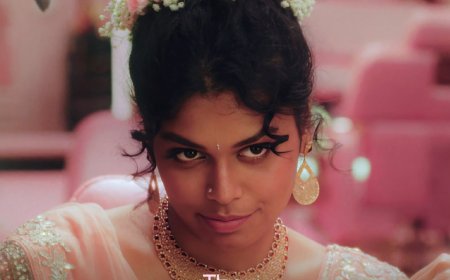
The Difficult Bride is very much about a woman’s subconscious, so I focused intensely on her interiority. Visually, the film is also very close to her body -- we literally get into her pores.
But at the same time, I situated her within the political atmosphere of Dhaka, a city marked by political violence as well as violence against women.
So, the personal and the political are never really separate. Her interior world is shaped by the world around her, even when the film is primarily concerned with what is happening inside her
You have made films in very different political and social moments in Bangladesh. Has the way you think about an audience changed over the years, particularly when making a film about something as personal as marriage, gender or family?
I think the audience for Bangladeshi cinema has grown over the years, and there is certainly a greater interest in Bangladeshi films now.
More films are being made, and I think there is a real curiosity around our cinema, both within Bangladesh and internationally.
But in terms of censorship, unfortunately, the situation has remained remarkably similar. There have been intentions to reform the system, but the state apparatus around cinema hasn’t really changed since I started making films.
So, while the audience and the possibilities around Bangladeshi cinema have evolved, the institutional structures we have to work within have remained largely the same.
What is something about making films in Bangladesh that you have stopped trying to fight against, and instead learned to work with?
I’ve stopped fighting for recognition. I think my creative voice and my work have often been undermined by my gender and my class position, and I’ve come to accept that as part of the landscape I work within.
I don’t really look for validation in Bangladesh anymore. I’ve learned to locate my sense of validation elsewhere -- in the work itself, and in the audiences and spaces that are able to engage with it on its own terms.
When you look back at Meherjaan and compare it with The Difficult Bride, what do you think the younger filmmaker in you was asking that the filmmaker you are today is asking differently?
Aesthetically, I think Meherjaan and The Difficult Bride have something in common. Both were made very much from instinct, and from a place of joyfulness and playfulness. I think that part of me as a filmmaker hasn’t really changed.
What has changed is my visual language. Today, I feel much closer to a visual language that is truly my own -- one that feels more directly connected to my creative expression and to the way I see the world.
I think I’ve become more confident in trusting that language and allowing it to lead the film.
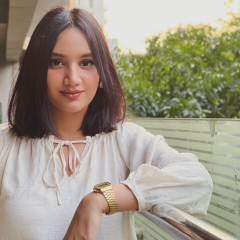
Rubaiyat Hossain is a film mentor, screenwriter, producer and director. She is a visiting faculty at Smith College where she teaches Gender, Film and South Asia Studies.